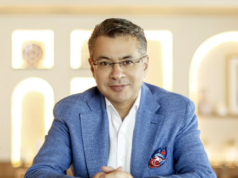

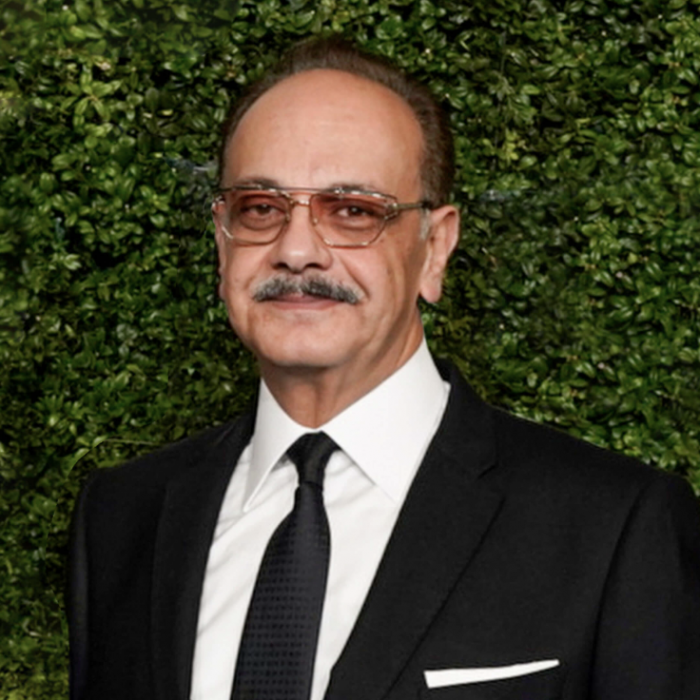


Tarek M El Sayed’s portfolio is global, but its strategic centre remains Doha. As chief executive of Al Rayyan Tourism Investment Company, known as ARTIC, he oversees 30 hotels and resorts with more than 8,000 rooms, alongside approximately 1,830 residences and close to 100,000 square metres of commercial space.
The assets span 14 cities, including Doha, Cairo, Rome, Istanbul, Berlin and Miami. This geographic spread gives ARTIC exposure to business travel, leisure, domestic demand and international gateway markets. It also requires El Sayed to manage different economic cycles, currencies, regulations and operating partners at the same time.
El Sayed joined Al Faisal Holding in 2001 and became ARTIC’s chief executive in 2017. He previously served as managing director and board member of Aamal, the listed Qatari company with interests across industrial manufacturing, trading, property and services. That experience broadened his understanding of portfolio governance and capital allocation beyond hotels.
His long tenure within Al Faisal Holding gives him institutional knowledge of how the group’s international property strategy developed. ARTIC’s expansion combined acquisitions of operating hotels with development and mixed-use real estate. El Sayed has therefore managed assets at different stages of maturity, from stabilised properties requiring disciplined capital plans to projects whose brand, financing and operating structure must be designed before construction.
The portfolio’s spread also creates a natural currency and demand hedge. Doha may respond to major events and corporate travel, Rome to international leisure, Berlin to business and exhibitions, and Miami to a mix of tourism and residential demand. Diversification does not remove risk, but it reduces dependence on one destination cycle. El Sayed’s job is to ensure that geographic breadth produces shared financial insight rather than administrative complexity.
ARTIC operates primarily as an owner and investor rather than a consumer-facing hotel brand. Its properties work with major international operators, allowing the company to combine recognised distribution with local asset oversight. The value of El Sayed’s role lies in deciding where to invest, which brand and management structure fit each property, and when an asset needs renovation, repositioning or disposal.
This active ownership model has become more important as hotel economics have grown more complex. A strong operator cannot compensate indefinitely for poor financing, inefficient design or deferred capital expenditure. Conversely, a well-located property can underperform if its positioning and commercial strategy are not challenged by an informed owner.
El Sayed’s board responsibilities reinforce the financial dimension. He chairs Seldar Holding and serves on the board of BNF Bank in Malta. These roles connect hospitality with banking, investment and international governance, areas that influence how cross-border portfolios are funded and managed.
Qatar’s emergence as a global investor has provided context for ARTIC’s growth. The country’s institutions and private groups have acquired prominent assets abroad while building tourism infrastructure at home. ARTIC’s portfolio contributes to that international presence, but it also gives the group operating intelligence that can be applied to Qatar’s hospitality market.
The challenge is to avoid becoming a passive collection of properties. Scale creates value only when data, procurement, financing and asset-management insight move across the portfolio. Hotels in Miami and Cairo will never operate identically, but lessons about renovation returns, food and beverage, labour productivity and distribution can still travel.
Information is the connective tissue of such a portfolio. El Sayed needs comparable evidence on room revenue, labour productivity, food and beverage, capital needs and market positioning even when hotels use different brands and accounting systems. Strong asset management turns those data into intervention, identifying where an operator needs support or challenge and where new investment will genuinely change the property’s competitive position.
El Sayed’s career reflects the maturation of Gulf hospitality investment. The first phase was often about acquisition and prestige. The current phase is about performance, governance and the disciplined stewardship of assets through multiple cycles. ARTIC’s reach makes his work less visible to hotel guests than that of a brand chief executive, but highly consequential to the properties in which they stay.