
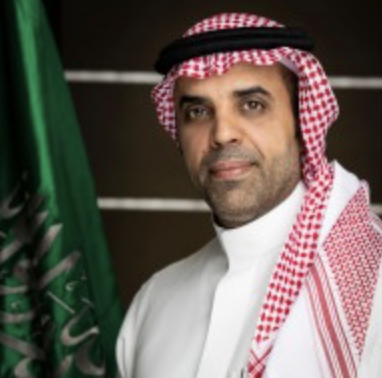


Ibrahim Al-Omar did not build his career entirely within airlines. That is precisely why his appointment to lead Saudia Group was significant. He arrived with experience in industries that had already faced liberalisation, digital disruption and large-scale transformation, bringing an outsider’s view to one of the kingdom’s most established institutions.
Al-Omar trained as an electrical engineer at King Fahd University of Petroleum and Minerals and later completed executive leadership study at Harvard. He spent much of his early career in telecommunications, including senior roles at Saudi Telecom Company. He went on to become chief executive of the National Shipping Company of Saudi Arabia, known as Bahri, from 2014 to 2017, then served as governor of the Saudi Arabian General Investment Authority until 2020.
Those roles created a distinctive preparation for aviation. Telecoms taught him about customer scale and technology. Shipping exposed him to fleets, logistics and global networks. Investment promotion placed him at the centre of Saudi Arabia’s economic diversification agenda. In October 2020, he became director general of Saudia and began applying those lessons to a group that extends beyond the airline itself.
By 2025, Saudia Group carried about 37 million passengers across more than 203,000 flights, with a network of around 100 destinations and a fleet approaching 200 aircraft across Saudia and low-cost carrier flyadeal. The group also includes maintenance, ground services, cargo, catering and training capabilities, making Al-Omar’s task one of portfolio transformation as much as airline management.
Fleet expansion is the most visible commitment. Saudia Group’s order for 105 Airbus A320neo-family aircraft was described as the largest aircraft deal in Saudi aviation history when announced. New narrowbodies will support flyadeal growth, domestic and regional connectivity, and the wider national target of increasing inbound visitors. Long-haul renewal and cabin investment are also central to Saudia’s international proposition.
Al-Omar has pushed the carrier to connect more directly with the tourism strategy. Saudia is not only transporting residents and religious travellers. It is expected to bring leisure visitors, support new destinations and present Saudi hospitality from the first interaction. New routes therefore need to be coordinated with events, hotels, tour operators and destination readiness.
Digital transformation has accompanied the physical expansion. The group has invested in mobile service, data, operational technology and artificial intelligence, while rethinking the end-to-end journey. For a legacy airline, the challenge is to modernise systems without destabilising a complex daily operation.
Talent is equally strategic. Saudia’s aviation academy and technical businesses can train pilots, cabin crew, engineers and specialists for a rapidly growing national sector. In 2026, the group celebrated the graduation of more than 1,000 aviation professionals. Developing Saudi capability reduces dependence on imported expertise and creates a deeper industrial base.
Al-Omar’s engineering training and experience leading Bahri are particularly useful as the fleet expands. Aircraft acquisition is not simply a procurement announcement. It creates decades of commitments in financing, maintenance, spare parts, crew planning and network deployment. A shipping executive understands that asset productivity and schedule reliability determine whether an impressive fleet becomes an advantage or a burden. That discipline will be central as Saudia absorbs aircraft while maintaining its existing operation.
The competitive environment is changing quickly. Riyadh Air is entering the market, Gulf carriers remain formidable and aircraft delivery constraints affect every growth plan. Saudia must clarify its role within a multi-airline national strategy while protecting performance at Jeddah and expanding connectivity.
Al-Omar’s cross-sector career makes him suited to that institutional challenge. He has led networks, fleets and investment programmes before, though never in a sector as publicly visible as aviation. His legacy at Saudia will depend on whether he can turn a historic flag carrier into a coordinated group that supports tourism, logistics and national capability at once. The early evidence shows transformation at scale, but the decisive test will be reliable execution as the new fleet arrives.