
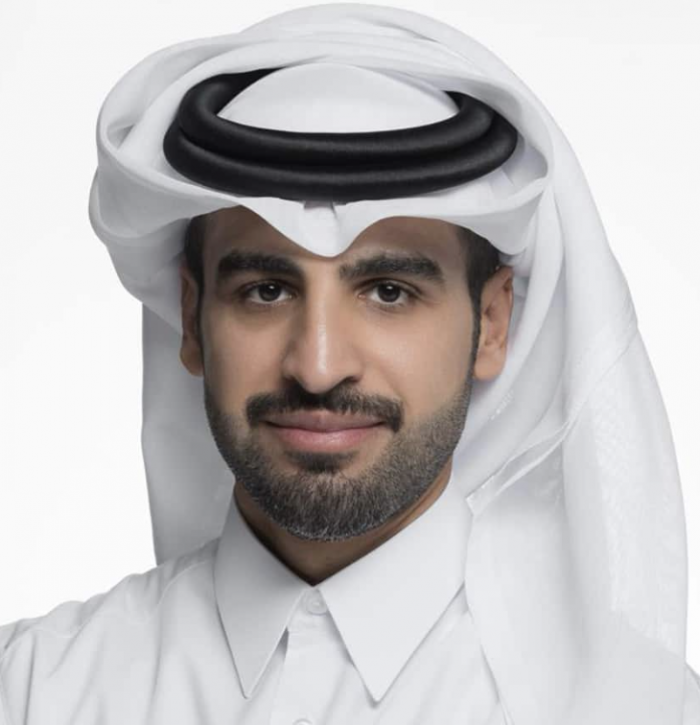


The question facing Qatar after the 2022 FIFA World Cup was never whether people had heard of the country. It was whether the hotels, transport, public spaces and international attention created for the tournament could support repeatable tourism demand. Abdulaziz Ali Al-Mawlawi now leads the organisation responsible for that conversion.
An engineer by training, Al-Mawlawi built his career at the intersection of major events and destination marketing. He worked with the Supreme Committee for Delivery and Legacy, the organisation responsible for Qatar’s World Cup preparations, before serving as chief tourism marketing and promotion officer at Qatar Tourism. In May 2024, he became chief executive of the newly structured Visit Qatar, the authority’s marketing and promotional arm.
That sequence matters. Mega-events can accelerate infrastructure and awareness, but they do not automatically produce a sustainable visitor economy. Al-Mawlawi experienced both the event-delivery phase and the transition to a permanent destination proposition. His work now focuses on campaigns, international partnerships, a unified events calendar and trade distribution.
The performance has been strong. Qatar welcomed more than five million international visitors in 2024 and about 5.1 million in 2025. Accommodation demand reached 10.8 million room nights in 2025, while accommodation revenue rose to roughly $2.3 billion. The figures suggest that Qatar has preserved much of its post-World Cup momentum rather than experiencing the steep drop that can follow a mega-event.
Events remain a deliberate demand engine. Visit Qatar works across sport, culture, exhibitions, festivals and entertainment, using the calendar to counter seasonality and create reasons to return. A five-year agreement to host the T100 Triathlon World Championship Final from 2025 to 2029 is an example of the move from one-off spectacle to recurring international property.
Al-Mawlawi has also broadened source-market partnerships. In 2026, he led a Visit Qatar delegation to China and signed agreements with Fliggy and Huawei. The partnerships are intended to combine distribution, digital marketing and artificial intelligence to improve planning and the visitor experience. China is a high-potential market, but success requires tailored payment, language, content and booking pathways.
His engineering education and master’s study in strategic business management support a notably structured approach to destination promotion. The earlier role as chief tourism marketing and promotion officer meant he did not arrive at Visit Qatar as an external campaign specialist. He helped build the market strategy he now executes. That continuity matters when the organisation must move quickly from global brand exposure to decisions about audience, air capacity, events and conversion.
Qatar’s compactness is one of its strongest products. Visitors can combine museums, desert, waterfront, dining, shopping and sport without long transfers. Hamad International Airport and Qatar Airways give the destination exceptional global access. Visit Qatar’s challenge is to persuade transfer passengers to stop, and stopover guests to return for a longer stay.
Regional disruption in 2026 highlighted the importance of crisis capability. Al-Mawlawi said Qatar helped repatriate thousands of international visitors during a period of heightened tension. Destination trust is built not only through marketing but through how visitors are treated when plans fail.
The next challenge is value and differentiation. Gulf destinations are expanding quickly, and Qatar cannot compete by copying their scale. It needs a clear identity grounded in culture, service, accessibility and a curated calendar. It must also ensure that visitor growth benefits local businesses and supports a wider range of experiences beyond major venues.
Al-Mawlawi’s career has prepared him for that transition. He understands what a global event can achieve and what it cannot. The World Cup made Qatar visible. His leadership at Visit Qatar will be judged by whether visibility becomes habit: more stays, more repeat visits and a destination brand that remains compelling when there is no final whistle.