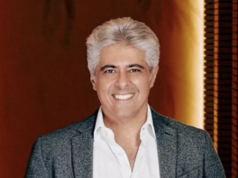

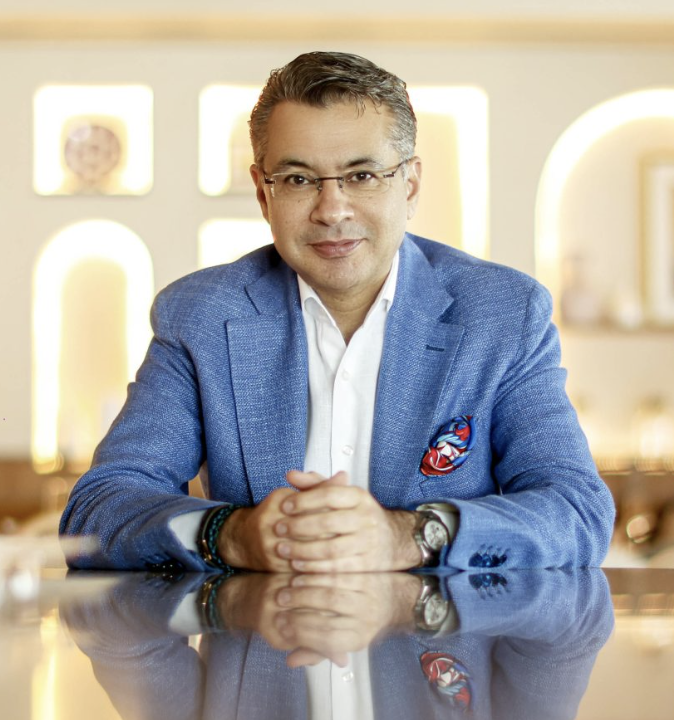


Sandeep Walia’s career has developed inside one company, but not inside one market or one type of hotel. Since joining Marriott International in 2005, he has moved through finance, development and operational leadership, building a perspective that connects owner returns, brand standards and the daily realities of hotel teams.
Walia has more than 25 years of international hospitality experience. He became chief operating officer for Marriott’s Middle East business in 2021 and added responsibility for luxury operations across Europe, the Middle East and Africa in 2024. In 2026, his remit expanded again to include sub-Saharan Africa and global leadership of Design Hotels, the collection of independent, design-led properties affiliated with Marriott.
The numbers explain the management challenge. Walia oversees more than 410 hotels and around 90,000 rooms across a region that includes mature tourism capitals, fast-growing Gulf markets, resort destinations and African cities with very different infrastructure and demand. Marriott opened 35 properties with about 6,500 rooms in the region during 2025 and is targeting significant additional growth in Africa.
Saudi Arabia is a major engine. A 10-hotel agreement valued at about $1.33 billion illustrates how Marriott is using multiple brands to match new destinations and customer segments. Across the Gulf, the company is expanding luxury, select-service and extended-stay offerings while competing for owners with every major global group.
Walia’s role is therefore as much about relationships as hotel operations. Marriott generally grows through management and franchise agreements, so owners provide the capital and expect performance. The operator must protect brand standards while adapting to local project economics. Walia’s grounding in finance helps him understand that tension, while his operational career keeps the guest and associate experience in view.
He has consistently argued for a people-first model. Hospitality growth in the region is creating intense competition for general managers, chefs, commercial leaders and frontline teams. Recruitment alone will not solve it. Training, mobility, local career pathways and inclusive leadership determine whether new hotels can deliver the service promised by their brands.
Luxury adds another layer. Travellers increasingly expect personalisation, cultural connection and distinctive design rather than uniform formality. Walia must manage established flags such as Ritz-Carlton, St. Regis and JW Marriott while giving Design Hotels’ independent members room to preserve their identity. Scale creates distribution and loyalty benefits, but too much standardisation can erase the qualities that make a property desirable.
His expanded Design Hotels mandate makes that tension a defining leadership test. Marriott can offer independent properties global distribution, Bonvoy demand and sophisticated revenue systems, yet membership is valuable only if the hotels remain recognisably themselves. Walia must create safeguards around design, storytelling and local operating freedom while still delivering owner performance. If he succeeds, the assignment could demonstrate that a global group can provide scale without converting individuality into another standard.
Technology can help with forecasting, pricing and personalisation, yet Walia’s operating philosophy places human service at the centre. That balance is important in markets where digital convenience is expected but hospitality is judged through warmth and recognition.
Sustainability and owner economics are converging as energy and water efficiency affect both cost and environmental performance. Marriott’s size allows it to spread standards and purchasing power, but implementation happens property by property. Walia’s task is to turn global commitments into operating routines across hundreds of hotels.
His influence is less visible than a developer opening a landmark resort, but it is deeply felt across the region’s hotel sector. He shapes who gets trained, which brands enter which markets and how global systems meet local expectations. At Marriott’s scale, consistency is not sameness. Walia’s challenge is to prove that the company can keep growing while making each hotel feel as though it belongs where it stands.