
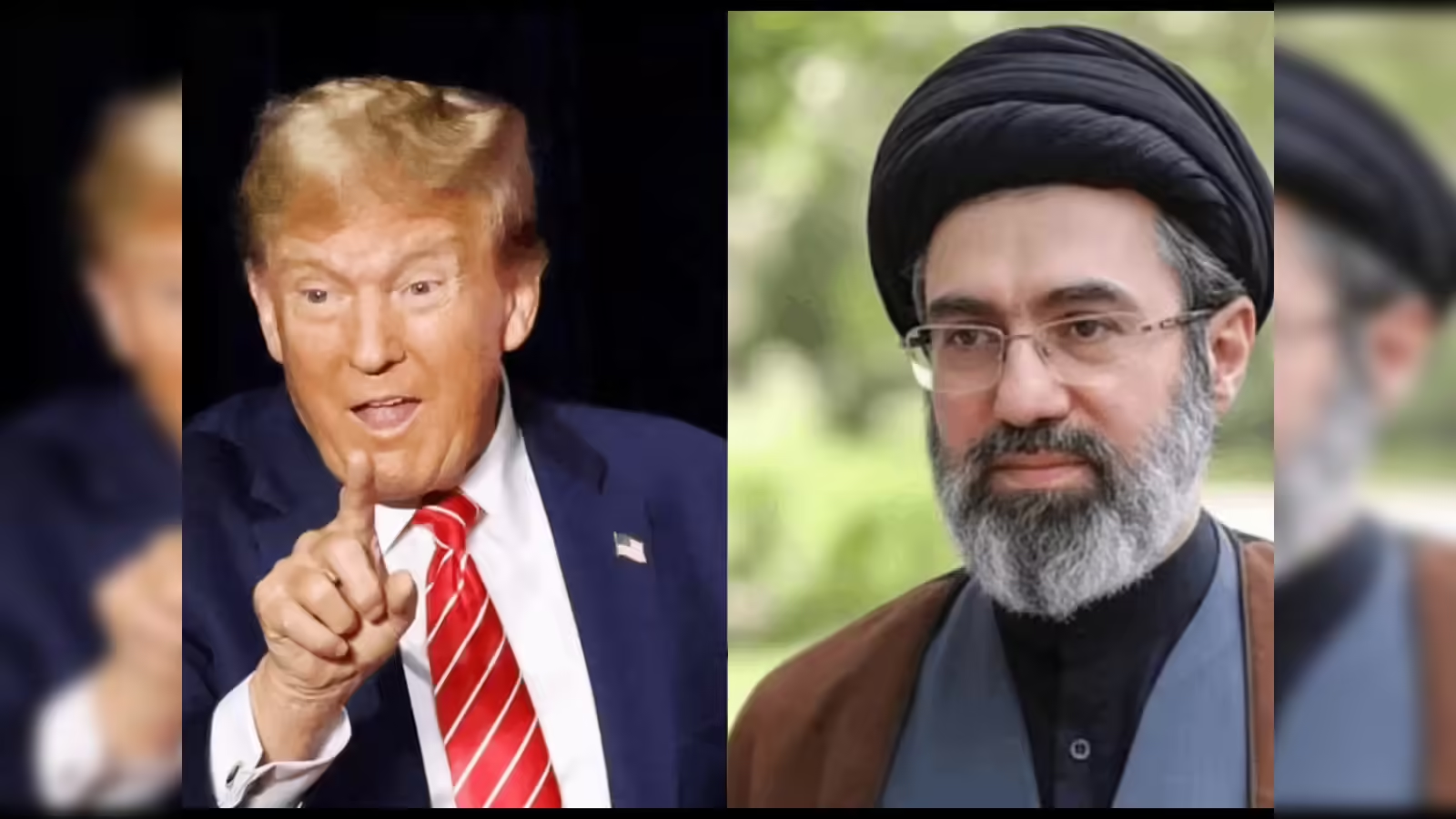

Trump said that the agreement was an effort to get the oil moving in order to prevent a worldwide slump rather than a reflection of his strength.
New Delhi
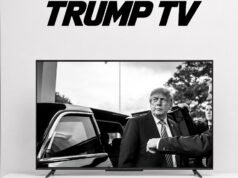
On Thursday, US President Donald Trump denied that the three-month conflict with Iran, which had far-reaching consequences worldwide, had humbled him in any way and stated that he feels there are “no limits” to his ability to exercise power.
In order to prevent the war from developing into a worldwide economic disaster, Trump informed Axios that he had negotiated a memorandum of understanding, the future of which has been called into question when Vice President JD Vance cancelled his trip to Switzerland. The present agreement omits Washington’s crucial demand that Iran stop its nuclear enrichment and relocate the stockpile, despite the fact that Obama entered the war demanding Iran’s unconditional capitulation. Trump responded, “I haven’t learned that lesson yet,” when asked if the conflict had taught him about the boundaries of his authority. I am aware of them, but there are no boundaries.”
Trump reiterated that the MoU indicates a likely “unconditional surrender” and that the US had defeated Iran’s military. “Who else could have carried out such a blockade? I conducted a naval blockade that prevented any ships from passing through. Some made an attempt. It was short-lived,” he said to Axios.
Trump said that the agreement was an effort to get the oil moving in order to prevent a worldwide slump rather than a reflection of his strength. “I can only get more resilient if I stay in there for an additional two or three weeks and keep bombing the living daylights out of them. Correct? What does that gain us, though? There will be no opening of the Strait of Hormuz. It would be months before we had any oil. “This is the kind of thing that could trigger a global depression,” he stated.
Shadow Cast on a Bigger Agreement
Trump and Iranian President Masoud Pezeshkian signed the agreement on Wednesday, initiating a 60-day period for discussions on broader concerns between the two adversaries, including Iran’s nuclear program.
However, Vance’s decision to postpone his trip to Switzerland, where discussions about the next stages in the US-Iran agreement to stop the Middle East war were scheduled for Friday, has aroused concerns.
“As they dial up their good behaviour, we can dial up the economic relief,” Vance has previously stated. “If they dial down their good behaviour, we can turn it off.”
Ayatollah Mojtaba Khamenei, the supreme leader of Iran, expressed concerns about the deal on Thursday. There would be “face-to-face negotiations” with the US in the future, but he clarified that this does not “mean accepting the enemy’s point of view”.
After a three-month blockade, Hormuz opens
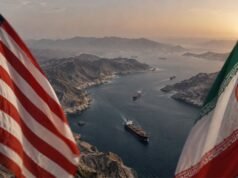
The US Navy stated that American warships “will remain in the general area” after lifting their naval blockade of Iranian ports, which had prohibited ships from travelling to or from the Islamic republic. According to marine trackers, a French ship carrying liquified natural gas and three Saudi oil tankers departed the Gulf through the strait on Thursday.
Vance stated that over 12.5 million barrels of oil passed through the Strait of Hormuz on Wednesday night, despite the fact that big shipowners started to move their boats through the crucial energy chokepoint, according to maritime data provider Lloyd’s List Intelligence, which did not provide any numerical statistics. Lloyd’s List reports that two sanctioned crude oil tankers flying the Iranian flag and owned by the National Iranian Tanker Company had crossed the strait.
Shipping has “normalised” at Iran’s southern ports, according to Iranian official media, but transiting across the crucial waterway still requires cooperation and the strait is still under military supervision. Iran stated that “no fees whatsoever will be collected from applicants for a period of sixty days.” This deal was made in return for Washington’s promise to promptly lift the oil sanctions that were severely harming Iran’s economy.
According to Lloyd’s List, 550 merchant ships will have to leave the Persian Gulf. The two alternate routes—the northern route through Iranian waters and the southern route through Omani waters—do not have the same capacity as the strait’s major passage, and it may take weeks or months for the strait to fully reopen.
The Question of Nuclear Power
Negotiations between the United States and Iran are anticipated in the future. Iran’s nuclear enrichment would probably stop as a result of the final deal, and the US will help release a $300 billion reconstruction fund backed by regional countries.
Iran will ask the UN’s nuclear watchdog agency to inspect its nuclear sites, a senior Trump administration envoy informed US lawmakers in a secret meeting earlier.
Members of Congress were informed by Trump ambassador Steve Witkoff that Iran will extend an invitation to the International Atomic Energy Agency to visit its nuclear facilities and start locating Tehran’s enriched material, which is said to be buried behind debris.
What’s Included in the MoU
Iran “reaffirms that it shall not procure or develop nuclear weapons,” according to the memorandum of agreement signed by Trump and Pezeshkian, but it offers no means of enforcing or verifying this.
According to information made public by both nations, the deal requires Tehran to reduce its reserves of highly enriched uranium and lifts US-backed sanctions on the nation, immediately enabling Iran to sell its oil freely in a significant concession from Washington.
In addition, it calls for the removal of a US naval blockade of Iran’s ports, the creation of a $300 billion reconstruction fund for Iran, and sanctions waivers that permit Tehran to export oil.
Missiles, proxies, and the navy—which has been virtually devastated by US strikes—are not included in the document.