
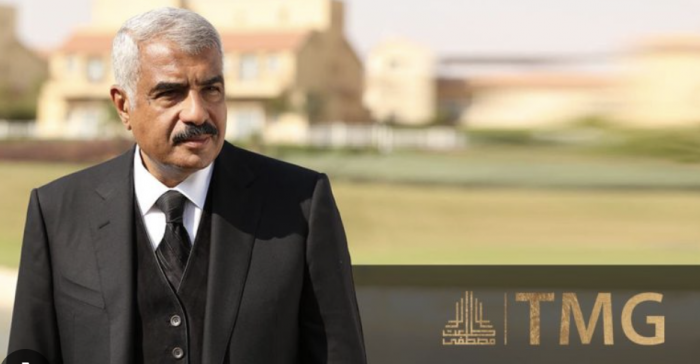


Hesham Talaat Moustafa approaches tourism from the scale of a city builder. Hotels are important to TMG Holding, but they sit alongside homes, commercial districts, golf, marinas, retail and infrastructure. That integrated model has made him one of Egypt’s most influential developers and an increasingly significant tourism investor across the region.
Moustafa joined the family business in the 1980s. The group had begun as a construction company in the early 1970s and expanded under his leadership into large masterplanned communities, including Al Rehab and Madinaty. He became chief executive and managing director in 2017 and has since accelerated both geographic expansion and hospitality investment.
TMG’s hospitality arm now holds 11 operating hotels with more than 3,500 keys, managed through partnerships with brands including Four Seasons, Kempinski, Marriott and Steigenberger. The portfolio includes landmark properties such as Four Seasons Hotel Cairo at Nile Plaza, Four Seasons Alexandria at San Stefano and Four Seasons Resort Sharm El Sheikh. A major Four Seasons project next to the Grand Egyptian Museum is planned for 2028, helping take the pipeline towards 5,000 keys.
The 2023 acquisition of a controlling interest in a company holding seven historic Egyptian hotels significantly widened the platform. The assets included Cairo’s Marriott Mena House, the Sofitel Winter Palace in Luxor, the Old Cataract in Aswan and the Cecil in Alexandria. For TMG, the transaction added irreplaceable heritage properties and exposure to several of Egypt’s core tourism circuits.
Those hotels also impose a stewardship duty that differs from greenfield development. Their value lies in memory, architecture and place as much as room revenue. Moustafa must invest in kitchens, systems, rooms and staff without sanding away the identity that makes the assets irreplaceable. Managed well, the portfolio can connect Cairo, Alexandria, Luxor and Aswan into a national heritage circuit. Managed poorly, it could turn singular hotels into interchangeable luxury inventory.
The strategy extends beyond hotels. SouthMED, a 23-million-square-metre development on Egypt’s Mediterranean coast, is planned as an integrated destination with residences, hotels, a marina, retail, dining and golf. TMG has projected $21 billion in investment and around $35 billion in sales. The project is intended to help turn the north coast from a highly seasonal domestic market into an international tourism destination.
Moustafa is also leading TMG into Saudi Arabia, Oman and Iraq. The expansion reflects confidence that the group’s city-building model can travel, but it creates significant execution risk. Large developments require patient capital, infrastructure and demand across economic cycles. They can generate tourism ecosystems, yet they can also produce supply long before a destination is ready to absorb it.
His career includes a major and material interruption. Moustafa was convicted in Egypt in 2009 in connection with the killing of Lebanese singer Suzanne Tamim. Following a retrial, he received a 15-year sentence and was released in 2017 after a presidential pardon. He has maintained his innocence. The case remains part of the public record and is inseparable from a complete account of his career.
Since returning to leadership, he has rebuilt TMG’s reach at remarkable speed. The group’s hospitality revenue reached about $152.5 million in the first half of 2026, according to Forbes, while large new projects have deepened its role in Egypt’s visitor economy. Supporters point to job creation, foreign-currency earnings and the preservation and upgrading of hotel assets. Critics raise questions about concentration, state-linked transactions and the economics of mega-development.
Moustafa’s tourism influence therefore deserves both recognition and scrutiny. He has helped bring international hotel brands to Egypt, created resort capacity and assembled a heritage portfolio that few private developers could replicate. He is also making bets on destination scale that will take decades to judge.
The core of his approach is clear: tourism performs best when hotels are embedded in complete places. Whether in Sharm El Sheikh, beside the Grand Egyptian Museum or on the Mediterranean coast, TMG is trying to own and shape more of that place. The result is a business model with exceptional reach and equally substantial responsibility.