
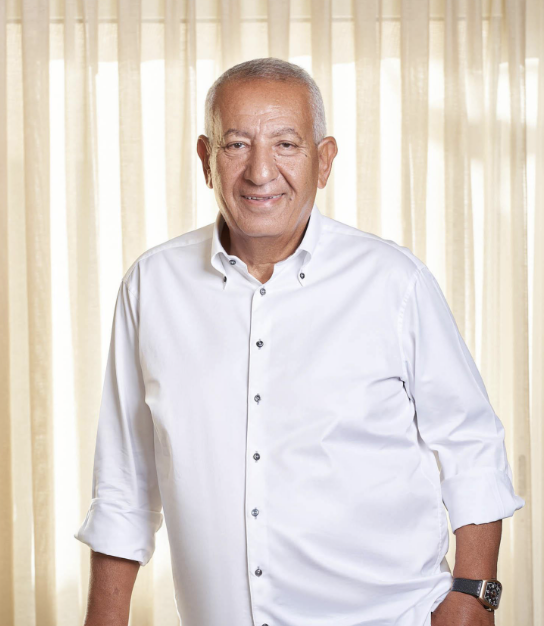


The origin story of Pickalbatros Hotels and Resorts is unusually personal. Kamel Abou Aly has recounted how an unsatisfactory stay in Hurghada convinced him that Egypt’s growing Red Sea market needed better organised resorts. In 1992, he founded the company and began developing the Beach Albatros concept.
Born in Port Said in 1954, Abou Aly spent part of his early career in Switzerland before returning to Egypt. His background included sport and ice hockey, experiences that helped shape his interest in recreation-led resorts and large-scale leisure facilities. Pickalbatros grew by understanding the practical requirements of family and package travel: extensive pools, entertainment, food choice, beach access and reliable service.
The founder’s decision to build Beach Albatros in Hurghada was made when the Red Sea’s resort economy was still taking shape. He used the operational discipline encountered in Switzerland and his sporting background to create properties organised around activity rather than accommodation alone. Waterparks, family zones and entertainment became part of the group’s repeatable formula, helping it develop strong relationships with European tour operators seeking dependable high-volume product.
Abou Aly has also remained unusually visible in the business. Founder oversight can accelerate decisions and preserve a clear service philosophy, but a portfolio of 45 properties cannot be managed through personal intervention alone. Pickalbatros’s next institutional challenge is to formalise leadership, systems and succession so that the founder’s standards survive across countries, new segments and future generations.
By September 2026, the group operated 45 properties in Egypt and Morocco with more than 20,000 rooms. The scale places it among the region’s largest founder-led hotel businesses. Its main clusters in Hurghada, Sharm El Sheikh and Marsa Alam have given the company deep operational knowledge of Red Sea tourism and the European distribution channels that support it.
The portfolio continued to expand in 2025 with Albatros Makadi in Egypt and Palais des Roses and SunGo Club in Morocco. The 2026 pipeline included Palmeraie Golf Palace in Marrakech, Royal Paradise in Sharm El Sheikh and a Cairo hotel and spa in the former Le Meridien Heliopolis.
These projects reveal two strategic shifts. The first is geographic diversification into Morocco, where Marrakech and Agadir offer year-round international demand, golf, meetings and a different airlift profile from the Red Sea. The second is product diversification. A Cairo city hotel and golf-led luxury properties extend Pickalbatros beyond the all-inclusive beach model on which it built its reputation.
Abou Aly’s operating formula remains important. Large resorts can deliver strong economies of scale, but they are complex businesses with extensive food and beverage, water, energy and staffing requirements. Value perception depends on a consistent experience across thousands of guests each week. The group’s longevity suggests an ability to manage that complexity and maintain tour-operator relationships through repeated market disruptions.
Egyptian tourism has faced revolution, security incidents, source-market restrictions, currency shocks and the pandemic during Pickalbatros’s development. Founder-led control allowed the group to take a long view when demand fell, although it also concentrates strategic decisions around one individual and raises the question of future succession.
The company’s Moroccan expansion is therefore more than a search for rooms. It is a test of whether a formula refined in Egyptian resorts can adapt to another country’s workforce, culture, regulations and distribution. The hotels must feel Moroccan rather than exported.
The founder’s formula also depends on distribution discipline. Large leisure resorts need volume, and empty rooms cannot be stored for another week. Pickalbatros has used long relationships with European tour operators while increasing direct and regional demand. In Morocco, Abou Aly must decide how much of that distribution model can be transferred and where the group needs new partners, airlift and positioning for golf, meetings and higher-end leisure.
Abou Aly’s achievement is to have built regional scale from a guest’s frustration and an operator’s response. Pickalbatros succeeds when it turns complicated resort machinery into an easy holiday. As the group moves into new markets and segments, preserving that clarity will be the founder’s most important legacy.