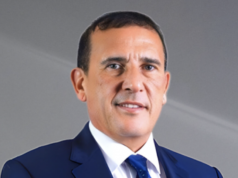

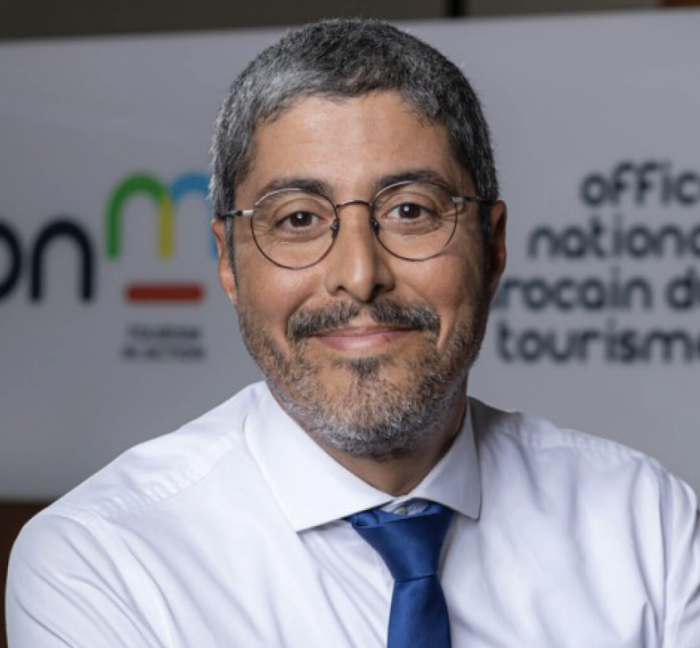


Adel El Fakir has experienced destination growth from both sides of the terminal. As chief executive of the Moroccan National Tourism Office, he was responsible for persuading travellers and airlines to choose Morocco. Since becoming director general of Airports of Morocco in June 2024, he has been responsible for what happens when that demand arrives.
The career transition is strategically significant. Marketing can accelerate visitor numbers faster than infrastructure can absorb them. By moving a destination marketer into airport leadership, Morocco placed someone familiar with source markets, airline partnerships and visitor expectations in charge of a national network facing rapid growth.
El Fakir combines business education with consumer-marketing experience. He holds a master’s degree from ISCAE, postgraduate marketing training from Toulouse and an MBA from Ecole des Ponts. Before tourism, he held leadership roles connected to SNRT’s advertising operations, Atlas Bottling and Coca-Cola, where he worked in regional marketing across North and Equatorial Africa.
Those consumer roles taught him to build demand through distribution as well as communication. When he moved to the Moroccan National Tourism Office, he applied the same principle to airline relationships, tour-operator capacity and digital conversion. The Morocco Kingdom of Light campaign was the public expression of a wider commercial effort to make the destination easier to sell in priority markets.
His move to Airports of Morocco completed an unusual journey from brand promise to physical delivery. Few airport leaders have previously been responsible for national destination marketing. El Fakir can therefore evaluate passenger growth not as an abstract forecast but as the consequence of specific campaigns, routes and source markets. That perspective should help Airports 2030 align terminal investment with the traffic Morocco is actually seeking, including higher-value leisure, diaspora travel, business events and the exceptional demand expected around the World Cup.
At the tourism office, that background informed the international campaign Morocco Kingdom of Light, which positioned the country through culture, landscapes and contemporary creativity. It also supported closer work with airlines and trade partners as Morocco rebuilt demand after the pandemic.
At Airports of Morocco, the metrics are operational. The country’s airports handled 36.3 million passengers in 2025. During the first seven months of 2026, traffic reached 22.28 million, an increase of 8.77 per cent, with international traffic rising to 19.9 million.
Growth on that scale puts pressure on terminals, baggage systems, border processing, ground access and airfield capacity. It also raises the standard travellers expect. An airport is part of the destination brand, and poor queues or inconsistent service can undo some of the value created by an international campaign.
El Fakir’s mandate sits within Morocco’s Airports 2030 transformation, linked to tourism expansion and preparations to co-host the 2030 FIFA World Cup. The programme requires major capacity and modernisation work across key gateways, along with stronger digital systems and commercial services. Success will depend on sequencing construction while airports continue operating.
His marketing background can add value in route development. Airlines need evidence of demand, but they also need confidence that airport capacity, incentives and destination promotion will support a new service. El Fakir understands how those elements work together because he previously sat on the demand-generation side of the negotiation.
There is a broader regional dimension. Morocco wants tourism benefits to extend beyond Marrakech, Casablanca and Agadir. Improved regional airports can support cultural cities, coastal areas and emerging destinations, but routes must be commercially sustainable. Infrastructure alone does not create traffic.
El Fakir’s career embodies the next step in Moroccan tourism strategy. The country has become highly effective at attracting attention and visitors. It must now ensure that its gateways can handle growth with efficiency and warmth. The leader who once promised travellers a Kingdom of Light is now responsible for making their first and last physical impressions match that promise.