
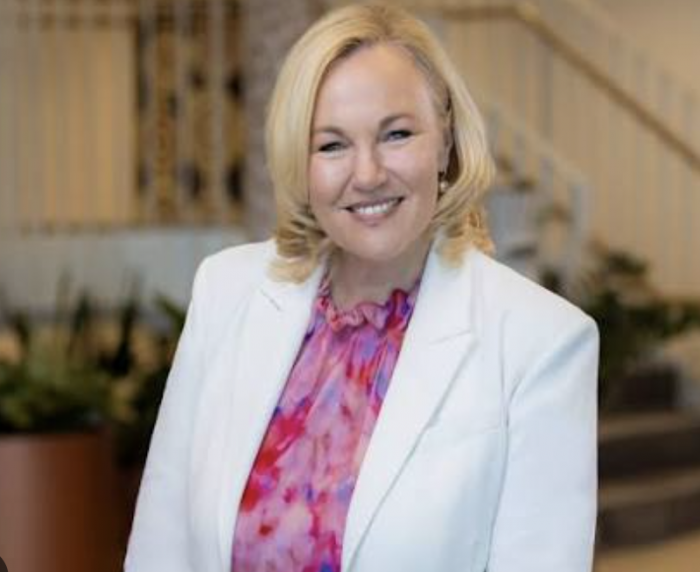


Phillipa Harrison became chief executive of Ras Al Khaimah Tourism Development Authority in September 2025, moving from a national tourism organisation to one of the world’s most closely watched emerging destinations. Her appointment placed an experienced international marketer in charge just as the emirate entered a major hotel and attraction cycle.
Harrison spent eight years at Tourism Australia and served as managing director from 2019. Her tenure included bushfires, border closures and the long rebuilding of international aviation after the pandemic. She also brought earlier commercial and marketing experience from the travel sector, giving her an understanding of both destination promotion and the businesses expected to convert demand.
Before becoming managing director, Harrison led Tourism Australia’s international division, overseeing teams and partnerships across major source markets. She had also held senior roles with Hamilton Island and in travel distribution. That combination gave her experience of the entire demand chain: national brand marketing, airline and trade conversion, and the commercial realities faced by an individual destination and its operators.
Her Australian tenure was defined by crisis as much as growth. The 2019 to 2020 bushfires required careful communication between global headlines and the reality on the ground. The pandemic then closed the country’s borders and forced the organisation to rebuild domestic demand before restarting international markets and air capacity. Ras Al Khaimah is a different scale, but the lessons around evidence, market prioritisation and reputation management are directly transferable.
Ras Al Khaimah offers a concentrated version of many national tourism challenges. It must build awareness, secure airline access, attract hotel investment, develop experiences and protect natural assets, all with a relatively small resident population and in competition with better-known neighbours.
The emirate received more than 670,000 visitors in the first half of 2026, its strongest first-half performance. Domestic visitation rose 47 per cent despite a challenging regional environment. The authority is targeting 3.5 million annual visitors by 2030 and expects hotel supply to roughly double.
The pipeline will change the destination’s profile. Wynn Al Marjan Island is expected to become the region’s first integrated resort with licensed gaming. Four Seasons, Janu, Fairmont, Nobu and Nikki Beach are among the brands preparing projects. Together they can raise rates, attract new source markets and create employment, but they also risk allowing individual resorts to overshadow the destination around them.
Harrison’s experience at Tourism Australia is relevant because Australia markets nature, food, indigenous culture and cities as parts of one varied national story. Ras Al Khaimah similarly needs to connect Al Marjan Island’s resorts with Jebel Jais, desert landscapes, heritage, adventure and local communities. The goal is not merely to fill rooms, but to encourage visitors to explore and stay longer.
Air access and distribution remain central. The emirate benefits from proximity to Dubai, but direct services and stronger trade partnerships can reduce dependence on road transfers. Harrison’s international relationships and knowledge of long-haul markets should help RAKTDA assess where airlift, campaigns and hotel openings can reinforce one another.
Growth will bring pressure on water, energy, coastlines and workforce capacity. The authority has promoted balanced tourism and sustainability, but the next phase will test those commitments at far greater scale. Residents must experience benefits through jobs, business opportunities and improved public realm if the expansion is to retain local support.
Harrison’s appointment signals confidence that Ras Al Khaimah is ready to move from emerging destination to established international contender. Her most important task is to make that transition coherent. The emirate’s strength lies in contrast: mountain and sea, adventure and relaxation, access and relative calm. Protecting that contrast while absorbing a wave of investment will define her leadership.