


From meteor showers to the Milky Way, more travellers are venturing into regional Queensland in search of unforgettable night sky experiences with a 100% increase for the word ‘astrotourism’.
New research by LifeFlight Lotteries has ranked the state’s best stargazing destinations, highlighting where visitors can enjoy spectacular views while reminding adventurers to prepare before heading off the beaten track.
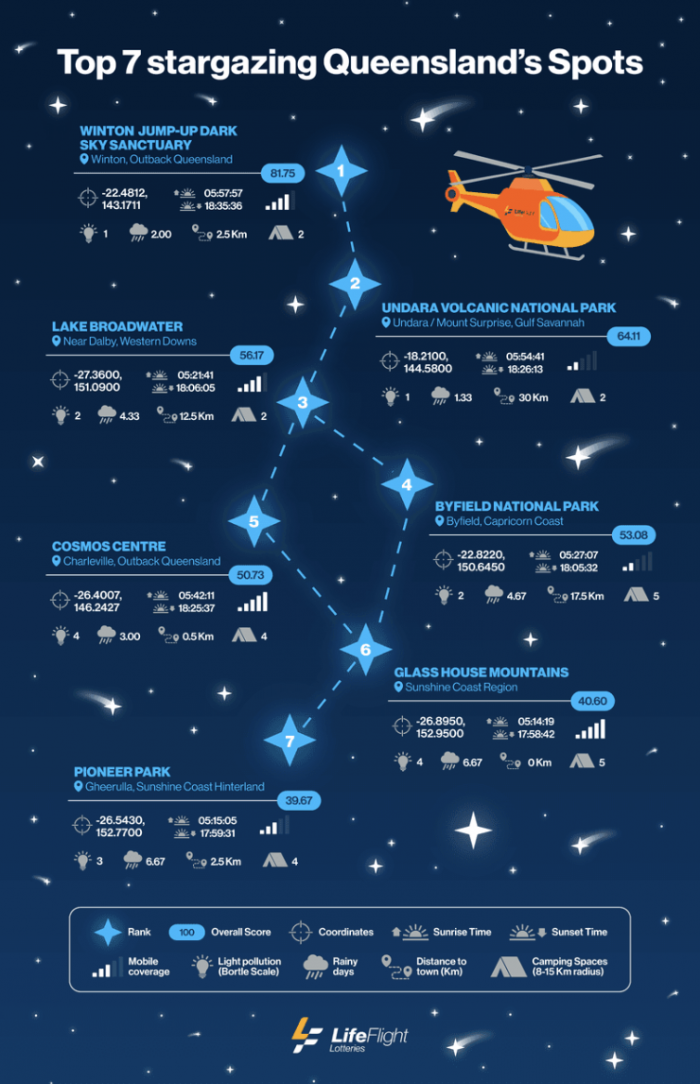
The ranking assessed Queensland’s leading stargazing locations using publicly available data, including light pollution, average spring rainfall, accessibility, mobile coverage and nearby camping opportunities.
Whether you’re an experienced astronomer, a keen camper, or simply looking for your next weekend escape, these destinations combine breathtaking night skies with memorable outdoor experiences. Below is a closer look at Queensland’s highest-ranked stargazing locations.
The Top 7 Places to Go Stargazing in Queensland
1. Winton Jump-Up Dark Sky Sanctuary, Outback Queensland (Overall Score: 81.75 / 100)
Queensland’s premier Dark Sky Sanctuary, Winton secured first place in the rankings. Famous for both its dinosaur heritage and spectacular night skies, the sanctuary earned a Bortle Scale rating of 1 and experiences an average of just two rainy days during spring.
2. Undara Volcanic National Park, Gulf Savannah (Overall Score: 64.11 / 100)
Claiming the second spot is Undara Volcanic National Park, which combines some of Queensland’s darkest skies with one of the world’s longest lava tube systems. Formed almost 190,000 years ago, the park offers a unique backdrop for stargazing, while thousands of microbats emerge from the caves at dusk before the stars take centre stage.
With a Bortle Scale rating of 1, the darkest classification possible, just 1.33 average rainy days during spring and a location 30 kilometres from the nearest town, Undara provides ideal conditions for stargazers looking to escape light pollution.
3. Lake Broadwater, Western Downs (Overall Score: 56.17 / 100)
Taking third place is Lake Broadwater, the Western Downs’ only naturally occurring freshwater lake. Popular with campers and birdwatchers, the destination combines a Bortle Scale rating of 2, strong mobile coverage and easy access from nearby Dalby, making it an ideal weekend stargazing escape.
4. Byfield National Park, Capricorn Coast (Overall Score: 53.08 / 100)
Fourth place went to Byfield National Park, where rainforest, towering sand dunes and secluded beaches create a spectacular setting for an overnight camping trip. The park received a Bortle Scale rating of 2 and sits just 17.5 kilometres from the nearest town, making it one of Queensland’s most accessible dark-sky destinations.
5. Cosmos Centre, Charleville (Overall Score: 50.73 / 100)
Fifth place went to Charleville’s Cosmos Centre, one of Australia’s best-known astronomy destinations. Located just 500 metres from town, the centre offers guided stargazing experiences beneath the Outback’s expansive night skies, supported by relatively dry spring conditions and a Bortle Scale rating of 4.
6. Glass House Mountains, Sunshine Coast Region (Overall Score: 40.60 / 100)
Glass House Mountains sits in sixth place, where dramatic volcanic peaks provide a striking foreground for astrophotography and night sky viewing. While closer to populated areas than many other destinations, the region’s excellent accessibility, strong mobile coverage and abundance of camping options make it an ideal introduction to astro-tourism.
7. Pioneer Park, Gheerulla (Overall Score: 39.67 / 100)
Nestled in the Sunshine Coast Hinterland, Pioneer Park claimed seventh place thanks to its combination of accessible camping, nearby walking trails and darker skies. With a Bortle Scale rating of 3, it’s a popular option for South East Queenslanders looking for a nature escape close to home.
LifeFlight’s Top Tips for Safe Stargazing
Many of Queensland’s best stargazing destinations are in regional and remote areas, where a little preparation can make all the difference. Before heading off in search of dark skies, LifeFlight Australia is encouraging travellers to take a few simple steps to help ensure a safe and enjoyable adventure.
Plan ahead: Research your destination, check road conditions and let a family member or friend know your travel plans and expected return time.
Keep an eye on the weather: Clear skies make for the best stargazing, but conditions can change quickly. Check the forecast before you leave and be prepared to adjust your plans if needed.
Pack for the conditions: Carry plenty of drinking water, food, warm clothing, a first aid kit and a reliable torch or headlamp, as temperatures can drop significantly after sunset.
Prepare for limited reception: Mobile coverage can be unreliable in remote areas, so download offline maps before you leave and consider carrying a personal locator beacon (PLB) or satellite communication device if travelling beyond coverage.
Drive with extra caution after dark: Wildlife is often more active on regional roads at night. Reduce your speed, stay alert and, where possible, arrive at your destination before sunset to set up camp safely.
Camp responsibly: Choose designated camping areas where available, familiarise yourself with your surroundings before nightfall and help preserve Queensland’s dark skies by leaving no trace and keeping artificial lighting to a minimum.