

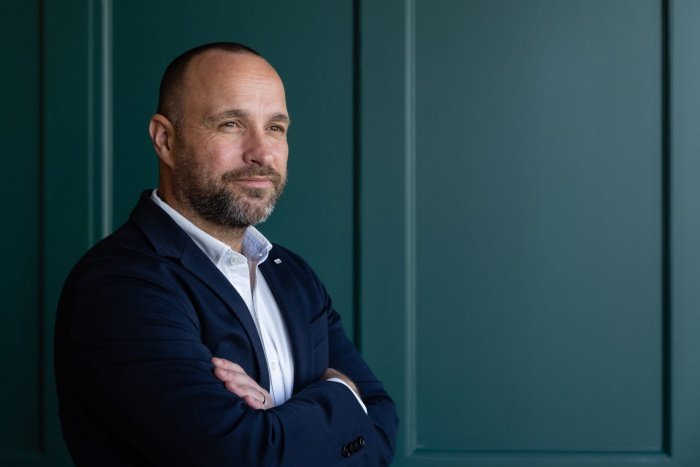


Simon Leigh leads Premier Inn Middle East at a moment when the region’s hotel conversation is broadening beyond luxury. The company has outlined investment of about $545 million to add six to eight hotels and roughly 3,500 rooms across the UAE and Saudi Arabia, effectively doubling its inventory. Leigh’s task is to make that expansion feel disciplined rather than opportunistic, preserving the simple promise on which the brand depends.
He brings more than 25 years of hospitality, procurement and supply-chain experience across the United Kingdom, United States, Europe and Asia. Before his Middle East appointment in 2021, Leigh held senior responsibilities at Premier Inn parent Whitbread, including global supply-chain leadership, and worked through IQ Consulting. That background is unusually relevant to a value-led hotel business, where consistency and cost control are central to the guest proposition.
Premier Inn succeeds by removing uncertainty. Guests expect a comfortable bed, clean room, friendly service, practical location and fair price. None of those elements is glamorous, but each must be delivered reliably across the network. Leigh’s supply-chain experience helps connect that promise to procurement, specifications, maintenance and the economics of scale.
The Middle East opportunity is substantial. Expanding airports, major projects, domestic travel and a larger events calendar generate demand from families, contractors, small businesses and short-stay visitors who do not always need a resort or five-star city hotel. Saudi Arabia in particular requires far more internationally standardized mid-market supply as tourism spreads beyond established gateways.
Leigh has also emphasized direct booking. A strong direct relationship lowers distribution costs and gives the company better insight into its customers, but it must earn that behaviour through clear value, useful digital tools and trust. For a brand positioned on affordability, avoiding hidden friction is part of the product. The booking path should be as dependable as the room.
Rapid growth will test that consistency. Saudi and UAE markets have different labour, development and demand dynamics. New locations must be selected for durable need rather than short-lived project traffic. Teams need training and career paths, while owner and investor expectations must remain aligned with a focused-service model. Adding unnecessary complexity would undermine the operational advantage.
Leigh’s contribution is to champion the practical centre of the hotel market. Destinations are not competitive only because they have iconic resorts; they also need reliable accommodation that lets more people participate in travel. If Premier Inn can double its regional presence while maintaining quality and price credibility, Leigh will have helped build essential capacity beneath the Middle East’s tourism ambitions. That is not a supporting role. It is a foundation.
Development cost is the central equation. A value hotel can become uneconomic if land, construction or specification drifts upward, because rates cannot always rise enough to compensate. Leigh’s procurement and supply-chain background allows him to challenge design choices through the lens of total cost and guest relevance. Repetition can lower expense, but the prototype still needs to respond to local climate, family patterns and regulatory requirements.
Saudi expansion will also test brand awareness. Premier Inn is familiar to many British travellers and established in the UAE, but new Saudi locations require locally relevant marketing and partnerships. Leigh must build trust among domestic travellers who may have different expectations around room configurations, food and communal space. The strongest version of consistency is not rigid uniformity. It is a reliable outcome delivered through a format intelligent enough to fit the market.