
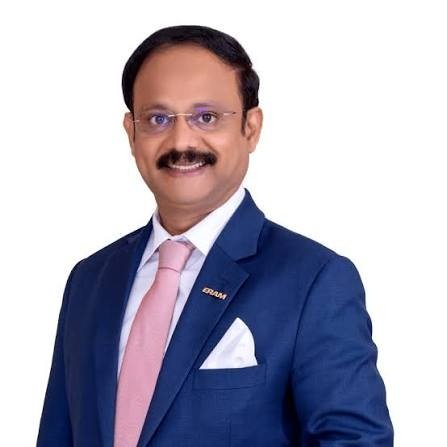


Siddeek Ahmed is chairman and managing director of ITL World, a travel-management company operating across corporate travel, leisure, meetings and related services. His leadership sits within the wider Eram Holdings group, a diversified business with interests across dozens of verticals. That entrepreneurial ecosystem has given ITL access to networks, capital and operating experience beyond travel alone.
Ahmed has led ITL World since 2006, building on a business history connected with India and the Gulf. The company has grown in markets where corporate clients require much more than ticketing. Travel management now includes policy compliance, data, traveller security, payments, negotiated content, round-the-clock service and the integration of meetings and leisure.
His challenge has been to modernize without losing the relationship-based service that built the company. Global travel-management giants possess immense technology and supplier leverage. Online platforms make simple bookings easy. ITL must therefore create value in complexity: multi-country programmes, disruptions, executive travel, marine or project movements, religious journeys and clients who need local accountability.
Ahmed’s broader leadership of Eram influences that proposition. Exposure to sectors beyond tourism provides insight into the actual needs of corporate travellers and procurement teams. It also supports a culture of diversification, though the risk is diffusion. ITL’s competitive standing depends on sustained specialist investment rather than simply belonging to a large group.
Technology is central but not sufficient. A useful platform should give travel managers visibility over spend and risk while making the traveller’s experience simpler. During disruption, automation must hand over intelligently to people with authority to solve problems. Ahmed’s task is to combine digital convenience with a service organization that remains reachable and decisive.
The Gulf’s changing business geography creates opportunity. Saudi expansion, regional headquarters, construction, energy and events all generate complex travel demand. At the same time, sustainability reporting and duty of care are becoming more important to corporate buyers. ITL can differentiate itself by helping clients understand emissions, choose responsibly and protect employees across journeys.
Ahmed’s contribution is the creation of a regional travel business able to bridge local knowledge and international requirements. He has sustained ITL through technological disruption, airline changes and repeated shocks to travel. Its next phase will depend on whether it can turn data and human service into a seamless proposition. His entrepreneurial record suggests a leader accustomed to adaptation, but the travel-management market will continue to demand focus.
The pandemic exposed the value of professional travel management when borders, testing rules and cancellations changed rapidly. Companies needed accurate information, traveller location and the authority to rebook at scale. Ahmed can convert that crisis-earned relevance into a permanent duty-of-care proposition, integrating alerts, approvals and assistance rather than competing only on transaction fees. That makes ITL harder to replace with a consumer website.
Succession and governance will matter as the wider group grows. Founder-led energy creates speed, but corporate clients expect continuity independent of one relationship. Ahmed’s next institutional task is to deepen the management bench and document the service culture that distinguishes ITL. A travel company becomes truly valuable when its responsiveness survives scale, geographic expansion and generational change. Building that resilience may be as important as winning the next large account.