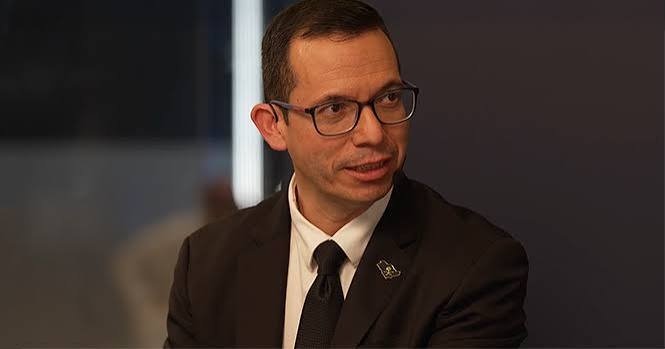

Marco Mejia has served as acting chief executive of King Salman International Airport Development Company since 2021, placing him at the centre of a project intended to transform Riyadh’s connectivity and urban future. The planned airport is not merely a replacement terminal. It is conceived as a vast aviation, logistics and commercial platform supporting the capital’s growth and Saudi Arabia’s wider economic diversification.
Mejia brings more than 25 years of experience in infrastructure-intensive sectors. That phrase is important because the challenge is one of systems integration. Runways, terminals, roads, rail, utilities, air traffic control, baggage, security, cargo, real estate and digital infrastructure must be designed to function together over decades. The success of any iconic architectural element depends on the less visible network around it.
The project reached important implementation milestones in 2026, including progress on a third runway and the appointment of international architecture, engineering, construction and air-traffic partners. Mejia also oversaw the unveiling of the airport’s brand, an early expression of how the gateway intends to represent Riyadh. These steps move the organization from vision towards a sequence of accountable programmes.
Scale creates both opportunity and risk. A new airport can unlock capacity, improve passenger experience and shape development around the city. It can also suffer from scope expansion, interface failures and a mismatch between infrastructure and airline demand. Mejia’s leadership must preserve flexibility while holding partners to common technical standards, timelines and commercial assumptions.
The relationship with airlines is fundamental. Saudi Arabia’s aviation strategy includes ambitious growth by national carriers and a desire to connect Riyadh more directly with the world. The airport must support efficient hub operations, short connection times and reliable baggage performance, while remaining intuitive for origin and destination passengers. Those operating requirements need to influence design before concrete makes them expensive to change.
Sustainability will also be judged at city scale. Efficient buildings and ground operations matter, but so do surface access, land use, water, energy and the emissions implications of induced aviation growth. Mejia has the chance to embed performance targets at the masterplanning stage, when they can shape systems rather than decorate them.
His most important contribution may be governance. Megaprojects succeed when decision rights are clear, interfaces are managed and information reaches leaders early enough to act. Mejia is building the client organization capable of coordinating that complexity. King Salman International Airport will eventually be measured by journeys completed, not renderings admired. The discipline established under his leadership now will determine whether Riyadh receives a coherent gateway or simply a very large one.
Phasing will be critical. Demand forecasts will evolve as Riyadh Air develops, existing carriers adjust and the city grows. Mejia needs infrastructure modules that can open in useful increments, creating capacity without leaving vast underused facilities or forcing passengers through permanent construction. A credible transition plan from King Khalid International is as important as the end-state masterplan, because operations cannot pause while the future airport is assembled.
The project also offers a chance to shape an airport city rather than allow speculative development to gather around it. Logistics, hospitality, offices and services should reinforce aviation and connect efficiently with metropolitan planning. Mejia must coordinate with transport and city authorities whose decisions sit beyond his direct control. That ability to align institutions may prove more consequential than any single procurement package under his authority.