
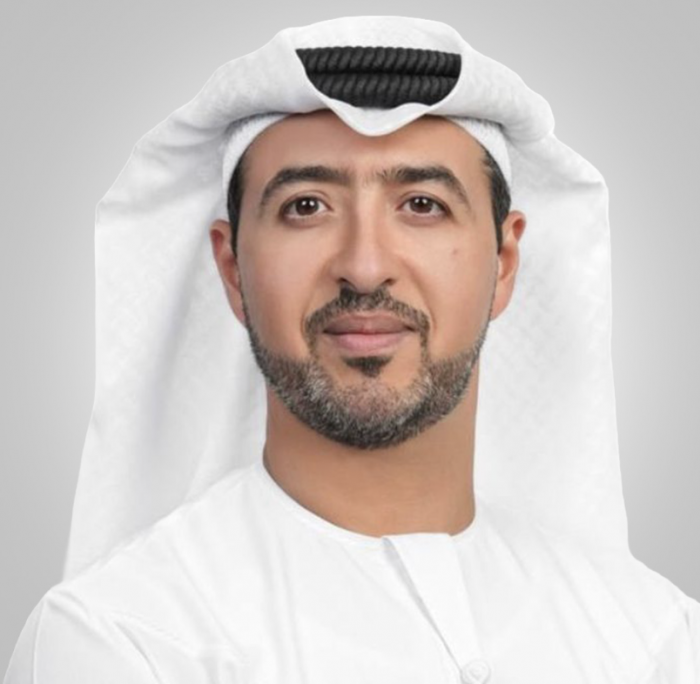


Abu Dhabi Aviation Group operates in parts of the aviation industry that most passengers rarely see. Helicopter and fixed-wing operations, maintenance, repair and overhaul, defence support, training and specialist services form an industrial platform behind transport, energy and national capability. Mahmood Al Hameli became group chief executive in March 2026.
Al Hameli brought more than 25 years of leadership experience across public and private organisations in Abu Dhabi. Before taking the group role, he served as chief executive of Global Aerospace Logistics and led its transformation following acquisition by ADQ and Abu Dhabi Aviation. The programme stabilised the business, strengthened leadership and produced its strongest operational and financial performance in 2024.
His earlier roles were centred on people and industrial capability rather than airline operations. As chief human capital officer at ADQ and a leader at SENAAT and Emirates Steel, he worked on organisation design, national talent and transformation inside large asset-heavy businesses. Aerospace presents the same fundamental challenge at a higher level of technical and safety complexity: growth is impossible without a workforce whose certifications and experience take years to build.
At GAL, Al Hameli demonstrated how he approaches integration. The priorities were not limited to cost removal. He rebuilt the leadership team, standardised processes and established a culture of continuous improvement after the acquisition. That record provides the template for Abu Dhabi Aviation Group, where the financial case for consolidation depends on stronger operational performance rather than a new corporate structure alone.
Earlier in his career, Al Hameli was chief human capital officer at ADQ and held leadership roles at SENAAT and Emirates Steel. Those positions gave him experience in workforce strategy and industrial transformation, both highly relevant to an aviation group dependent on specialist technical talent.
The scale of the platform is substantial. Forbes Middle East reported revenue of $1.3 billion and assets worth $4.4 billion for the first half of 2026. The group includes capabilities in aircraft operations and MRO, creating potential synergies across fleets, engineering, procurement and customer relationships.
Integration is the central challenge. Acquisitions can create scale on paper while leaving systems, cultures and commercial teams fragmented. Al Hameli must convert the group structure into lower costs, stronger bidding capability and clearer accountability without weakening safety or specialist expertise.
The maintenance ecosystem is strategically important to Abu Dhabi. A renewed long-term agreement between Sanad and Etihad Engineering secured approximately 40,000 square metres of facilities for engine work within a major MRO complex beside Zayed International Airport. Partnerships of this kind keep technical value, skilled employment and aviation capability in the emirate.
Emerging mobility creates another opportunity. In March 2025, the group signed an agreement with Archer Aviation to support deployment of Midnight electric vertical take-off and landing aircraft. Commercial eVTOL operations still face certification, infrastructure and public-acceptance hurdles, but Abu Dhabi Aviation brings operating and maintenance experience that technology developers need.
Al Hameli’s qualifications reflect the strategic nature of the role. He holds a degree in computer information systems from American University in Washington and a postgraduate degree in strategic and security studies from the UAE National Defence College.
People remain decisive. Engineers, pilots and technicians take years to develop, while defence and aerospace work demands rigorous security and quality standards. The group’s Al Jeer programme and wider Emiratisation efforts are therefore part of its long-term operating capacity.
The customer mix will determine whether that platform is genuinely resilient. Government and defence contracts can provide scale and long-term visibility, while commercial aviation, energy support and international MRO create different cycles and margins. Al Hameli must diversify without allowing the group to become unfocused, using capabilities that can serve several markets while maintaining the security and governance required for sensitive work.
Al Hameli’s task is to turn a collection of aviation capabilities into one resilient platform. Success would give Abu Dhabi more control over the technology, skills and services on which its aviation economy depends, while building a business able to compete regionally and internationally.