



Hamed El Chiaty’s career began with a deceptively simple proposition: a travel company should control enough of the visitor journey to deliver consistent service. Since founding Travco Travel Company of Egypt in 1979, he has pursued that idea across almost every layer of tourism.
The result is one of the region’s most extensive privately built travel groups. Forbes Middle East reported that Travco’s hospitality portfolio encompassed 75 hotels and resorts and 28 cruise ships across Egypt, Tunisia, Zanzibar, the UAE, the Maldives, Morocco and Greece in 2026. The wider group also operates across destination management, transportation, aviation, real estate, engineering, security and retail.
This integration is El Chiaty’s defining contribution. Travco can meet travellers in the source market, move them on the ground, accommodate them in a hotel, place them on a Nile or Red Sea cruise and support the infrastructure behind those experiences. The model creates commercial resilience because weakness in one part of the travel cycle can be offset by strength elsewhere. It also provides direct intelligence about what tour operators, guests and hotel owners need.
El Chiaty built the business during the rise of Egyptian mass tourism, when charter airlift and European tour operators transformed the Red Sea coast. Rather than remain an intermediary, he invested in rooms and experiences. The Jaz Hotel Group became the hospitality engine of the portfolio, developing brands across different price points and resort settings while giving Travco greater influence over the product it sold.
The scale of that decision is clearer in the wider corporate structure. Travco has grown from a specialist agency operating from a Cairo apartment into a group of more than 60 companies with a presence across the Middle East, Europe and Asia. The World Economic Forum records more than 24,000 employees and assets exceeding EGP70 billion. Earlier diversification included a role in Air Arabia Egypt and the acquisition of the German Steigenberger hotel business, moves that gave an Egyptian-founded company unusual reach across aviation, distribution and European hospitality.
El Chiaty’s influence on Egyptian tourism is therefore partly institutional. Travco developed the capacity to negotiate with international tour operators while retaining more of the value chain inside Egypt. That mattered in destinations where overseas distributors historically exercised significant control over prices and demand. The group could use its own hotels, coaches, boats and destination teams to build itineraries at scale, while the hotel division created a recognisable operating standard for guests arriving through several different channels.
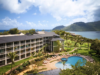
That operating philosophy continues to evolve. In 2025, Travco introduced Grand Odyssey, a seven-night Red Sea cruise concept designed to connect coastal destinations through a single itinerary. In 2026, the group entered Tanzania with JAZ Elite Aurora and prepared to open JAZ Amaluna and JAZ Adonia. The African expansion shows a company using expertise developed in Egypt’s resort markets to pursue comparable sun, sea and nature opportunities elsewhere.
El Chiaty’s impact also reaches beyond corporate growth. In 2006, Egypt’s Ministry of Tourism recognised his pioneering role in developing the country’s North Coast. The honour pointed to a recurring feature of his career: Travco has often moved into destinations before demand, infrastructure and international awareness were fully established.
That willingness to build early brings risk. Tourism in Egypt has repeatedly faced geopolitical shocks, currency volatility, aviation disruption and sharp changes in source-market confidence. A large asset base can become a burden when occupancy falls. Yet Travco’s longevity suggests that diversification, distribution relationships and control of operations can provide a buffer through difficult cycles.
The next question is how a founder-led group institutionalises five decades of knowledge while expanding across borders. Different markets bring different regulations, labour pools and traveller expectations. Brand standards must be strong enough to travel, but flexible enough to reflect place.
El Chiaty’s legacy is already visible in the architecture of Travco. He did not build a hotel company with a travel agency attached. He built a tourism system in which distribution, mobility, accommodation and experiences reinforce one another. As destinations seek more control over the value created by visitors, that integrated model looks increasingly relevant.