
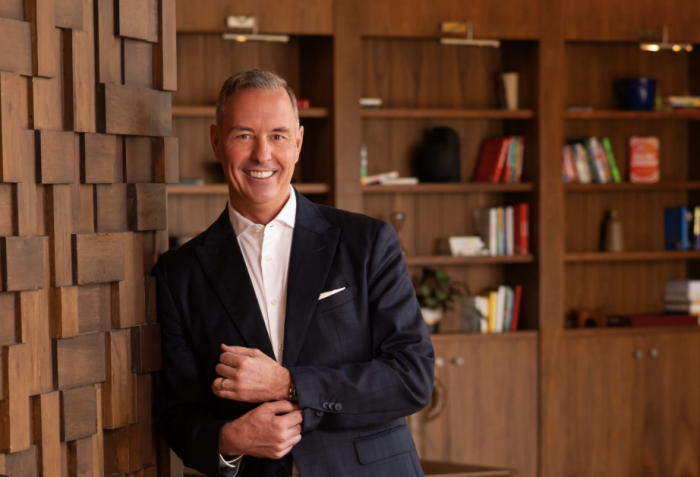


The Chedi name has long been associated with quiet design, generous space and a sense of place. Stephan Schupbach took the helm in 2025 with a mandate to turn that reputation into a stronger development platform and a more coherent global hospitality company.
Schupbach became chief executive in March 2025 and was elevated to president and group chief executive in December. He brought nearly 40 years of luxury hospitality experience across Europe, the United States, the Middle East and Asia, including senior roles with Dogus Tourism Group and Jumeirah.
His career has exposed him to luxury from both the operating-company and investment sides. At Jumeirah, he worked inside a brand associated with landmark service and architecture. At Dogus Tourism Group, he engaged with an owner’s portfolio and the strategic choices behind restaurants, hotels and lifestyle assets. The combination helps him distinguish between ideas that are attractive to guests and those that can support a viable development.
Schupbach joined Chedi while its parent identity was evolving from General Hotel Management into a platform intended to carry the best-known brand more prominently. His appointment was therefore connected to organisational reinvention as well as property growth. He must give developers a clearer understanding of what Chedi can operate, assemble specialist teams and build a pipeline without accepting sites that weaken the brand.
His experience spans both ownership and operations. That distinction matters in luxury development. Operators focus on brand and service, while owners carry capital risk and require returns. Schupbach’s career allows him to speak to both sides of the partnership and to identify where design ambition must be supported by viable operating economics.
Chedi Hospitality has a presence across Switzerland, Germany, Saudi Arabia, the UAE and South Asia, with plans to enter East Asia. In April 2026, it partnered with JIH Global Investments on a boutique hotel and branded residences in the Maldives.
The Maldives project reflects the brand’s natural strengths: design, privacy and a destination where architecture must respond to landscape. It also enters a crowded luxury market where high rates are balanced by complex logistics, environmental pressure and dependence on international air access.
Branded residences form an important part of the growth strategy. They can improve project financing and extend the brand into long-term living, but they demand clear governance and sustained service. Owners remember every maintenance failure and fee increase, making the relationship more exacting than a hotel stay.
Schupbach has also introduced ambassadors from elite sport, including snowboarder Jan Scherrer and padel player Miguel Yanguas. The partnerships connect Chedi with performance, wellbeing and contemporary lifestyle audiences. Their value will depend on whether they shape real experiences rather than function only as endorsements.
The wider repositioning requires discipline. Luxury groups are expanding rapidly, and many promise design, authenticity and wellbeing. Chedi needs a distinctive development proposition for owners and a recognisable experience for guests. Growth cannot come at the cost of the understatement that differentiates the brand.
Schupbach is strengthening the organisation around development, investment and owner relationships. These capabilities are essential if Chedi is to move from a small collection of admired properties to a sustainable international pipeline.
Owner selection will be as important as site selection. Chedi requires partners willing to fund design, service and long-term maintenance at the level the brand promises. Schupbach must also be prepared to refuse projects where the economics demand too many rooms, insufficient staffing or a residential scheme that overwhelms the hotel. In luxury hospitality, disciplined rejection can protect more value than rapid signing.
His leadership is therefore an exercise in controlled expansion. The brand must become more visible without becoming ubiquitous, and more commercially capable without becoming conventional. Schupbach’s experience on both sides of hotel ownership gives him the perspective to manage that tension.