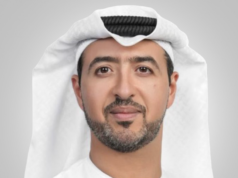

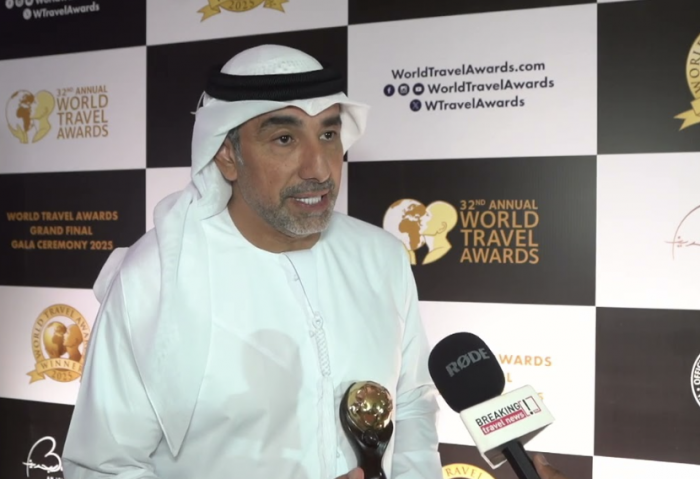


An exhibition venue creates value far beyond its halls. Delegates fill hotels, use airlines and taxis, dine in restaurants and form commercial relationships that can last for years. Mahir Abdulkarim Julfar’s career at Dubai World Trade Centre has been built around making that economic chain work.
Julfar joined DWTC in 2005 and is now executive vice president. His responsibilities cover key commercial and operational functions, including venue management and hospitality services. He has therefore experienced Dubai’s events economy through its rise from a strong regional platform to one of the world’s most active business-event hubs.
Across more than two decades, he has managed the practical services on which an organiser’s confidence depends: venue readiness, exhibitor access, hospitality, contractor coordination and the movement of very large crowds. These functions rarely receive the attention given to a show launch, but they determine whether international associations and exhibition owners commit to return dates and expand their events in Dubai.
Julfar’s progression also mirrors DWTC’s evolution. The organisation has moved from running an exhibition complex to developing a business district, operating hospitality and event services and planning a second venue of international scale. He has had to translate accumulated operating knowledge into a larger institutional system, so that performance does not depend on individual relationships or informal fixes when the calendar becomes more demanding.
In 2025, DWTC delivered more than 400 exhibitions and events, welcomed 2.97 million participants and generated an estimated $6.8 billion in economic output. The calendar spans technology, healthcare, food, travel, construction, finance and many other industries, creating year-round demand across the city.
Julfar’s work concerns both scale and service. A large international exhibition can involve thousands of exhibitors, complex freight movements, temporary structures, food production, security and visitors arriving from dozens of countries. The venue must support each organiser while coordinating public agencies and suppliers behind the scenes.
The next phase is Dubai Exhibition Centre at Expo City Dubai. A $2.7 billion expansion will create approximately 180,000 square metres of event space and is intended to become the region’s largest purpose-built indoor exhibitions venue when completed in 2031. The development gives Dubai capacity for events that have outgrown the existing site and supports the wider evolution of Expo City.
Capacity alone will not guarantee success. International organisers compare destinations on air access, hotels, freight, visas, venue costs, digital infrastructure and the quality of the host ecosystem. DWTC must persuade them that Dubai can produce stronger attendance and commercial outcomes than rival cities.
Julfar’s operational experience will be important during the transition between sites. The established city-centre venue benefits from metro access and a dense hotel cluster. Dubai Exhibition Centre offers much greater scale but requires transport, accommodation and surrounding activity to develop with it.
Technology is changing the product too. Digital registration, matchmaking and data can improve the visitor journey and demonstrate return on investment to exhibitors. Yet the fundamental value of an event remains human contact. The venue’s systems should make those meetings easier rather than attempt to replace them.
Julfar also serves on the board of UFI, the global association for the exhibition industry. That role connects Dubai with international standards and gives him insight into organiser expectations and competitive trends.
The economic-output figure also brings responsibility. DWTC must be able to demonstrate how delegate spending, trade and business formation justify continued public and private investment. Julfar’s operational data can strengthen that case by connecting attendance with hotel nights, international participation and organiser growth. More precise evidence will help Dubai compete for events whose owners increasingly demand both commercial results and measurable destination support.
His contribution is the professionalisation of events as economic infrastructure. DWTC is not simply renting space. It is creating temporary marketplaces that move people, capital and ideas through Dubai. As the city commits to a much larger venue, Julfar’s challenge is to preserve the operational quality that made the existing platform successful while building for a different order of scale.