

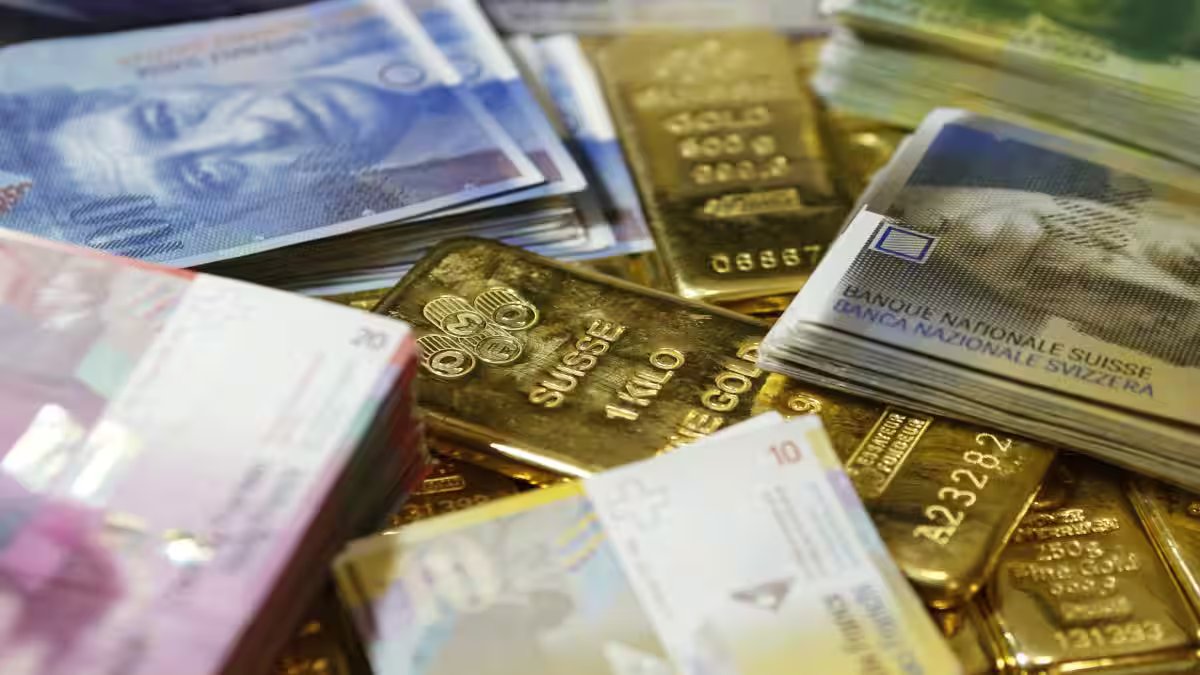

The Swiss National Bank has held its key interest rate at zero for more than a year, even as rising oil prices and a weaker franc raise fresh inflation risks.
Switzerland is sticking to an unusually low-interest-rate path even as inflationary pressures are building elsewhere. The Swiss National Bank (SNB) kept its key interest rate unchanged at 0 per cent on September 24, maintaining the rate at its current level since June 2025. The decision comes as major central banks move in the opposite direction, with higher rates being used to contain renewed inflation pressures.
The answer lies largely in Switzerland’s unusually low inflation and the strength of its currency. Swiss inflation reached 0.8 per cent in August, still comfortably within the SNB’s target range of 0 to 2 per cent. The central bank expects average inflation of 0.7 per cent in 2026 and 0.8 per cent in both 2027 and 2028.
That gives the SNB considerably more room to keep borrowing costs low than central banks facing stronger price pressures. Switzerland also benefits from the Swiss franc’s status as a global safe-haven currency. A stronger franc makes imported goods cheaper and can act as a natural brake on inflation.
The Swiss franc currency is an important part of Switzerland’s monetary-policy story.
When investors seek safety during periods of global uncertainty, money tends to flow into the franc. That can push up the currency and reduce the cost of imports, helping Switzerland absorb external inflationary shocks.
 More from Business
The SNB has also kept the door open to foreign-exchange intervention if necessary to maintain appropriate monetary conditions. But the equation has recently become more complicated. The franc has weakened in recent months, while oil prices have risen. Both developments could eventually add to inflationary pressure and make it harder for the SNB to maintain its ultra-loose stance.
The divergence is striking. The Swiss policy rate is at 0 per cent, compared with 3.75-4 per cent in the US and 2.50 per cent for the European Central Bank, according to the September comparison. That difference reflects very different inflation conditions.
While Switzerland’s inflation remains below 1 per cent, inflation in the US and Europe is considerably higher. Switzerland’s relatively low public debt, fiscal discipline and long history of low inflation have also helped keep borrowing costs structurally lower. But zero rates may not last forever.
Trading data cited in the source showed roughly even odds of an SNB rate hike in December, while markets were pricing in a more than 90 per cent chance of the first hike by early 2027.
The SNB itself expects inflation to rise somewhat in the fourth quarter before easing again during 2027. Higher energy prices are one of the key reasons behind that near-term increase.