

China says about 90 per cent of products in the $30 billion trade baskets could move to MFN tariff rates, while US farm goods get relief but soybeans remain excluded
The United States and China have disclosed details of a planned tariff arrangement covering about $30 billion of goods on each side, with agricultural products, medical devices and consumer goods among the items that could receive more favourable tariff treatment.
China has now provided more details of the framework, saying the two countries have agreed to reduce tariffs on about $30 billion of products imported from each other. Around 90 per cent of products in each basket will see tariffs reduced to most-favoured-nation, or MFN, rates, although the exact product lists and tariff details are yet to be announced.
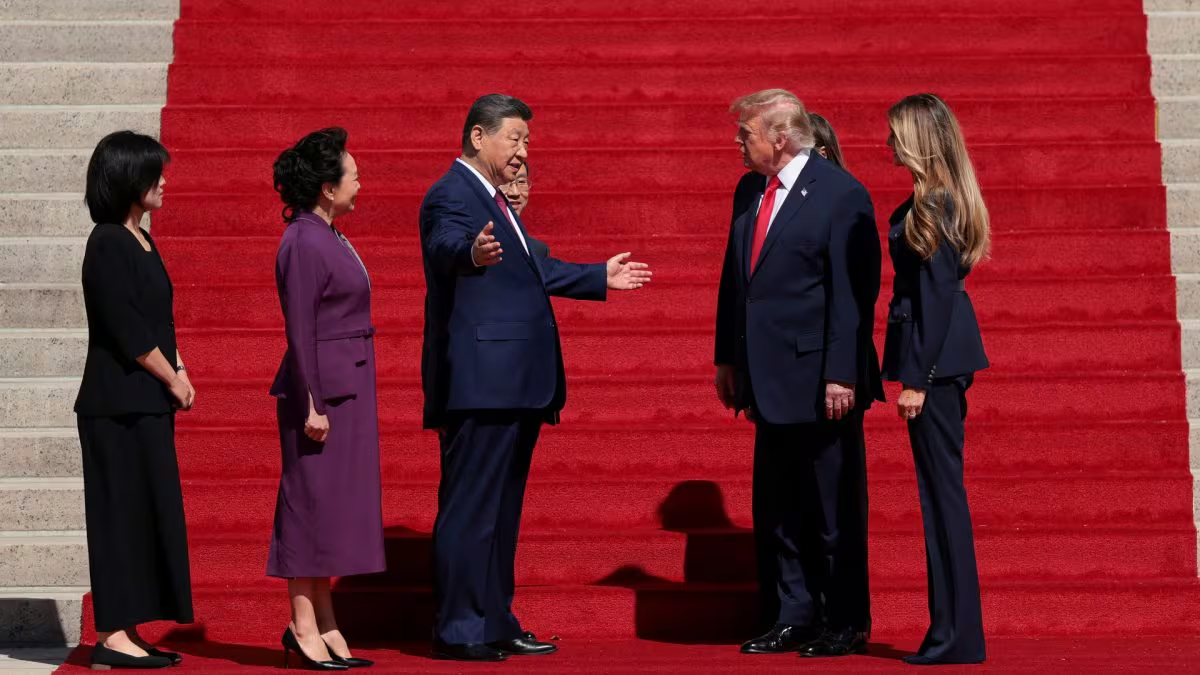
The announcement comes days after US President Donald Trump and Chinese President Xi Jinping met in Washington. The White House had said the two sides reached consensus on more favourable tariff treatment for $30 billion of non-sensitive goods in each direction.
What has China revealed?
China’s Ministry of Commerce said the two sides have agreed to establish a US-China Trade Council under the existing economic and trade consultation mechanism. The council will focus on improving bilateral trade. Its first task will be to discuss the “30billion-for-30 billion” reciprocal tariff reduction framework.
Both countries will implement the tariff cuts at the same time after completing their respective domestic legal procedures. China said further details of the arrangement will be announced later.
 More from Business
MFN rates are the standard tariff rates a country applies to eligible trading partners under normal trade rules. A reduction to MFN rates does not necessarily mean that tariffs will fall to zero.
US farm goods get tariff relief, but soybeans are excluded
Agriculture is emerging as one of the key parts of the arrangement.
China is preparing to cut tariffs on a broad range of US agricultural products, including corn, wheat, sorghum, vegetable oils, meat and dairy products. But soybeans, one of the biggest US farm exports to China, have been excluded from the latest tariff-reduction list, Reuters reported.
US soybeans continue to face an additional 10 per cent tariff.
The distinction is important because Chinese state-owned agricultural companies Sinograin and COFCO have already bought more than 12 million metric tonnes of US soybeans, according to Reuters. That is nearly half of the 25 million tonnes that the White House has said China committed to buying annually through 2028.
China has not confirmed that purchase target in its latest statement.
The US had earlier said China would buy at least $17 billion of American agricultural products each year in 2026, 2027 and 2028, in addition to soybean commitments.
Which US products are covered?
The White House said the US products identified for more favourable tariff treatment include agricultural goods, fish and seafood, logs and wood products, cosmetics and medical devices.
On the Chinese side, the categories include consumer products such as small household appliances, toys, holiday decorations and children’s car seats.
The arrangement therefore does not represent a blanket removal of tariffs. Instead, it targets selected non-sensitive products traded between the world’s two largest economies.
US coal also gets a place in the deal
China said US coal imports will be included in the 30billion-for-30 billion tariff framework.
That will allow China to import US coal in 2027 and 2028. The White House separately said China will import at least 10 million metric tonnes of US coal in each of those years.
The coal arrangement gives the deal an energy component alongside agriculture and manufactured goods.
New trade and investment mechanisms
China also said the two countries have agreed to establish a US-China Investment Council.
The council will provide a regular channel for discussing investment opportunities and barriers and addressing concerns raised by companies, subject to the laws and regulations of each country.
An agriculture working group will operate under the Trade Council. It will discuss agricultural market access and regulatory issues, with the first meeting expected by the end of 2026.
The two sides have also agreed to continue an artificial intelligence dialogue. Chinese Vice Premier He Lifeng and US Treasury Secretary Scott Bessent will lead the discussions, with the next meeting planned by the end of November.