

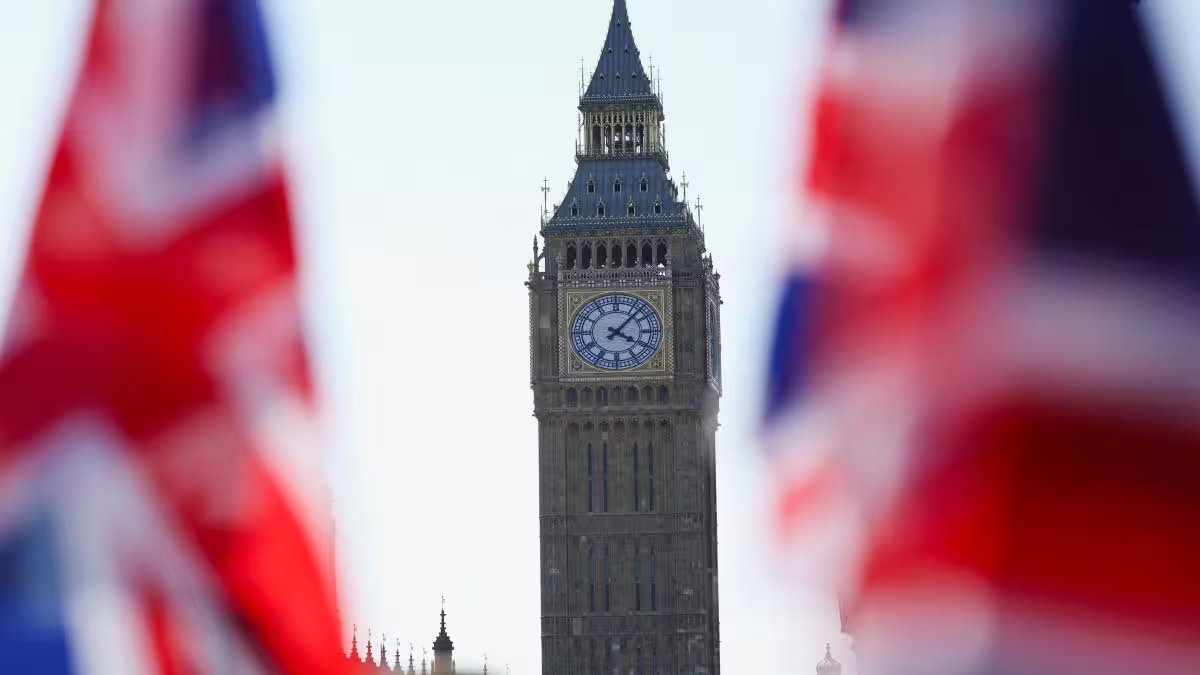

UK GDP growth was revised up from an initial 0.4 per cent estimate, while household disposable income and business investment also posted stronger gains
Britain’s economy grew faster than initially estimated in the second quarter of 2026, with stronger household finances and business investment providing fresh signs of resilience ahead of the government’s October budget.
Economic output expanded 0.5 per cent in the April-to-June period, the Office for National Statistics said on Wednesday, revising up its preliminary estimate of 0.4 per cent growth in gross domestic product.
Economists polled by Reuters had expected the initial 0.4 per cent estimate to be confirmed.
Britain’s economy was the fastest-growing among the Group of Seven advanced economies in the first half of 2026, according to ONS data.
The stronger quarterly growth came alongside an improvement in household finances. Real household disposable income per head rose 1.0 per cent in the second quarter, marking its biggest increase since the end of 2024. That followed a 0.8 per cent decline in the first quarter.
The ONS also sharply revised up its estimate for business investment growth. Business investment rose at an annual rate of 5.2 per cent in the second quarter, compared with an initial estimate of 0.8 per cent.
 More from Business
The stronger economic performance could provide some support to Finance Minister John Healey as he prepares for the government’s October budget.
Separate balance-of-payments data showed that Britain’s current account deficit was narrower than economists had expected in the second quarter.
The deficit stood at £19.9 billion ($26.4 billion), compared with a consensus forecast of £24.7 billion.
Excluding precious metals trade, the current account deficit narrowed to 1.4 per cent of economic output, its smallest share in five years.
The improvement was supported by strong growth in Britain’s services exports, according to the data.
The latest figures indicate that the UK economy entered the second half of 2026 with stronger momentum than previously estimated, although the outlook will continue to depend on household spending, business investment and developments in inflation and interest rates.