

India raised concerns with a bipartisan US Congressional delegation over the potential impact of the recently enacted Sanctioning Russia and Iran Act on bilateral ties and global energy markets
India has raised concerns with a visiting US Congressional delegation over the potential impact of the recently enacted Sanctioning Russia and Iran Act of 2026 on bilateral ties and the international energy market.
Foreign Secretary Vikram Misri conveyed India’s concerns over the legislation during his meeting with a bipartisan US Congressional delegation led by Brian Mast, chairman of the House Foreign Affairs Committee, the Ministry of External Affairs said on Tuesday. The meeting took place in New Delhi on Sunday.
“Various issues of bilateral nature were discussed at the meeting. Also, the Foreign Secretary conveyed our concerns about the SRIA legislation, as to the kind of implications it would have for bilateral relationships, as well as for the international energy market,” MEA spokesperson Randhir Jaiswal said during a media briefing.
The comments come as India assesses the implications of the Lindsey O Graham Sanctioning Russia and Iran Act of 2026, or SRIA, which provides a framework for expanded sanctions and trade restrictions targeting Russia and Iran.
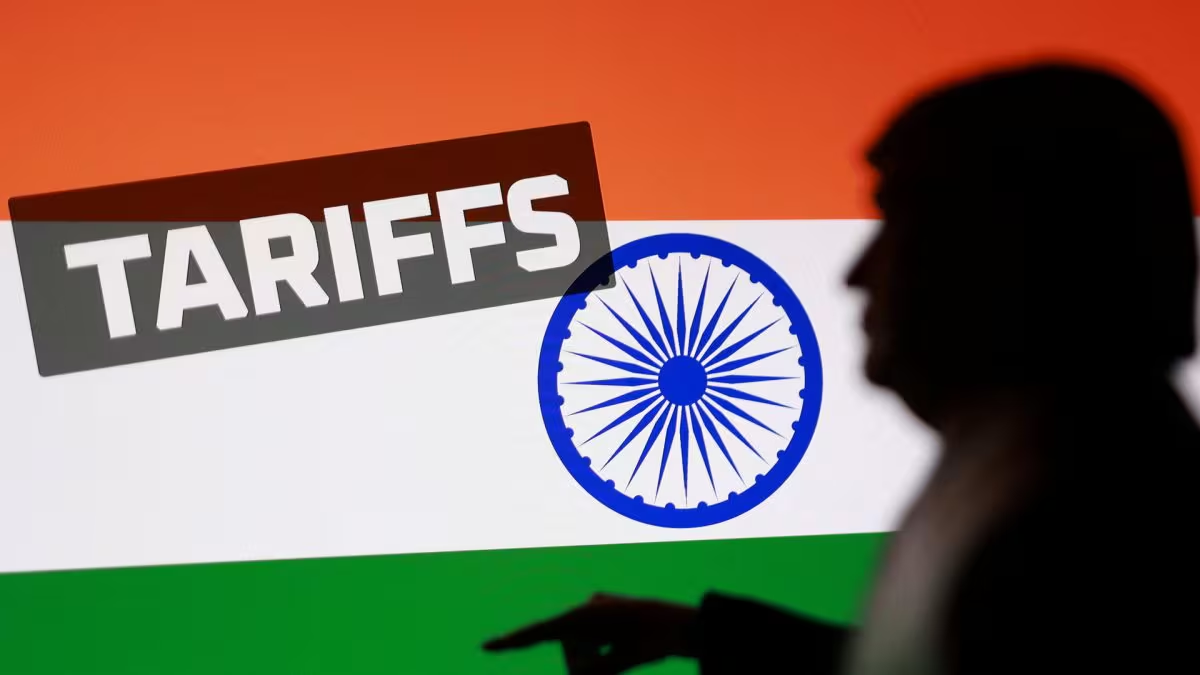
The legislation is particularly significant for India because it gives the US president authority to impose tariffs of up to 100 per cent on countries that continue to purchase Russian oil and gas, subject to specified conditions.
The law does not automatically impose a 100 per cent tariff on Indian goods. Instead, it gives the US executive branch the authority to impose such tariffs under the conditions set out in the legislation.
 More from World
India remains a major buyer of Russian crude oil. Any measures affecting that trade could therefore have implications for India’s energy costs and supply arrangements, as well as for broader global oil markets.
New Delhi has consistently maintained that its energy purchases are guided by national interests and energy security.
The latest discussions also covered the broader India-US relationship and several international issues.
“Discussions covered the entire gamut of India-US relations, including the recently enacted SRIA legislation and the future trajectory of the relationship. They also exchanged views on international issues of mutual concern, energy security, counter-terrorism and freedom of navigation,” Jaiswal said in a post on X following the meeting.
The US delegation was led by Mast and included bipartisan members of Congress. The discussions come amid efforts by New Delhi and Washington to manage differences over trade and energy while continuing engagement on broader bilateral issues.
The potential tariff mechanism creates a new consideration for its continued purchases of Russian energy. The government is also assessing how measures targeting Russian energy trade could affect international energy markets and India’s own energy security.
Jaiswal also said on Tuesday that there was no immediate timeline for the next India-Russia annual summit. The previous annual summit was held in India, where Prime Minister Narendra Modi hosted Russian President Vladimir Putin. The next meeting is expected to be held in Russia.