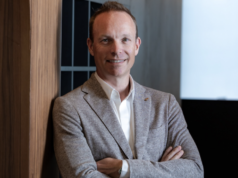




Marloes Knippenberg argues that a hotel should create value beyond its rooms. Since becoming chief executive of Kerten Hospitality in 2015, she has built the company around mixed-use destinations where accommodation, residences, food, work and community programming are planned together.
Knippenberg first joined the wider Kerten organisation in 2005. Her long tenure gave her an investor’s understanding of real estate as well as an operator’s view of guest experience. Under her leadership, Kerten Hospitality developed brands including The House Hotel, Cloud 7 and a collection of living, working and dining concepts.
Kerten Hospitality grew from an Ireland-based investment vehicle rather than a conventional hotel company. That origin shaped Knippenberg’s focus on the complete economics of mixed-use development. A hotel lobby, restaurant, residence and workspace are not separate decorative components. Each must create demand, support the others and justify the capital allocated to it.
The company now works across a collection of brands and countries with a deliberately lean central organisation. Knippenberg describes the culture in terms closer to entrepreneurship than traditional hotel hierarchy. The approach can encourage local decisions and unusual partnerships, but it also increases reliance on the judgement of individual teams. As the pipeline expands, leadership development and financial controls become as important as creative freedom.
In January 2026, the company signed 1,000 new rooms across the Middle East and Africa and announced Casadora Resort by Cloud 7 Hotels, its second project in Morocco. In November 2025, it signed Cloud 7 Al Murjan Island Resort in Saudi Arabia.
These projects express a strategy built around flexibility. A development may combine a hotel with branded residences, co-working, restaurants and public spaces. Different components can create demand at different times of day and provide developers with several revenue streams rather than one hotel income line.
Knippenberg’s focus on local engagement is central to the model. Lifestyle hospitality becomes generic when operators import the same design, menus and programming into every city. Kerten instead seeks local food entrepreneurs, artists, suppliers and community partners who can give each project a distinctive identity.
That approach also has a commercial purpose. Local businesses can reduce the need for an operator to create every concept itself. Residences can support project financing. Shared spaces can serve guests, residents and neighbours. The challenge is coordinating these uses so they reinforce rather than compete with one another.
Saudi Arabia and Morocco are well suited to this proposition because both are developing destinations where hospitality needs to connect with local culture and entrepreneurship. Yet mixed-use projects are operationally demanding. Service agreements, owner expectations, public access and the economics of multiple outlets must be managed with precision.
Knippenberg has also become a visible advocate for sustainability and talent. She serves as an ambassador for the Sustainable Hospitality Challenge and holds advisory roles connected to the Sustainable Hospitality Alliance and Arabian Travel Market. These positions reflect her interest in turning responsible hospitality into a development and operating framework rather than a reporting exercise.
The test for Kerten is scale. A flexible, locally driven model can become difficult to reproduce as the pipeline grows. Strong central systems are required, but too much standardisation would weaken the point of the brand.
The model also changes how success should be measured. Room occupancy is important, but it does not capture residential sales, workspace use, local customer spending or the performance of independent food businesses. Knippenberg needs integrated measures that show whether the components genuinely support one another. Without them, mixed use can become a persuasive description for a group of unrelated commercial spaces.
Knippenberg’s contribution is to challenge the assumption that a hotel should stand apart from its surroundings. Her projects aim to become pieces of neighbourhood infrastructure, places where visitors and residents overlap. If Kerten can retain that purpose through expansion, its mixed-use model may offer developers a more resilient alternative to traditional hospitality.