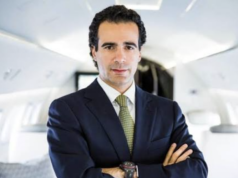



Hadi Mouawad has led ExecuJet Middle East since 1999, when Dubai’s private-aviation market was still nascent. The company became the city’s first private aircraft operator and fixed-base service provider, giving Mouawad a pioneering role in the infrastructure that now supports one of the world’s busiest business-aviation destinations.
Over more than a quarter century, he has developed operations at Dubai International and Al Maktoum International, providing ground handling, lounges, charter and aircraft management. ExecuJet has been reported to hold about 40 per cent of Dubai’s private-aviation market, serving flights to around 120 destinations. Its managed fleet grew from 18 aircraft to 23 during 2025, a measure of owner confidence as well as market demand.
Mouawad’s business sits between several demanding customers. Aircraft owners want safety, preservation of asset value and availability. Charter clients expect speed, privacy and personalization. Crews need dependable handling and facilities. Airport authorities require compliance and efficient use of constrained infrastructure. The operating platform must satisfy all of them without allowing a premium image to obscure technical discipline.
Dubai’s rise as a finance, trade, events and tourism hub created favourable conditions, but Mouawad helped make the aviation product credible. Business aircraft are highly mobile assets. Owners and operators can base them elsewhere if service, regulation or maintenance support is weak. Building a mature ecosystem therefore required long-term relationships, trained people and confidence that complex requests would be solved.
The dual-airport presence is strategically important. Dubai International offers proximity and global connectivity, while Al Maktoum provides room for the longer-term concentration of private and commercial aviation. Mouawad has had to manage today’s customer expectations while preparing for that geographic shift. Facilities, staff and commercial partnerships must develop ahead of demand without outrunning it.
The managed-fleet model also aligns incentives. ExecuJet takes responsibility for crewing, compliance, maintenance and administration, and can help owners generate charter revenue when aircraft are available. Transparency is critical, because the relationship involves expensive assets and private schedules. Mouawad’s longevity suggests an ability to retain trust through market cycles.
His contribution to Dubai is best seen as institutional. He did not merely open a lounge or sell charter hours. He helped establish the professional systems that allow private aviation to support investment, diplomacy, tourism and global business. As the market faces capacity changes and environmental scrutiny, Mouawad’s next task is to modernize that system without losing the reliability on which its reputation was built.
Maintenance and technical support are part of that reliability even when they sit behind the passenger experience. A managed aircraft that is unavailable loses both owner utility and charter revenue. Mouawad’s organization must plan inspections, parts and crew training around demand while meeting several regulatory regimes. Strong dispatch performance is the hidden luxury that allows a client to change plans with confidence.
Competition will continue to rise as Dubai’s status attracts international operators. Mouawad’s defence is accumulated local knowledge, long relationships and a platform spanning management and ground service. Those advantages remain valuable only if the company keeps improving digital access and personal service. His longevity should be used as a source of insight, not an excuse for legacy process. The pioneer now has to operate with the urgency of a challenger.