

Trump’s own Fed pick raises rates as the US president demands borrowing costs be cut to 1% or less
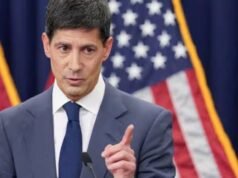
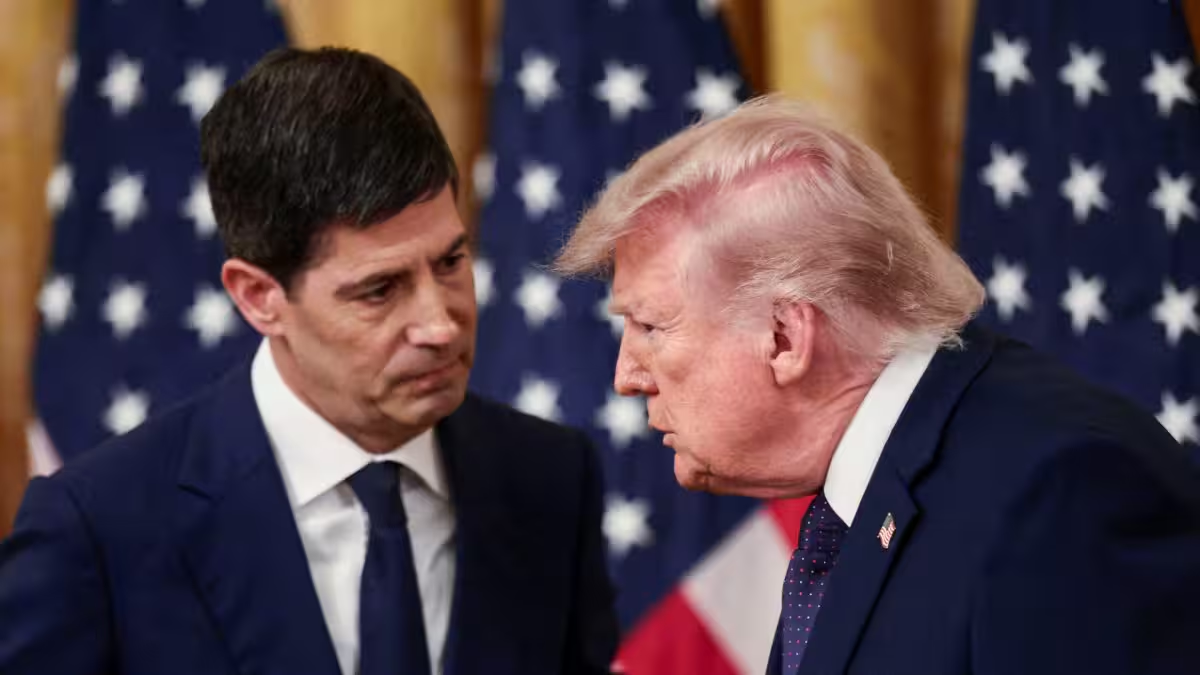
US President Donald Trump turned his criticism towards his own pick to lead the Federal Reserve after the US central bank raised interest rates for the first time since July 2023, putting fresh pressure on Fed Chair Kevin Warsh.
“Interest Rates in the United States should be 1%, or less, because we are the Best Credit in the World — BY FAR,” Trump wrote on Truth Social on Thursday.
“LOWER THE INTEREST RATES FOR THE UNITED STATES OF AMERICA, AND FAST!” he added.
Trump’s comments came shortly after the Federal Reserve raised its benchmark interest rate by 25 basis points to a range of 3.75 per cent to 4 per cent. It was the first rate hike since July 2023 and the first such decision under Warsh, who took over as Fed chair earlier this year.
Fed raises rates as inflation stays elevated
The Federal Open Market Committee unanimously backed the quarter-point increase, saying the move would support a more timely return of inflation to the Fed’s 2 per cent target.
“Inflation remains elevated. Today’s policy action will support a timelier return to the Committee’s 2 percent goal,” the Fed said in its policy statement.
The central bank also said economic activity was expanding at a solid pace.
Warsh defended the decision at his post-meeting press conference, saying inflation had remained too high for too long.
 More from Business
“The plain fact is that inflation is too high and has been for too long,” Warsh said.
The rate decision came as policymakers faced renewed pressure from higher energy prices and persistent inflation. A sharp rise in crude oil prices has added to concerns that price pressures could remain elevated for longer.
Markets had largely expected a 25-basis-point increase ahead of the decision.
Warsh’s first big test as Fed chair
The rate hike is significant for Warsh because he was selected by Trump to succeed Jerome Powell, whom the president had repeatedly criticised for not cutting rates quickly enough.
Trump had often demanded aggressive rate cuts during Powell’s tenure. He had also used social media to pressure the central bank over borrowing costs and argued that lower rates would support US economic growth.
Warsh’s appointment had therefore been closely watched for signs of how the Fed would operate under a chair chosen by Trump.
But his first major rate decision has gone in the opposite direction to what Trump is demanding.
Warsh had initially steered the Fed towards holding rates steady after taking office. Persistent inflation and renewed price pressures eventually pushed policymakers towards a rate increase.
Trump has repeatedly called for lower interest rates, while Warsh has stressed the need for the central bank to focus on inflation and its broader economic mandate.
More rate hikes could be coming
The Fed’s updated economic projections provide another reason why Trump’s latest intervention matters.
Sixteen of the 18 policymakers expect at least one more quarter-point rate increase by the end of 2026, according to the latest projections. Only two officials expect rates to remain at their current level.
The median projection puts the federal funds rate at 4.1 per cent at the end of 2026.
Investors are now looking closely at the Fed’s so-called dot plot and its economic outlook for clues about the path of interest rates into 2027.
The central bank’s projections also show inflation remaining above its 2 per cent target for some time. Higher energy prices have added another complication because they can feed into headline inflation even as tighter monetary policy weighs on demand.
Trump says Fed board is ‘very political’
Speaking to reporters, the president said he had spoken with Warsh and suggested he had told the Fed chair that he could vote with the rest of the board because, in Trump’s view, it was “very hostile” and “very political”.
Warsh did not confirm the conversation when asked whether he planned to meet Trump to explain the Fed’s decision.
“I don’t have anything for you on discussions with the president,” Warsh said.
Trump also linked the US trade deficit with the level of interest rates in his Truth Social post. He argued that the US could generate significant savings by stopping trade with countries with which it runs deficits.
Trade deficits and the Federal Reserve’s interest-rate decisions, however, are separate policy issues, although tariffs and trade policies can influence inflation and economic growth.