

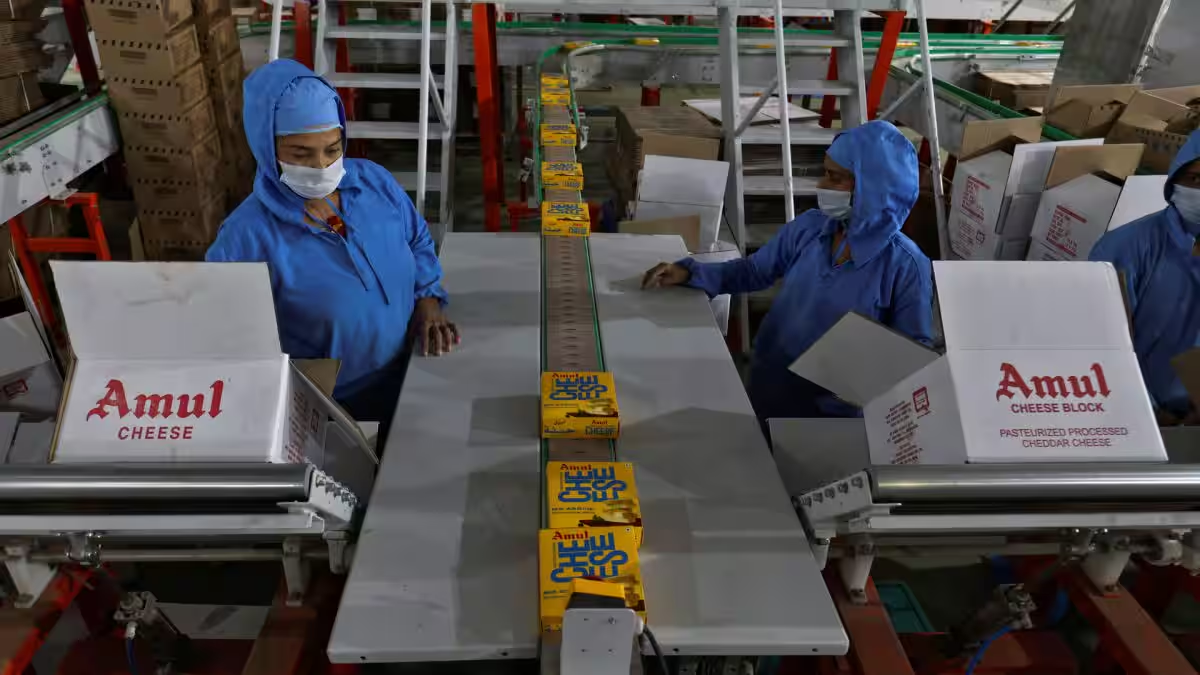

From the US to Europe and now new markets in Africa and Southeast Asia, Amul is increasingly using local dairy partnerships to take its milk and brand overseas
Amul is taking an Indian milk brand global without necessarily taking Indian milk with it. The Gujarat Cooperative Milk Marketing Federation (GCMMF), which markets products under the Amul brand, has traditionally exported dairy products to overseas markets. But its latest international expansion is taking a different route for fresh milk.
Instead of shipping fresh milk from India, Amul partnered with dairy cooperatives in overseas markets to use local milk, processing facilities and supply chains while selling products under the Amul brand.
The model was first put into practice at scale in the United States and has since been extended to Europe. Amul is now looking to expand further in Africa and Southeast Asia.
The strategy could allow the Indian dairy cooperative to build an international fresh milk business without having to recreate its entire milk procurement and processing network outside India.
Why Amul is not shipping milk from India
Fresh milk is highly perishable, making long-distance international transportation considerably more complicated than exporting products such as cheese, butter, ghee or milk powder.
Amul has exported its products to more than 50 countries for decades. But the launch of fresh milk overseas required a different approach.
In March 2024, GCMMF announced a partnership with the Michigan Milk Producers Association (MMPA), a US dairy cooperative established in 1916.
 More from Business
The partnership allowed Amul to launch fresh milk in the US using MMPA’s milk and processing infrastructure. Amul’s initial range included Amul Gold with 6 per cent milk fat, Amul Shakti with 4.5 per cent, Amul Taaza with 3 per cent and Amul Slim n Trim with 2 per cent.
MMPA’s 2024 sustainability report said the partnership combines its member milk and technology with Amul’s brand and product formulations. The milk products are packaged in the US rather than shipped from India.
Amul’s US website now lists Amul Gold at Costco in Edison, New Jersey. It also says the brand’s fresh milk range is available through Indian grocery stores in the US.
The model means the milk can come from American dairy farms while the product follows Amul’s specifications.
The model moves to Europe
Amul has subsequently taken a similar approach to Europe. In June 2025, it partnered with Spanish dairy cooperative COVAP to pack Amul milk for the European market.
The first launches were in Spain and Portugal. Amul said it eventually planned to extend the business to countries across the European Union. COVAP said the milk sold in Spain would come from farms belonging to its cooperative members.
GCMMF’s chairman also confirmed the European expansion in the federation’s 51st annual general body meeting address. He said Amul had collaborated with COVAP for packing milk and had launched Amul milk in multiple cities in Spain and Portugal in June 2025.
The European move is significant because it shows that the US partnership was not a one-off arrangement.
Amul is developing a model in which its brand and product specifications can be combined with the milk supply and processing infrastructure of established dairy cooperatives in individual markets.
From Europe to Africa and Southeast Asia
The next phase of Amul’s expansion is broader than fresh milk in the US and Europe.
In April 2026, GCMMF Managing Director Jayen Mehta said Amul had a presence in more than 50 countries and was expanding in Africa and Southeast Asia. He said the company planned to add another 10 international markets within a year.
Amul’s expansion in Africa is also moving towards local packing and production for some milk products. ET BrandEquity reported in May 2026 that Amul was introducing locally packed milk in Gambia, Ghana, Mozambique and Sierra Leone, alongside its plans for markets in France, Germany, Spain and Switzerland.
However, these developments should be distinguished from the US and European fresh milk partnerships.
Amul’s own disclosures confirm the MMPA and COVAP arrangements. The more detailed list of African markets comes from media reporting and should therefore be treated as part of the company’s reported expansion plans rather than as a blanket statement that Amul has established fresh milk production in all those countries.
A bigger global business
The international push comes as Amul’s overall business has crossed another major threshold.
Amul’s brand turnover crossed Rs 1 lakh crore in the financial year 2025-26, according to reports citing GCMMF. The federation itself reported turnover of Rs 73,450 crore in FY26, up 11.4 per cent from Rs 65,911 crore in FY25.
GCMMF’s 2024-25 chairman’s address had put the wider Amul group’s turnover at about Rs 90,000 crore and said its products were already being exported to more than 50 countries.