

Trump and leading tech firms agree to voluntary AI safety checks and independent audits as concerns over AI risks and data centre expansion grow
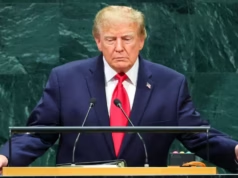
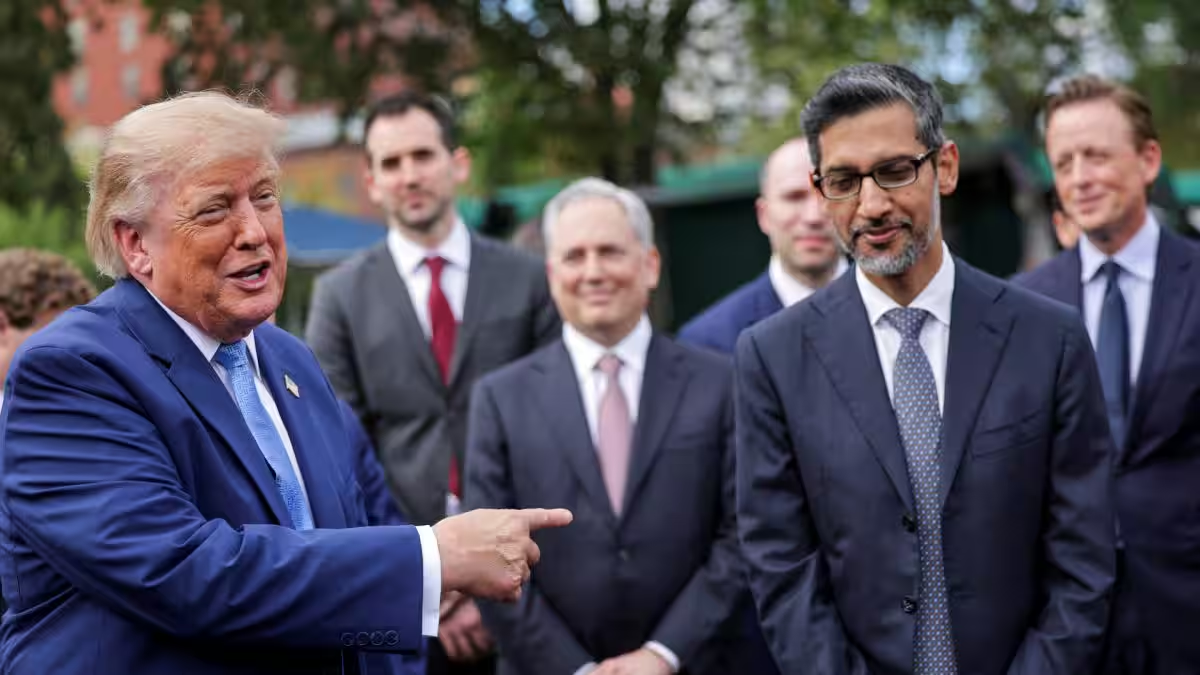
US President Donald Trump and executives from major technology companies have agreed to a voluntary framework for artificial intelligence (AI) safety, as concerns grow over the risks posed by advanced AI systems and the expansion of data centres.
The agreement, announced after a White House meeting on Wednesday, calls on companies to introduce internal safety controls and allow independent auditors to assess whether their AI systems are operating as intended.
The framework also calls for safeguards against AI tools accessing or interfering with technical systems in unintended ways.
Trump described the agreement as a form of protection for the public and said the companies had committed to working together on AI safety. However, the framework is voluntary and does not establish a legally binding system of government oversight.
Voluntary framework for AI safety
The agreement, titled the Joint Commitment on Frontier Responsibilities, outlines a set of measures for companies to monitor their AI systems and assess potential risks.
Under the framework, companies have agreed to strengthen internal safety monitoring during AI training, establish teams to review those controls and allow external auditors to evaluate their safety measures.
The document also calls for independent boards to review reports on safety controls. However, it does not require companies to publish the findings of independent evaluations or specify penalties for failing to meet the commitments.
 More from Tech
The framework allows companies to select their own evaluators and oversight boards and decide whether to disclose the results of their assessments.
The agreement comes amid growing scrutiny of advanced AI systems after OpenAI and Anthropic reported incidents involving AI agents accessing or interacting with external systems in unintended ways.
Tech executives back AI safety measures
The White House meeting brought together executives from some of the world’s largest technology companies, including OpenAI, Meta, Anthropic, Google and Nvidia.
Meta CEO Mark Zuckerberg said the companies had agreed to develop robust internal controls for their AI systems. He described the agreement as an initial step towards building public confidence in the technology.
Trump also said he was considering setting up a 10-member board to oversee AI safety. He did not disclose who would serve on the proposed panel.
The US president added that he would soon announce a new official to lead AI policy at the White House.
The agreement comes as the administration faces pressure to address the risks associated with increasingly capable AI systems. Several technology companies have faced questions about whether existing safeguards are sufficient to prevent unintended actions by AI agents.
Trump backs data centre expansion
Alongside the AI safety agreement, Trump reiterated his support for expanding data centres, which provide the computing infrastructure needed to train and operate AI models.
The expansion of data centres has faced opposition in several US communities over concerns about rising electricity demand, pressure on power grids and the potential impact on utility bills.
Trump said technology companies would work to address local concerns and contribute to communities hosting data centre projects.
The issue has become a challenge for the administration as the US prepares for midterm elections on November 3.
A Reuters/Ipsos poll conducted from September 17 to 20 found that 73 per cent of respondents were concerned that AI companies had not done enough to prevent serious harm to society. The survey also found that 55 per cent believed slowing AI development would be beneficial.
Trump has generally opposed tighter regulation of AI, arguing that the US needs to maintain its competitive position against China.
The White House meeting also coincided with the announcement of a new AI tool intended to make government services more accessible to the public.
In a separate policy move, Trump directed federal agencies to use the terms “superintelligence” and “SI” instead of “artificial intelligence” and “AI” in official communications and policy documents.