


As international hotel groups continue to expand their presence across the Maldives, the destination is entering a new chapter of growth—one where increasing investment and global hospitality brands are reshaping the resort landscape. Yet alongside that growth comes an important question: how can the Maldives continue to evolve while preserving the distinctive sense of place, culture and identity that makes the archipelago so compelling to travellers?
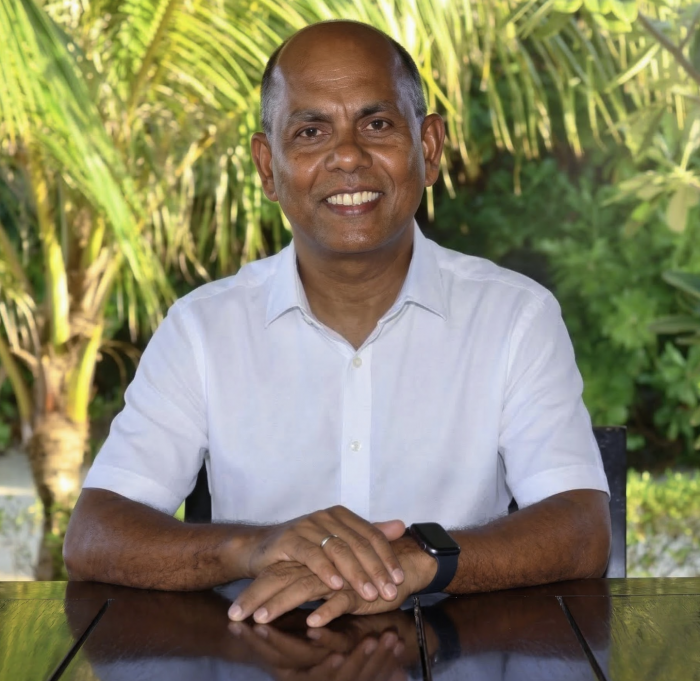
For Hussain Shahid, General Manager of Noku Maldives, the answer lies in ensuring that development does not come at the expense of authenticity. In this exclusive interview with Breaking Travel News, Shahid discusses the changing face of Maldivian hospitality, the importance of creating experiences rooted in the destination, and how resorts can embrace international standards while retaining a genuine connection to local culture.
From evolving guest expectations and sustainable growth to the role of Maldivian heritage in shaping the resort experience, Shahid offers his perspective on where the country’s luxury hospitality sector is heading—and why the Maldives’ greatest asset may ultimately be its ability to remain unmistakably itself.
1. As international hotel groups expand across the Maldives, how can resorts evolve without losing the local identity that distinguishes the destination?
I think the key is to understand that international standards and local identity do not have to compete with each other. A global hotel group can bring systems, distribution, technology, loyalty, training and operational discipline, but it should not dictate the personality of an island.
I have spent most of my career in the Maldives, while also working overseas and across organisations such as Soneva, Six Senses, Shangri-La and IHG. What that has taught me is that the strongest hotels are not necessarily the ones that conform most closely to a global template. They are the ones that understand what is unique about where they are and then use the strength of the brand to amplify it.
That is particularly important in the Maldives because our sense of place is so strong. The ocean, island communities, fishing traditions, stories, language and the way we welcome people are part of the destination’s value. At Noku, joining Vignette Collection has allowed us to access IHG’s global platform while maintaining the individuality of the resort. To me, that is the right balance: international confidence behind the experience, but an identity that still belongs unmistakably to the Maldives.
2. What impact is the arrival of more international brands having on the Maldivian hospitality landscape?
Overall, I see it as positive, provided growth is handled responsibly. International brands bring greater global visibility to the Maldives, open access to new source markets, introduce sophisticated commercial platforms and create opportunities for our people to work within international systems without necessarily leaving the country.
They also raise expectations. Resorts are competing not only on villas and beaches anymore, but on service, culinary quality, wellness, sustainability, technology and, increasingly, on the depth of the experience. That pushes the whole industry forward.
At the same time, there is a risk. If every resort begins following the same design language, the same service scripts and the same definition of luxury, we eventually dilute what makes the Maldives different. I have been involved in pre-openings, a rebranding and now the repositioning of Noku, and I have learned that standards are important, but standardisation is not always the same thing. We need consistency in quality without creating uniformity in character.
3. When an independent resort joins an international group, what should it retain and what may need to change?
It should retain the things guests cannot find anywhere else: its identity, its story, its people, the relationship it has with its surroundings and the experiences that have grown naturally from that particular island. Those are often the reasons the property was attractive to an international group in the first place.
What may need to change are the systems behind the experience. There may be opportunities to strengthen safety, quality assurance, technology, revenue management, distribution, training, sustainability measurement and guest recognition. Those changes should make the hotel stronger without making it less recognisable.
Vignette Collection is particularly well suited to that model because each hotel is encouraged to keep its own name, identity and story while gaining access to IHG’s global infrastructure. Having experienced both pre-openings and brand transitions during my career, I would say the most successful transition is the one where a returning guest feels that the hotel has become better, but not that the hotel they loved has disappeared.
4. How has Noku Maldives approached that balance between international standards and a distinctly Maldivian experience?
We have tried to be very deliberate about separating the two. IHG gives us an excellent international platform: global distribution, IHG One Rewards, systems, standards, commercial expertise and access to a much wider customer base. But the guest-facing personality of Noku should come from this island and from the Maldives.
So alongside the refurbishment and the strengthening of our operational systems, we have invested in experiences that have a genuine relationship with place. We have our Maldivian House, a full-size traditional home that allows guests to understand how Maldivian families lived; Island Echoes, where stories, folklore and bodu beru are shared around a fire at dusk; our weekly Fisherman’s Visit, where a local fisherman visits the island with the day’s catch and guest get the opportunity to buy fish; and the Kurum-bar, which moves around the island serving fresh coconuts. These are simple experiences, but they make sense here.
This is very much how I see Noku developing: global confidence behind the scenes, but an experience at the front that could only belong in the Maldives.
5. How can Maldivian identity be embedded throughout the guest journey beyond food, design and organized cultural activities?
For me, it begins with people. You can create Maldivian menus, use local materials and schedule cultural evenings, but if the overall interaction feels scripted or imported, the guest will sense that very quickly.
Identity can be expressed in much smaller moments: the way a team member welcomes a guest, the stories they share during a boat journey, the Dhivehi words that naturally enter a conversation, how we explain the sea and the weather, or how somebody from the islands talks about fishing, family or growing up here. It can also influence the pace of service. Maldivian hospitality has an informality and warmth that should not be trained out of people in the pursuit of luxury.
The role of management is therefore not to give Maldivian colleagues a script for being Maldivian. It is to create an environment in which they are comfortable bringing their own knowledge and personality into the guest experience. That is when a sense of place becomes something guests feel throughout the stay rather than something scheduled at a particular time of day.
6. How do you avoid presenting guests with a version of Maldivian culture that feels staged or curated?
A good test is to ask whether the activity has meaning when no guest is watching.
Take our relationship with the local fisherman. The weekly Fisherman’s Visit is not simply somebody arriving because we need a photograph or a cultural moment. There is a genuine partnership behind it, and the catch is part of a real local economic relationship. Guests are encountering something that already has purpose rather than something created solely for them. Our conservation partnerships work in a similar way. The reef work, turtle monitoring and protection of seagrass matter regardless of whether they appear in a brochure.
Even with something such as Island Echoes, we try to keep it intimate. Storytelling around a fire is much closer to the way stories are naturally passed between people than putting culture on a stage and turning it into a spectacle. Authenticity, in my view, often comes from doing less and allowing the people who actually belong to the culture to tell the story.
7. What role should Maldivian employees play in shaping the guest experience, rather than simply delivering standards created elsewhere?
They should be co-creators of the experience.
I have always believed that the people closest to the guest and closest to the culture should have a voice in how the experience is designed.
Maldivian colleagues understand details that cannot be captured in an international brand manual: the significance of certain traditions, how island communities interact, how the ocean changes through the seasons, what a particular Dhivehi expression really means, or simply what feels genuine and what does not.
This is also where I see value in IHG’s wider Inclusion & Impact approach. The idea is to create an environment where colleagues feel they belong, are valued and have opportunities to grow, while giving each hotel the flexibility to bring that to life in a way that is relevant locally. Through initiatives such as the I&I Ambassador network, Personal Development Plans, mentoring, IHG University and opportunities for colleagues to share their own stories and experiences, the emphasis is on participation rather than simply top-down delivery.
For me, that is important because inclusion is not only about how colleagues feel internally; it also affects the guest experience. When people feel heard and trusted, they are much more confident bringing their personality, cultural knowledge and ideas into their interactions with guests.
International standards should provide the framework for quality, safety and consistency, but they should leave room for personality and judgement. You cannot design authenticity somewhere else and then ask local employees to deliver it. It must be shaped with them.
8. What more should hotel groups be doing to help Maldivian employees progress into management and senior leadership positions?
This is an issue very close to me because my own career was not a traditional operational route to becoming a General Manager.
I began in administration with Soneva, moved into Human Resources and training, worked through pre-openings, spent time overseas with Six Senses in Oman, returned to Maldives with Shangri-La and later spent more than a decade with IHG at Holiday Inn Resort Kandooma. I joined Kandooma as Director of Human Resources and eventually crossed into full resort operations, becoming Executive Assistant Manager and Resort Manager. That transition from HR into operations was uncommon. Someone had to recognise the potential, give me exposure outside my function and allow me to prove myself.
We need much more of that. Development cannot simply mean sending someone for occasional training. There should be identifiable succession plans, mentors, cross-functional assignments, international exposure and genuine opportunities to act in the next role before being promoted into it. Education and experience must also work together. This is something I have advocated through my involvement with the Faculty of Hospitality and Tourism Studies and Maldives Association of Human Resources Professionals.
Ultimately, the objective should be that a young Maldivian entering hospitality can look several levels above and realistically see a path to becoming a department head, Resort Manager, General Manager or corporate leader.
9. How do relationships with local communities, suppliers and fishermen influence the everyday operation of Noku Maldives?
They make the resort more connected to the place in which it operates.
Our Fisherman’s Visit is a good example. A local fisherman comes to the island with his catch and we have built a genuine relationship around that visit. It supports local livelihoods, gives us access to local produce and allows guests to see the connection between the sea, the community and what eventually appears in the resort.
The same principle applies to conservation. Our relationship with the Atoll Marine Conservation Centre gives us locally rooted expertise that directly influences how we understand and manage the environment around the island. With a marine biologist based at Noku, the partnership is not an occasional activation; it contributes to ongoing turtle monitoring, reef assessment, coral work, guest education and community outreach.
A resort can easily become an isolated economy, particularly in the Maldives because of the one-island-one-resort model. I think we should resist that. The stronger the connections between the resort and the wider atoll, the more value tourism can create beyond the boundaries of the property.
10. Can you share examples of how local knowledge or community relationships have directly changed the way the resort operates?
One very practical example is our approach to the marine environment. Noku has extensive seagrass around the island. In the past, there was a tendency in the Maldives to see seagrass as something that disrupted the perfect turquoise-lagoon image. But when you understand its ecological value, particularly as habitat and food for turtles and other marine life, the operational decision becomes very different.
Noku has pledged to safeguard at least 80 per cent of its seagrass area, and our marine work now includes coral propagation, sea turtle conservation, reef and lagoon monitoring and guest education. Our partnership with the Atoll Marine Conservation Centre has also included practical wildlife rescue and response training for the team.
The fisherman partnership is another example. Instead of community engagement existing only as a donation programme, it becomes part of procurement, storytelling and the guest experience.
To me, those are the best partnerships because they actually change behaviour. They influence what we buy, what we protect, what we teach our employees and what guests experience.
11. Are there commercial or operational challenges associated with sourcing locally, and how can resorts overcome them?
Absolutely. We have to be realistic about that. The Maldives is geographically fragmented and many resorts require consistent volumes, specifications and delivery schedules that a small local supplier may find difficult to guarantee throughout the year. There are also issues around transport, storage, seasonality and pricing.
The answer, however, should not simply be to import everything because it is easier. Resorts can become better partners. We can give suppliers more visibility of our requirements, plan purchasing further ahead, adapt menus around seasonal availability and create longer-term commitments that give producers confidence to increase capacity. Sometimes the hotel also needs to adapt its expectations rather than asking a small Maldivian producer to behave immediately like a large international distributor.
At Noku, our scale helps. With only 50 villas, we have the flexibility to experiment with smaller quantities and individual relationships. Local sourcing will never completely replace imports in an island destination, but even incremental changes keep more tourism value within the country and can give guests a more meaningful sense of where they are.
12. Do guests increasingly value a stronger connection with the people, culture and communities of the destinations they visit?
Yes, I believe they do, particularly at the luxury end of the market. Once you reach a certain level, beautiful accommodation, excellent food and a swimming pool are expected. Those things are important, but they are not always what a guest remembers years later.
Increasingly, what differentiates one destination from another is the feeling of having actually been somewhere. It might be a conversation with a team member, seeing a turtle on the house reef, hearing a Maldivian story around the fire, meeting a fisherman or learning why we have chosen to protect the seagrass surrounding the island.
At the same time, we should not force connection. Some guests come to the Maldives precisely because they want privacy and stillness. The responsibility of the resort is to make meaningful experiences available in a natural way and allow the guest to choose how deeply they want to engage.
That is where I see luxury moving: away from simply accumulating features and towards creating experiences and emotions that are difficult to reproduce somewhere else.
13. How closely are cultural authenticity and sustainability connected in the Maldives?
Very closely. In the Maldives, culture developed in response to the environment. Fishing, boat building, our relationship with coconut palms, the way communities settled islands and even much of our food culture came from learning to live with limited land and the ocean around us.
So I do not think sustainability should be viewed only in terms of solar panels, waste or water consumption. Those things are essential, but sustainability also has a social and cultural dimension. If tourism protects the reef but loses its relationship with local communities, something is missing. Likewise, if we celebrate Maldivian culture for guests while degrading the marine ecosystems on which that culture has depended for generations, the contradiction becomes obvious.
That is why the philosophy behind Vignette Collection’s Means for Good is relevant to us. It encourages us to look at people, place and planet together. At Noku, community relationships, cultural experiences and marine conservation are all part of the same broader purpose rather than unrelated initiatives.
14. As further development takes place across the islands, what must the hospitality industry get right to protect the character and long-term appeal of the destination?
We have to remember what guests are travelling thousands of kilometres to find. The fundamental product of the Maldives is not a building. It is the natural environment, space, the ocean, the reef and the extraordinary feeling of being on an island.
Development therefore has to respect carrying capacity and natural systems. Environmental considerations cannot be something addressed after the architectural concept is complete. Reef health, erosion, seagrass, waste management, water, energy use and climate resilience need to be part of the development conversation from the beginning.
We also have to think about social capacity. Tourism should create meaningful careers for Maldivians and economic opportunities for communities, not just more rooms. I would like to see stronger pathways into leadership, deeper local supply chains and greater dialogue between resorts and neighbouring islands.
The Maldives has succeeded because it is different. If every new resort becomes larger, more engineered and more similar to something that could exist anywhere in the world, we gradually weaken that advantage. Development should improve the destination without overwhelming the qualities that created its appeal in the first place.
15. What would you like the next generation of Maldivian resorts to look and feel like?
I hope they feel more Maldivian, not less.
I do not necessarily mean that every resort must reproduce traditional architecture. I mean resorts that understand their island, protect what was naturally there, employ and develop people from the country, build meaningful relationships with surrounding communities and allow those influences to shape the guest experience.
I also think the next generation will judge luxury differently. The Maldives already has extraordinary villas and infrastructure. The smarter investment now is often in people, marine experiences, wellness, culture, culinary identity and the environment. Technology should make the journey easier, but ideally it becomes almost invisible and gives employees more time to engage with guests rather than replacing that contact.
After more than 27 years in this industry, I believe the resorts that will remain relevant are those that leave guests with something more difficult to photograph: a feeling of connection, a greater understanding of the place and a reason to care about returning to it. That is the direction I would like Noku, and Maldivian hospitality more broadly, to continue moving towards.