
Days after India introduced E85 for flex-fuel vehicles, the excise duty exemption followed new BIS standards for E22, E25, E27, and E30 fuels.
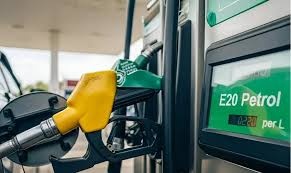
According to a government announcement released on Thursday, India has extended fiscal support to gasoline types above the nation’s current E20 petrol standard by exempting petrol blended with greater levels of ethanol from excise charge.
According to the notification, petrol that contains between 22 and 30 percent ethanol would not be subject to excise tax. Depending on the percentage of ethanol combined with fuel, mixes often referred to as E22, E25, E27 and E30 are exempt.
India is the third-biggest consumer and importer of oil worldwide. As part of a larger governmental push to boost the use of biofuels and lessen reliance on imported crude oil, the nation has been growing its ethanol blending program.
The most recent tax modification comes after the Bureau of Indian Standards recently announced fuel-quality requirements for mixtures of ethanol and petrol that are higher than E20. Standards for E22, E25, E27, and E30 fuels under IS 19850:2026 were established by the BIS notification, which was published in the Indian Gazette. These standards covered factors like ethanol concentration, octane levels, sulphur content, vapour pressure, impurity limits, testing procedures, and safety standards.
The announcement referenced in industry reports states that the standards went into effect on May 15, 2026. Prior to the most recent excise duty exemption, the action established a legal technical basis for greater ethanol mixes.
The ethanol blending initiative in India has progressed gradually. In order to forward the goal of 20% ethanol blending in petrol to Ethanol Supply Year 2025–2026 from 2030, the National Policy on Biofuels, 2018 was modified in 2022. The petroleum ministry informed Parliament in March 2025 that public sector oil marketing businesses reached 10% blending in June 2022, five months ahead of the goal for ESY 2021-22.
According to the government, up until February 28, 2025, ethanol blending increased to 12.06 percent in ESY 2022–2023, 14.60 percent in ESY 2023–2024, and 17.98 percent in ESY 2024–2025. The government said at the time that no decision had been made to increase ethanol blending above 20%.
Consumer worries about vehicle compatibility and fuel efficiency later surfaced during the E20 deployment. A petition against the government’s national introduction of E20 fuel was rejected by the Supreme Court in September 2025. According to Reuters, Attorney General R Venkataramani informed the court during the hearing that the decision was taken into consideration and would also help sugarcane growers.
Concerns that ethanol-blended petrol ought to be less expensive than non-blended fuel were also addressed by the petroleum ministry last year. The ministry reported in August 2025 that ethanol’s weighted average procurement cost had surpassed that of refined petrol. As of July 31, 2025, the average ethanol procurement cost for ESY 2024–2025 was Rs 71.32 per litre, including GST and transportation.
Days after India introduced E85 gasoline, a petrol variety combined with 85% ethanol for flex-fuel vehicles, the excise duty exemption was granted. According to Reuters and media sources, Petroleum Minister Hardeep Singh Puri stated that state-run oil marketing corporations would offer E85 for roughly Rs 20 per litre less than the price of E20 fuel.