
The bombings have been attributed by US Central Command to “Iran’s unwarranted and continued aggression.”
The United States is attacking “key facilities” in Iran, according to Secretary of Defence Pete Hegseth, who justified the strikes as part of the ongoing talks for a long-term truce.
Speaking to reporters on Wednesday in Tampa, Florida, Hegseth departed the US Central Command (CENTCOM) headquarters, which is in charge of military operations in the Middle East and portions of Asia.
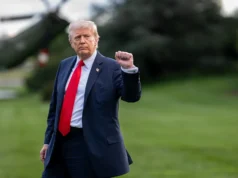
His comments mirrored the growing language of Republican President Donald Trump, who had earlier said that Iran would “have to pay the price” for delaying the negotiations.
Hegseth stated, “CENTCOM, or Central Command, will be busy tonight because President Trump said we will be hitting Iran hard, and we will be.”
He clarified that he and Admiral Bradley Cooper, the commander of CENTCOM, had just gone over the plans for the operation on Wednesday night.
“There will be powerful blows tonight. Hegseth remarked, “They will be clear,” before speculating that they might go into a second day. “They will be clear and strong if they have to happen tomorrow night.”
Following Hegseth’s remarks, CENTCOM announced “additional self-defence strikes” on social media around 5:15 p.m. US Eastern time (21:00 GMT).
It stated, “The strikes are in response to Iran’s unwarranted and ongoing aggression.”
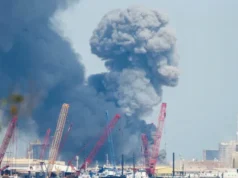
Iran’s IRNA media outlet reported explosions in Bandar Abbas, Qeshm, Gorgan, and Hengam within minutes of those remarks. The Fars region also had its air defences activated.
The attack on Wednesday will be the second day in a row that the US has attacked Iran, shattering the precarious ceasefire that was established on April 8.
Although Tehran has long denied seeking a nuclear weapon, both the US and Israel have claimed that the attack was required to stop Iran from acquiring one.
However, in the months since the war started, the Trump administration has provided conflicting justifications.
US Secretary of State Marco Rubio once claimed that the US took “pre-emptive” measures because it “knew that there was going to be an Israeli action” and wished to prevent reprisal. Since then, Rubio has retracted those statements.
On Wednesday, Hegseth attributed the impending strikes to his dissatisfaction with Iran’s diplomatic strategies.
They have been tap-tap-tapping, as President Trump stated. He remarked, “You can tell when someone is attempting to tap-tap-tap on a deal.” “Instead, the United States of America will be dropping tap, tap, tap bombs on important Iranian facilities.”
Most of the most severe fighting between the United States and Iran has been halted since a temporary ceasefire was declared on April 8.
However, the escalation this week started on Monday night when an AH-64 Apache helicopter was shot down close to the Strait of Hormuz.
On Tuesday, Trump accused Iran of being responsible for the helicopter’s demise. He stated that the US “must, of necessity, respond to this attack” even if no US service men were harmed.
Hegseth disputed that the US intended to resume full-scale combat when he announced a second round of attacks. Instead, he provided a changing justification for the battle by framing the offensive as a way to restart the stalled discussions with Iran.
Regarding the attack on Wednesday night, Hegseth stated, “That’s not because we want to restart anything we don’t have to restart.” “It’s because the War Department is ready to set the conditions so that we get the kind of agreement that President Trump anticipates.”
Concerns like as what would happen to Iran’s nuclear program and if sanctions would be lifted have caused disagreements between the two parties.
Human rights issues have been raised by their remarks. Critics likened Trump’s warnings against Iranian “civilisation” to genocidal statements, arguing that deliberately striking civilian facilities may constitute a war crime.
On Wednesday, reporters brought up such issues with Hegseth.
One reporter questioned, “You just said you’re going to plan to hit them and strike them hard tonight.” “How would it not be a war crime to attack bridges and electrical infrastructure in response, possibly targeting civilian infrastructure?”
Hegseth accused the reporter of “impugning the motives” of the US military and rejected the inquiry as “disingenuous.” However, he would not discount the possibility that Wednesday’s attacks would target civilian infrastructure.
Since the first round of US attacks this week, Iran has reacted with strikes of its own on US locations in Kuwait, Jordan, and Bahrain, indicating that it is not ready to back down.
Hegseth’s remarks in Tampa were cited by numerous political pundits as evidence of a return to “gunboat diplomacy,” or the use of force to further political objectives.
Hegseth declared, “We’ll negotiate with bombs if we need to.”
Hegseth’s remarks in Tampa were cited by numerous political pundits as evidence of a return to “gunboat diplomacy,” or the use of force to further political objectives.
Hegseth declared, “We’ll negotiate with bombs if we need to.”
According to Alan Fisher, a correspondent for Al Jazeera, those remarks signalled a change in direction for the Trump administration.
According to Fisher, “many people would argue that what happened overnight was definitely more than just the downing of a helicopter.” “It seems that we’ve entered a new stage of what a Republican referred to as the “peace-fire.”