


The world of Travel & Tourism has turned its attention to Malta this week, as the World Travel & Tourism Council (WTTC) opened its 26th Global Summit in Valletta, bringing together some of the most influential figures from across the international tourism industry.
Running from 7–9 October at the Mediterranean Conference Centre, the Summit is gathering government ministers, CEOs, investors, policymakers and senior industry figures to examine how the global Travel & Tourism sector must adapt to a rapidly changing world. This year’s Summit is being held under the banner FUTU[RE]SET, with discussions focused on the forces reshaping travel, from artificial intelligence and connectivity to investment, sustainability and changing traveller expectations.
The opening day placed one of the industry’s most important questions firmly at the centre of the conversation: what will make a destination competitive in the next decade?
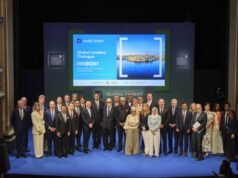
That question came into sharp focus during the high-level Global Leaders Dialogue, which brought together ministers and global business leaders from 24 countries for an unusually direct exchange between the public and private sectors.
Rather than treating government and industry as separate voices, the Dialogue explored how closer cooperation between the two can determine whether destinations are able to attract travellers, investment and talent in an increasingly competitive global marketplace.
Rewriting the rules of global competitiveness
Held under the theme “Rewriting the Rules of Global Competitiveness”, the Global Leaders Dialogue challenged some of the traditional measures of destination success.
Connectivity, ease of travel, investment conditions, regulation and the ability of governments and businesses to work together are becoming just as important as a destination’s attractions, hotels and visitor infrastructure.
Among the ministers taking part were Egypt’s Minister of Tourism and Antiquities Sherif Fathy, Spain’s Secretary of State for Tourism Rosario Sánchez Grau, Bahrain’s Minister of Tourism Fatima bint Jaafar Al Sairafi and Malta’s Minister for Tourism Jo Etienne Abela. Senior representatives from the United States, India and other markets also joined the discussions.
The private sector was represented by figures including William Heinecke, Founder and Chairman of Minor International; Eijiro Yamakita, Chairperson of JTB Corp; Zubin Karkaria, Founder and CEO of VFS Global; Maher Koubaa, President EMEA of Amadeus; Paolo Barletta, CEO of Arsenale; and Senthil Gopinath, CEO of ICCA.
For WTTC President and CEO Gloria Guevara, the central message was clear: competitiveness increasingly depends on partnership.
“Competitiveness is built through partnership,” Guevara said, arguing that governments and industry must work together to create the conditions for investment, innovation, connectivity and sustainable growth.
Making travel genuinely seamless
The first major discussion, “Seamless Travel: Where Government and Industry Meet,” examined the traveller journey from beginning to end.
Visa procedures, border controls, regulation, connectivity, technology, hospitality and logistics are no longer isolated elements of travel. Instead, they form a single experience in which friction at any point can influence a traveller’s decision about where to go.
The rapid development of biometric borders and AI-powered visa systems was therefore a key part of the discussion, with leaders considering how technology can improve security while simultaneously making international travel faster and easier.
It is a particularly relevant debate as international tourism continues to expand and travellers increasingly expect the same level of simplicity and digital convenience when crossing borders as they experience elsewhere in their lives.
The global race for investment
The second session, “Winning the Race for Global Investment,” turned towards perhaps the most important question for destinations seeking long-term growth: what makes a destination genuinely investment-ready?
Ministers and business leaders considered the role of infrastructure, connectivity, regulation, incentives and political decision-making in attracting private capital.
The discussion also questioned whether traditional investment incentives such as tax breaks, golden visas and special economic zones remain enough to persuade investors in an increasingly competitive environment.
Increasingly, investors are looking for something broader: regulatory certainty, speed of decision-making, transparency, reliable infrastructure and confidence that a destination has a clear long-term strategy.
That shift reflects the wider transformation taking place across Travel & Tourism. Destinations are no longer simply competing for visitors; they are competing for investment, businesses, skilled people and the infrastructure required to support future growth.
Malta provides a compelling backdrop
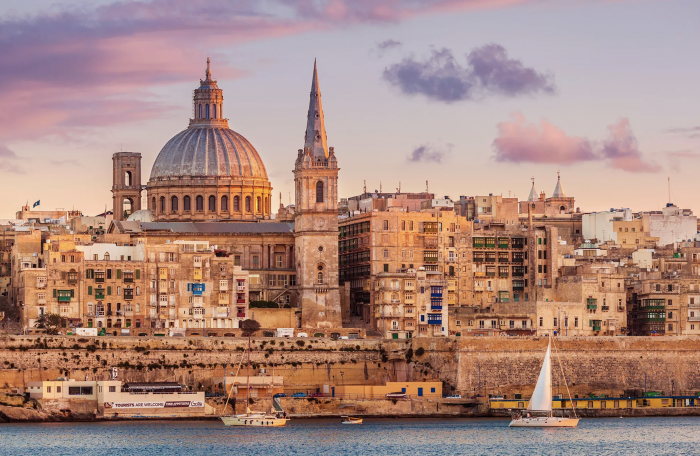
The choice of Valletta as host city adds an interesting dimension to those conversations.
Malta has experienced a remarkable period of tourism growth, with international arrivals rising from 2.75 million in 2019 to four million in 2025. WTTC forecasts that Travel & Tourism will contribute US$4.9 billion to Malta’s economy in 2026, equivalent to 16.9 per cent of GDP, while supporting around 72,200 jobs.
The country is therefore not simply providing the backdrop for a conversation about competitiveness; it is itself an example of a destination attempting to balance growth with quality, sustainability and year-round value.
Malta’s tourism strategy is increasingly focused on attracting higher-value visitors while ensuring that the benefits of tourism extend into local communities and the wider economy. That makes the Mediterranean nation a fitting setting for a Summit examining what the next generation of tourism growth should look like.
The wider European picture is equally significant. WTTC’s latest research presented at the Dialogue shows that Travel & Tourism contributed US$3 trillion to Europe’s economy in 2025, supporting 40.7 million jobs, while international visitors spent US$835 billion across the continent.
A sector preparing for its next chapter
The Global Leaders Dialogue is only the beginning of three days of discussions in Valletta.
More than 100 speakers are taking part across the Summit, with the programme addressing subjects including AI, digital identity, mobility, destination stewardship, sustainability, crisis resilience, tourism employment and the next generation of investment.
The Summit will also see the launch of the WTTC Youth Movement, giving young people a greater voice in discussions about the future of an industry that remains one of the world’s largest sources of employment and economic opportunity.
What has emerged from the first day in Valletta is a recognition that the next era of Travel & Tourism will not simply be about attracting more visitors. It will be about how destinations grow, who benefits from that growth and whether governments and businesses can work quickly enough together to respond to a changing global landscape.
As the WTTC Global Summit continues, Valletta has become more than a meeting place for the industry’s most powerful voices. For three days, Malta is the stage on which the future rules of global Travel & Tourism are being debated — and potentially rewritten.