
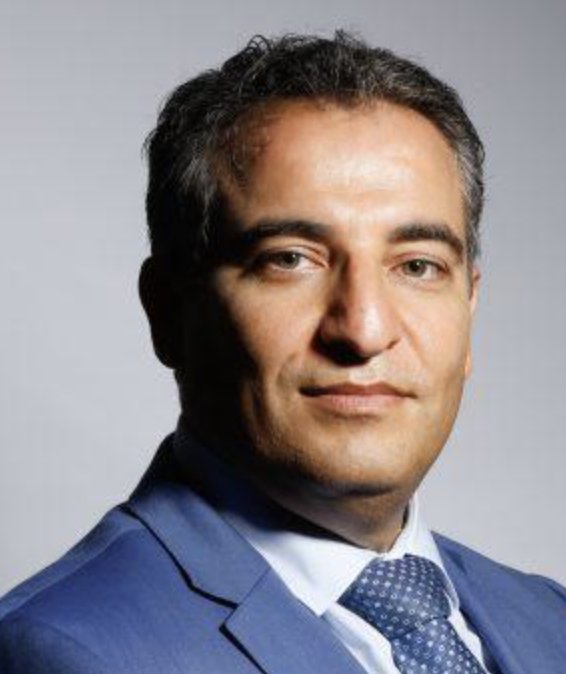


Tourism strategies often begin with targets and end with marketing. Imad Barrakad works in the complicated middle: land, finance, infrastructure, investors and the conversion of concepts into operating destinations. As chief executive of the Moroccan Agency for Tourism Development, known as SMIT, he has occupied that space since 2011.
Barrakad is an industrial engineer with postgraduate training in project management. Before moving into tourism, he built his career at Morocco’s national electricity utility. He joined in 2000, worked on cooperation with municipalities and the development of products and services, became regional director in Rabat in 2006 and moved into commercial and marketing leadership in 2009.
His professional formation began even earlier in renewable energy and energy-efficiency services, an unusual starting point for a tourism chief executive but one that anticipated the infrastructure and sustainability questions now facing destination development. At the national utility, he learned how public investment, municipal priorities and customer demand interact. Those skills became directly relevant when he moved to an agency expected to translate tourism policy into financeable projects across Morocco’s regions.
Barrakad’s tenure also covers repeated attempts to unlock investment beyond established destinations. SMIT supported more than 800 hotels during the 2023 to 2024 recovery period, using public support to accelerate renovation and reopen capacity. The agency’s work increasingly includes small and medium businesses as well as large developments, because Morocco’s tourism targets cannot be met through flagship resorts alone. The investment pipeline must include locally owned accommodation, experiences and services capable of spreading income through the economy.
That utility background is relevant. Tourism development is frequently constrained by the same fundamentals as industrial development: serviced land, power, water, transport, permitting and the coordination of multiple public bodies. At SMIT, Barrakad has applied a project-development mindset to a sector that can otherwise be discussed largely in promotional terms.
The agency was created in 2007 to mobilise investment and support the development of tourism products. Under Barrakad, its remit has included strategic studies, investor support, destination planning and the structuring of large projects. It acts as a bridge between the Moroccan state, regional authorities, landowners, financiers and private developers.
In April 2025, SMIT partnered with TAMWILCOM on digital transformation and financing support intended to make investment pathways more accessible. In November that year, the Ministry of Tourism and SMIT signed a memorandum with Naif Alrajhi Investment for the proposed Tangier Mediterranean City. Such agreements are early steps rather than finished achievements, but they show the agency’s role in bringing capital and destination plans into the same room.
Morocco’s opportunity has grown with record visitor numbers, renewed hotel interest and preparations for major sporting events, including the 2030 FIFA World Cup. Yet rising demand creates a need for more than rooms. Visitors require attractions, entertainment, transport, public realm and viable businesses beyond the established centres of Marrakech and Agadir.
Barrakad’s work therefore increasingly concerns geographic spread and product diversification. Cultural cities, coastal areas, nature destinations and rural communities need investment formats suited to their scale. A large integrated resort may be appropriate in one location, while another requires small accommodation businesses, guiding, food experiences and restoration of heritage buildings.
The test is delivery. Public agencies can accumulate memoranda and masterplans that take years to become operating assets. Land complexity, financing costs and infrastructure dependencies can slow even well-supported projects. SMIT’s credibility depends on how effectively it reduces those barriers and how much local value the resulting investment creates.
Barrakad’s long tenure has given him an unusual institutional memory across changing strategies and market cycles. He understands that capital follows confidence, but also that investor confidence must be matched by community legitimacy and destination capacity. His contribution to Moroccan tourism is the construction of an investment architecture capable of turning national growth into places travellers can actually visit.