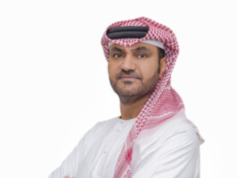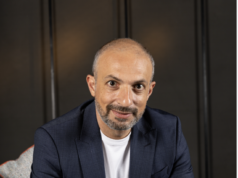




Andrew Tyler-Smith leads an airport with a deliberately different purpose. Red Sea International Airport is the principal gateway to The Red Sea and AMAALA, Saudi Arabia’s new luxury tourism destinations. It must provide international connectivity and premium service while supporting a development model that places environmental limits and carefully managed growth at its core. As chief executive since January 2025, Tyler-Smith is responsible for making those priorities operationally compatible.
His experience spans aviation, defence and complex infrastructure. Before joining the Saudi project, he held senior roles associated with Manchester Airports Group, including customer, security and terminal responsibilities, and served as chief executive of Grand Bahama International Airport. His wider career has included leadership at Airbus, Defence Business Services and the Atomic Weapons Establishment. That mixture brings an appreciation of safety-critical operations, public accountability, commercial recovery and customer experience.
The Caribbean chapter is especially relevant. In Grand Bahama, Tyler-Smith worked in a market where airport performance and destination prosperity were inseparable, and where resilience mattered. He also contributed to long-term visitor-experience thinking with governments in the region. Red Sea International takes that destination-airport relationship further: the gateway is being designed as the opening and closing chapter of a carefully curated journey rather than a neutral transport interchange.
Connectivity has expanded under that mandate. The airport has established regional links through hubs including Riyadh, Jeddah, Dubai and Doha, while international services and announcements have widened access from Europe. Forbes Middle East reported 135,000 visitors in 2025, with further links planned or launched from markets including Italy, Germany, the United Kingdom and Switzerland. Etihad’s announced service for September 2026 adds another powerful network connection.
Tyler-Smith is also building the less visible operating system. A five-year agreement with Saudi Ground Services supports passenger and aircraft handling, while partnerships across security, technology, airlines and destination transport must function as a single guest journey. The airport’s premium promise will be judged at points where organizational boundaries usually create friction: baggage transfers, last-mile movement, irregular operations and special assistance.
Environmental credibility is the harder test. An airport exists to enable flying, yet it serves destinations marketed around regenerative tourism. Leadership therefore requires candour and measurable improvement: efficient aircraft operations, renewable energy, controlled capacity, responsible ground transport and protection of surrounding ecosystems. The answer cannot be a frictionless luxury narrative detached from aviation’s footprint.
Tyler-Smith’s contribution is to treat the airport as destination infrastructure in the fullest sense. It supports access, reputation, employment and investor confidence, while shaping a visitor’s first understanding of place. If he can scale connectivity without losing the intimacy and environmental discipline on which The Red Sea depends, Red Sea International will offer a model for a new generation of resort gateways. Its importance lies not in becoming the busiest airport, but in becoming one of the most coherent.
Resilience will be a practical measure of that coherence. Resort guests may have complex international itineraries, and disruption at a small destination airport can quickly cascade into missed connections and damaged holidays. Tyler-Smith must build weather, diversion, baggage and passenger-care plans with airlines and ground partners before traffic reaches maturity. Premium service is most convincing when an operation recovers well under pressure, not only when everything runs to schedule.
He is also creating a new workplace in a relatively remote area. Recruitment, housing, transport and training affect whether the airport can retain experienced colleagues and develop local talent. The gateway can become a source of long-term technical and service careers for surrounding communities if workforce planning is treated as part of infrastructure. That social dimension connects the airport more meaningfully to the regenerative claims of the destinations it serves.