
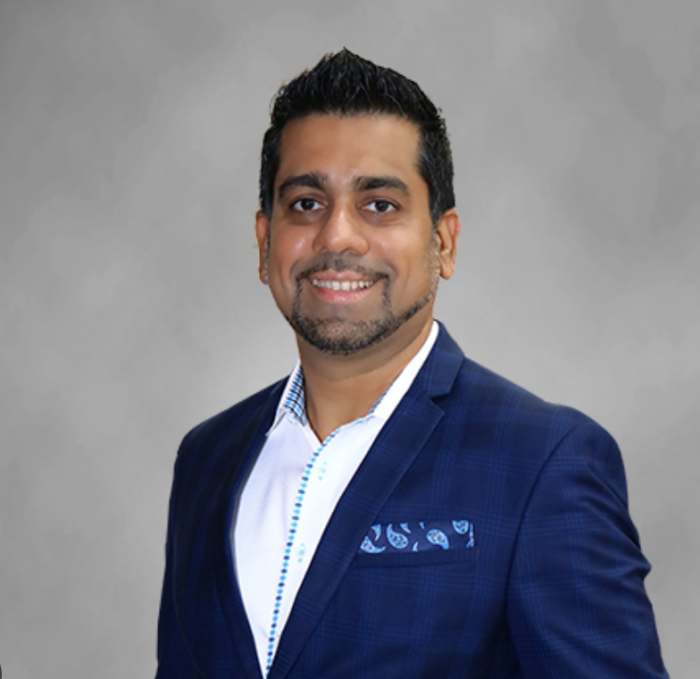


Prateek Kumar’s regional brief is unusually broad. As senior vice president of operations for Dusit Hotels & Resorts, he oversees properties across Europe, the Middle East, Africa, India, the Philippines, Singapore, the Maldives and Japan, as well as selected hotels in Thailand. The map spans city hotels, islands, mature markets and new destinations, but the common task is preserving a Thai-rooted service identity while adapting it to local guests and owners.
Kumar joined Dusit in 2008 and has grown with the company. Before taking his current position in May 2023, he served as regional vice president for Europe, the Middle East and Africa and held senior hotel leadership assignments. That internal progression gives him institutional memory at a time when Dusit is diversifying its brands, formats and geographic reach.
His role is operational, which makes him accountable for the part of expansion that press releases cannot prove. A signed project enters a pipeline; an open hotel must satisfy guests, colleagues and owners every day. Kumar coordinates general managers, commercial performance, standards, food and beverage, service delivery and talent across markets with different cost structures and cultural expectations.
Dusit’s competitive advantage is not sheer scale. It is the idea of gracious, personalized hospitality informed by Thailand’s service culture. Kumar must turn that intangible promise into behaviours that can be taught and measured without becoming scripted. In the Middle East, where luxury supply is intense and guests compare brands globally, warmth must be matched by technical precision and commercial sophistication.
His portfolio also demonstrates the importance of thoughtful localization. A resort in the Maldives, a hotel in Japan and an urban property in the Gulf cannot offer identical experiences. The brand needs recognizable values, but restaurants, wellness, design, staffing and programming should respond to place. Kumar’s long tenure helps him distinguish the principles that must remain constant from the formats that should change.
Growth creates a talent problem before it creates a room problem. New hotels need general managers and department heads who understand both the brand and the market. Kumar’s remit allows him to move expertise between regions and create broader career paths. The quality of that leadership bench will determine whether Dusit’s expansion strengthens its reputation or stretches it.
Kumar represents the operational leadership that turns cultural heritage into an international business. He is not simply exporting a Thai formula. He is overseeing a process of translation, ensuring Dusit’s service philosophy remains meaningful across very different destinations. In a hotel landscape crowded with brands, that disciplined protection of identity is strategically important. It gives owners a clear proposition and gives guests something more memorable than another well-appointed room.
Owner performance remains the commercial proof. Dusit may bring cultural distinction, but developers also expect rate growth, efficient distribution and control of payroll and procurement. Kumar’s multi-region oversight lets him compare performance, identify where brand standards add value and remove costs that guests do not appreciate. The strongest operators protect service by making the rest of the business more productive, not by treating warmth as a substitute for financial discipline.
The pandemic and subsequent travel recovery reinforced the need for adaptable operating leaders. Demand can change quickly between international leisure, domestic stays, groups and corporate travel. Kumar’s properties require local authority to respond, supported by regional intelligence and common systems. By creating that balance, he can make Dusit’s diverse footprint an advantage: experience gained in one market becomes a resource for another, while decisions remain close to the guest.