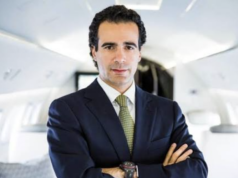




Adel Al Ali has served as group chief executive of Air Arabia since its establishment in 2003. Over more than two decades, he has led the company from a Sharjah start-up into a multi-hub airline group and one of the region’s defining low-cost carriers. His achievement is not simply growth. It is the creation of a business model that widened access to air travel while maintaining an unusual focus on profitability and cost discipline.
Al Ali entered the venture with more than 30 years of aviation experience. He spent over two decades with British Airways, including responsibility as general manager for the Middle East and Africa, and later served at Gulf Air as vice president for commercial and customer service during a period of restructuring. Those roles taught him both the capabilities of a global airline and the burden of complexity.
Air Arabia’s founding proposition was clear: safe, reliable travel at fares more people could afford, based on a simple fleet and efficient operations. From Sharjah, the airline developed routes often overlooked by traditional network carriers, connecting cities across the Middle East, North Africa, Asia and Europe. The model stimulated new demand rather than merely taking share from full-service airlines.
Al Ali then extended the concept through joint ventures and hubs beyond the UAE. The group structure gave Air Arabia access to local markets while applying common commercial and operating expertise. Such expansion is difficult. Regulatory environments, currencies and consumer expectations vary, while each affiliate must maintain safety and brand consistency. Al Ali’s preference for measured growth has been central to managing that complexity.
His leadership style is closely associated with cost control, but low cost is not the same as low quality. Aircraft utilization, direct distribution, ancillary revenue, schedule design and a focused product allow the airline to offer lower fares. The value disappears if unreliability creates hidden costs for passengers. Air Arabia’s sustained standing rests on operational discipline alongside price.
The tourism impact is substantial. Affordable direct services connect visiting-friends-and-relatives markets, emerging cities and leisure destinations that might not support a widebody network model. Sharjah has benefited from a home carrier able to feed its airport and tourism economy, while other hubs have gained additional capacity and competition.
Al Ali has now led Air Arabia through oil-price cycles, geopolitical disruption and the pandemic. Longevity alone is not the accomplishment; adaptation is. Fleet renewal, digital retailing and environmental pressure will define the next phase. His recognition in 2026 reflects a legacy already secure: he proved that a disciplined Arab low-cost airline could become an institution, and in doing so changed who gets to fly across the region.
Sharjah’s role in that story should not be underestimated. Al Ali helped make a secondary Gulf airport into a powerful base by aligning airline growth with a lower-cost, convenient gateway. The relationship generated traffic, jobs and international visibility for the emirate while giving the carrier an operating environment suited to its model. It is a reminder that airlines and airports create the most value when their strategies are mutually intelligible.
Succession is now part of his responsibility. Air Arabia’s culture has been shaped closely by its founding chief executive, especially its resistance to unnecessary complexity. A durable institution must preserve that discipline without depending on one leader’s judgement. Al Ali’s final and perhaps most difficult act of entrepreneurship will be to ensure systems, talent and governance can make equally clear decisions when the founder is no longer in the room.