
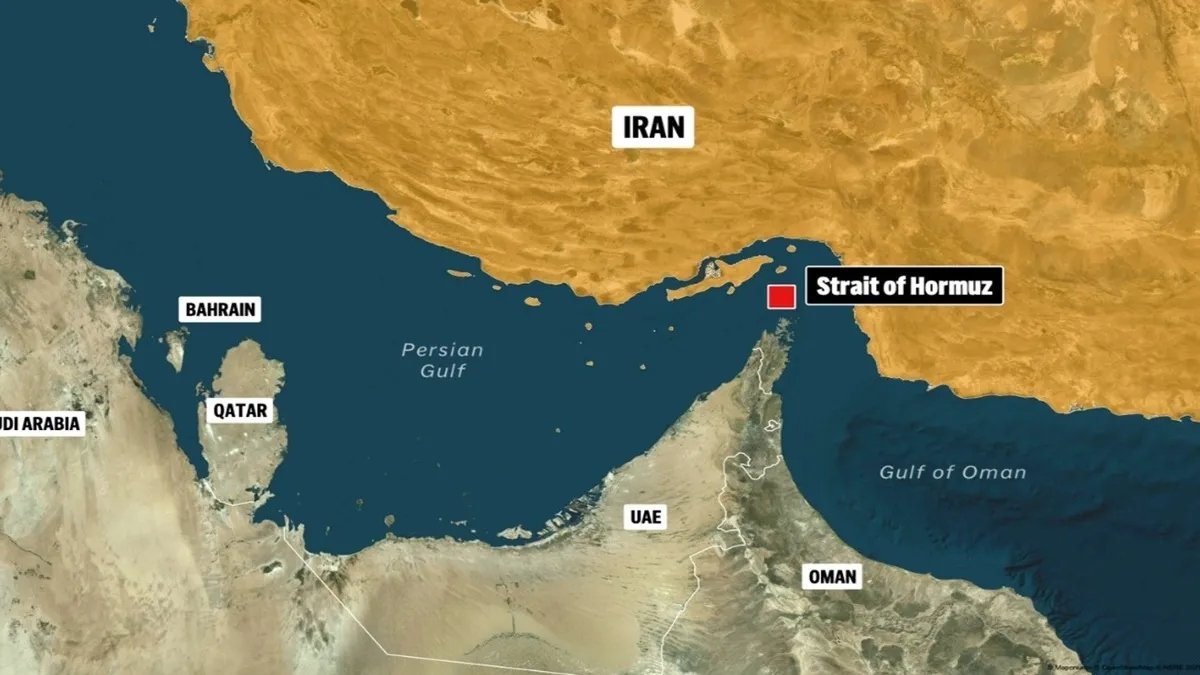

Iran and Oman have agreed on details of new entry and exit routes for the Strait of Hormuz, Iranian officials said on Saturday, amid heightened tensions in West Asia and growing international attention on the strategically vital waterway. The two countries reached an understanding on the new routes following consultations, with the details set to be presented to Gulf countries at a regional meeting in Muscat on Monday, ANI reported, citing Xinhua News.
The development comes as the Strait of Hormuz remains a key focus amid escalating regional tensions.
Iran-Oman understanding does not mean reopening of Hormuz
Citing a source close to Iran’s negotiating team, the semi-official Tasnim news agency reported that the understanding was reached after ‘intensive technical and diplomatic talks’ between Iran and Oman, which culminated in a final agreement in late August.
Under the proposed arrangement, the entry route from the Gulf would lie entirely within Iranian territorial waters, while part of the exit route would also pass through Iranian waters, Tasnim reported, citing sources.
The routes would operate under Iranian arrangements, while the southern route would be closed once the new system becomes operational, according to the source. The source claimed the United States had insisted that the southern route remain open.
The source also stressed that the agreement does not mean the Strait of Hormuz will be reopened. According to the report, Iran has set out seven conditions for reopening the strategic waterway and has conveyed them to the United States.
BRICS reaches consensus on West Asia situation
Meanwhile, BRICS countries reached a consensus on the situation in West Asia, with dialogue and diplomacy emerging as the guiding principles for addressing conflicts, Secretary (Economic Relations) in the Ministry of External Affairs Sudhakar Dalela said on Saturday.
Addressing a media briefing after the BRICS Leaders’ Summit, Dalela said the diverse development experiences and economic systems of BRICS members required space for discussions on national perspectives before building consensus.
“I would say that within the BRICS and in the preparation for the BRICS summit, we have been discussing these issues for some time, and I think it is the essence of the BRICS view is captured in para 28 of the New Delhi Declaration. In a grouping like BRICS, where we have members with diverse development experiences and diverse economic systems, it is important that we allow discussions to evolve and emerge, and we, as Chair, have provided a forum for very transparent discussion among us, and we have ensured that everybody is comfortable expressing their national perspective, and then within that framework, we try to build consensus and see which are the lending zones, which are the comfort areas,” he said.
(With ANI inputs)
Also Read
Saudi Arabia’s East-West oil pipeline targeted by Houthis; satellite images show huge plume of smoke
Literal shockwave: Israeli strike on Hezbollah triggers 4.1 magnitude quake in Lebanon | VIDEO