

Summer safaris frequently allow for prolonged observation rather than quick looks, which makes the experience more significant and unforgettable.
Families are already looking for the ideal vacation spot for 2026 as summer holidays get near. When going within the nation, many people prefer to visit North India’s colder hill areas, which frequently leads to congested tourist destinations. Go to Madhya Pradesh this season if you want to discover a real hidden gem instead of the usual. Panna National Park, a breathtaking but underappreciated wildlife location that is still one of India’s most captivating but little-known safari experiences, lies tucked away in the state.
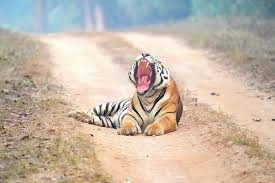
Summer may be the ideal season if you’re thinking about taking a wildlife vacation. Despite what many people think, April through June are some of the best times to see animals. Animals cluster near dependable watering spots as water sources diminish, thus increasing the likelihood of sightings. While encounters are typically longer and more behavioural, providing a deeper understanding of wildlife habits, sparse foliage improves vision across dense forest terrain. Summer safaris frequently allow for prolonged observation rather than quick looks, which makes the experience more significant and unforgettable.
What Sets Indian Wildlife Tourism Apart
India’s forests need time, intuition, and interpretation, in contrast to the vast savannas of Africa. Subtle signals, such as a spotted deer’s alarm call, langurs communicating from the canopy, or new pugmarks imprinted in dust, can reveal sightings. This results in a safari experience that is naturally immersive, unplanned, and thought-provoking.
According to industry estimates, wildlife travel in India has been increasing at a rate of 15–20% per year, with central India emerging as a major benefactor.
Tigers, leopards, gharials, and more may be found at Panna National Park.
In addition to a rich environment that includes leopards, sloth bears, gharials, and more than 200 kinds of birds, Panna National Park is widely recognised as a historic conservation success since it has restored its tiger population from near extinction in the late 2000s to over 70 tigers today.
Oberoi Hotels & Resorts has launched a new wildlife-led luxury itinerary based around central India within this changing backdrop. The Oberoi Rajgarh Palace, a 350-year-old Bundela palace that has been painstakingly rebuilt over the course of more than ten years, is the focal point of this itinerary.
Situated in the Maniyagarh Hills on a 76-acre estate with forests and a natural lake, the palace has a special place at the meeting point of tradition and nature. The building, which was first constructed by Maharaja Hindu Pat of the Bundela dynasty, has been restored with an emphasis on maintaining its architectural integrity while subtly and sensibly adding modern elegance. The palace has 65 rooms and suites, including large palace suites, villas with private pools, and lodgings with terraces and private gardens that overlook the surrounding hills and forests.
The Wildlife-Led Luxury Itinerary at the Oberoi Rajgarh Palace
A key component of the property’s placement is its closeness to Panna National Park. The palace provides easy access to well planned safari experiences guided by Oberoi’s in-house naturalists and is only a short distance from the park’s entrance.
While the estate itself is still closely linked to the surrounding ecosystem, morning and evening trips in specially built 4×4 vehicles provide the rhythm of the stay. A constant interaction between the property and the terrain is reinforced by the presence of birds, small mammals, and natural plants, which extend the experience beyond the safari.
The palace’s closeness to the Khajuraho Group of Monuments, a UNESCO World Heritage Site known for its elaborate temple architecture and historical significance, is equally important. One of India’s most significant creative legacies is the Khajuraho temples, which were constructed by the Chandela dynasty between the ninth and twelfth centuries.
Experiencing both the wilderness of Panna and the cultural legacy of Khajuraho in one trip provides a unique dichotomy that is becoming more and more prized in luxury travel.
Direct Flights to Khajuraho From Delhi
This idea is further supported by accessibility. Delhi and Khajuraho are connected by direct flights. The increasing desire for short-format, high-value itineraries that maximise both time and depth is supported by this mobility.
In this changing paradigm, luxury is increasingly defined not only by lodging but also by the depth of involvement, the complexity of the experience, and the destination’s integrity.