

WTTC is asking the world to choose seven landmarks that changed how we travel. After a weekend debating it with my dad, I’ve got a building site in Barcelona, an opera house in the Amazon and a fairly serious problem with the number seven.
The ancient Greeks gave travel one of its most perfectly executed destination marketing strategies. Pick seven places worth seeing and leave everyone else to argue about the eighth. From the Hellenistic age to the Renaissance, scholars have identified at least 25 different lists. In 2007, a global ballot put Petra, Machu Picchu and Rio’s Christ the Redeemer among a new seven. When the organisers turned to the wonders of nature, South Africans spent three years campaigning for Table Mountain. What tourist board wouldn’t want that kind of commitment?
The World Travel & Tourism Council has now reopened the argument with its search for the Seven Contemporary Wonders of the World. Its definition of contemporary takes us back to 1801, and it asks what each contender has done for the people who live there as well as those who come to visit. I spent the weekend pondering the list with my exceptionally well-travelled dad. We ran into difficulty in Dubai alone.

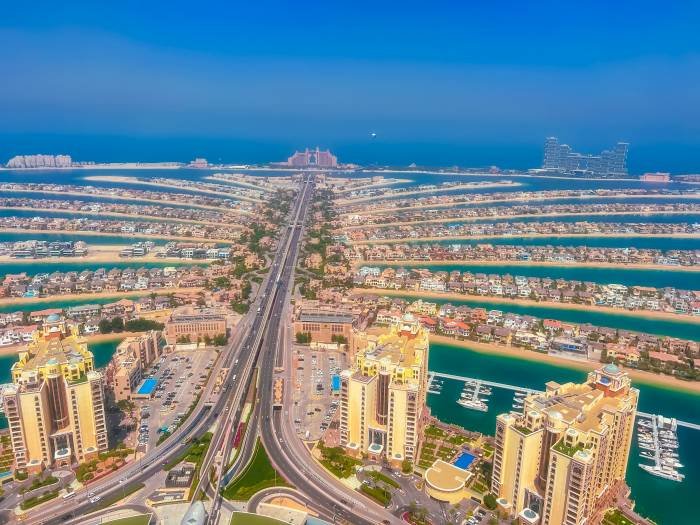
Dad lives in Dubai and his choice was Palm Jumeirah. He has a point. Dubai drew itself a new coastline in the shape of a palm tree and invited people to come and stay on it. You could equally argue that the Burj Al Arab put Dubai on the map. When that sail-shaped hotel opened in 1999, people who had never considered a holiday in the emirate suddenly had a picture of it in their heads. I went for the Burj Khalifa. There’s something wonderfully straightforward about promising visitors the tallest building on Earth and delivering all 828 metres of it. Between us we had a hotel, an island and a skyscraper, and we had yet to leave town.
If the question is which building persuaded people to book a trip, the Guggenheim Bilbao has a particularly good answer. Would you book a weekend in Bilbao without checking what was on at the Guggenheim? I would. Frank Gehry’s museum welcomed 1.3 million visitors in 2025, 69 per cent of them from outside Spain. Other cities saw the possibilities. In 2012, the Louvre opened a museum on a former coal mine in Lens. In 2018, the V&A opened on Dundee’s waterfront. Abu Dhabi went back to Gehry himself.
Living in Abu Dhabi, I’d be tempted to nominate the whole of Saadiyat Cultural District. I’d start at Zayed National Museum, because the story of Sheikh Zayed and the country he helped bring together gives you a sense of whose island you’re on. Look at the concentration of culture around it. You can stand beneath the dome of Louvre Abu Dhabi, explore Natural History Museum Abu Dhabi and spend an afternoon at teamLab Phenomena. On 11 December, Gehry’s Guggenheim Abu Dhabi is due to open, the largest Guggenheim in the world. Bilbao gave me a reason to book a weekend. I’d allow rather longer for Saadiyat.
Yet if WTTC gives particular weight to what a landmark means to its community, Abu Dhabi’s strongest contender may already be across town. The Sheikh Zayed Grand Mosque counted 4.3 million visitors in 2025 and, separately, nearly 900,000 iftar guests. A traveller crossing that white marble courtyard for the first time and a resident arriving to break the Ramadan fast have quite different reasons for being there. I like a definition of wonder that has room for both.
Cape Town found its museum in a building it already had. It took some imagination to look at a disused grain silo and see Zeitz Museum of Contemporary Art Africa. Thomas Heatherwick’s team carved an atrium out of its 42 concrete tubes, leaving enough of their shape for visitors to see how the silo once worked. A building that spent its working life shipping grain overseas now draws people in the other direction, to Cape Town, to see contemporary art from Africa and its diaspora.
The Panama Canal deserves a proper hearing here. At the Miraflores Locks, more than a million people a year turn up to watch ships go past. From the viewing deck you can see the water lift an ocean-going vessel and, in a few minutes, grasp how a ship gets across a continent. There’s a Caribbean claim on this wonder, too. Around 20,000 workers came from Barbados during the American construction period. If Panama makes the seven, I’d like to hear a cheer for Barbados.
The canal also obliges me to consider Japan. When the Tokaido Shinkansen opened in 1964, it cut the rail journey between Tokyo and Osaka from six and a half hours to four. Someone buying a return ticket that first week got five hours back. Panama changed the route a ship could take. Japan changed what a traveller could do with a day. Elsewhere in Asia, Dad’s palm tree has competition from Gardens by the Bay. Singapore planted a grove of Supertrees, invited people to walk among their canopies and has recorded more than 100 million visits to the gardens since 2012. In a field likely to attract every city with a record-breaking skyscraper, I rather like Singapore’s chances with a garden.
For sheer pleasure on arrival, I’d take the ferry into Sydney. From the water, the white sails of the Opera House look entirely at home among the boats. You can go ashore, walk up the steps and spend the evening beneath them listening to a performance. Christ the Redeemer in Rio works the other way round. From below, the outstretched arms draw your eye to the summit of Corcovado. From the statue’s feet, the attraction is Rio itself. An afternoon spent looking at the city from up there makes a pretty good case for the monument.
America gave me almost as much trouble as Dubai. The Statue of Liberty was my first thought. Between 1886 and 1924, nearly 14 million immigrants entered the United States through New York. Imagine seeing her from the deck of a ship with everything you owned in your luggage. Yet if we’re asking which places changed where people go on holiday, I’d give Disneyland in Anaheim a hearing. Walt Disney opened a theme park on former California orange groves in 1955. Families now plan holidays around versions of that idea from Paris to Shanghai. And where have Disney and Miral chosen for the seventh resort? Yas Island, Abu Dhabi. Somehow the argument has brought me home again.
The harder judgement is what to do about time. I want to know what it took to build a place in its day and whether it can still astonish somebody walking through the door a century later. In Manaus, where I spent part of my honeymoon, the rubber boom paid for an opera house that opened in 1896. The boom has long since passed, but you can still book a seat at Teatro Amazonas for the opera festival. In Barcelona, Gaudí lived to see just one bell tower of the Sagrada Famíliafinished. A century after his death, visitors still walk into that forest of stone columns and stop to look up. Nearly 4.9 million came in 2025, their tickets helping to pay for the work still to come.
I’m less sure about the London Eye, although I suspect David Marks and Julia Barfield might have enjoyed that argument. They conceived a wheel for the millennium, secured planning permission for five years and gave London a silhouette that now feels entirely at home on the Thames. Is it wondrous enough for a world seven? I might have asked much the same question about the Eiffel Tower in 1889. Imagine being the official sent to tell the people of Paris that the 20-year concession was up and it was time to take it down.
And then the Grand Egyptian Museum rather spoils my argument for waiting. Here is a wonder within wonders. At Giza, you can spend the morning looking up at the Great Pyramid and the afternoon standing beside the wooden boat built for the pharaoh who commissioned it. The treasures of Tutankhamun can finally be seen together in full. Egypt has reset the bar for cultural tourism by giving someone who has spent a lifetime dreaming of the pyramids an entirely new way to experience them. The museum opened fully in 2025. I’d put it on my list today.
After a weekend of this, I’m still pondering as I wonder. Dad, meanwhile, has the considerable advantage of having answered the question. What about you? Nominations are open now. WTTC will reveal its 70 nominees on 7 January 2027, when public voting begins. Get your vote in. I have a fair idea where Dad’s is going.
Nominate your contemporary wonder with WTTC
By Justin Cooke, Editor-in-Chief, Breaking Travel News