
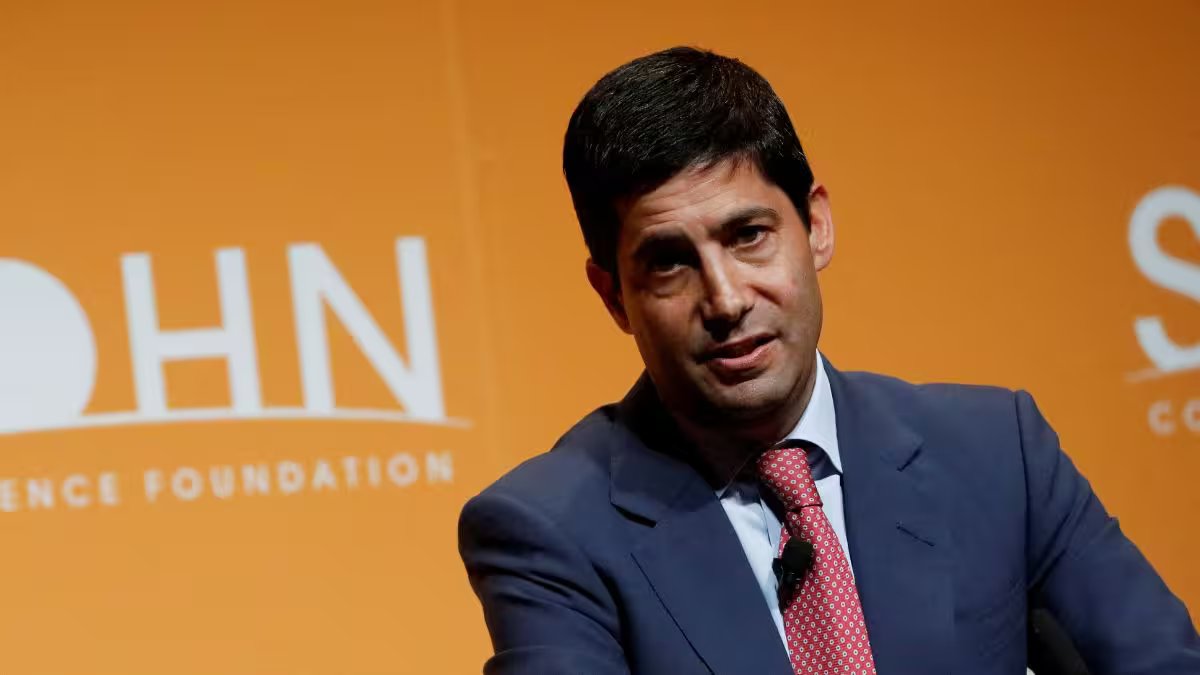

The new Fed chair stopped short of signalling a rate hike, but his warning that policymakers have “work to do” if inflation fails to move convincingly toward 2% has put September firmly back in play.
Federal Reserve Chair Kevin Warsh has changed the debate around the central bank’s next move, shifting markets from a discussion dominated by the prospect of eventual easing to a more immediate question: could persistent inflation force the Fed to raise interest rates as soon as September?
Warsh did not promise a hike — and went out of his way to say his Jackson Hole remarks were not “forward guidance”. But his message was unmistakably focused on inflation. He said the Fed must be confident that underlying inflation is moving toward its 2 per cent objective “clearly and at sufficient speed”; otherwise, policymakers would have “work to do”.
That was enough to push rate-hike expectations higher. Before Warsh’s speech, markets saw roughly a one-in-three chance of a September increase. Afterward, that probability rose to 57 per cent, according to CME Group’s FedWatch tool. The Fed’s next policy meeting is scheduled for September 15-16.
The significance of Warsh’s message lies less in an explicit policy signal than in what he identified as the Fed’s immediate problem.
“The Fed’s predominant focus right now should be on prices,” Warsh said, arguing that the inflation side of the central bank’s mandate was more concerning even as consumer spending remained healthy and the labour market stable.
 More from Business
Inflation is now the market’s trigger
That puts the upcoming inflation data at the centre of the September decision.
July inflation had already complicated the case for near-term easing. Warsh said recent readings, although better than expected in some respects, did not convince him that the underlying inflation trend had meaningfully improved. Annual inflation remained above the Fed’s 2 per cent target for the 65th consecutive month, while about half of the components in the Fed’s preferred personal consumption expenditures price index were rising at an annual rate above 3 per cent.
The implication is straightforward: a softer inflation reading could keep the Fed on hold, but another firm reading could materially strengthen the case for a hike.
Markets are also watching the labour market. Warsh described the economy as resilient, saying he was impressed by its overall performance. He also argued that credit and loan markets showed few signs of policy restraint and that broad financial conditions were not restrictive.
That matters because a stronger economy gives policymakers more room to prioritise inflation without immediately fearing that higher rates will tip the economy into recession.
Warsh deliberately leaves the decision open
Yet the new Fed chair has not abandoned his preference for keeping markets guessing.
Warsh has criticised forward guidance, arguing that excessive communication can make monetary policy less flexible. At Jackson Hole, he joked that his speech could be called an “outline” or a “trail map” — but not forward guidance.
The approach represents a significant change in how markets may have to read the Fed. Instead of looking for explicit promises about the next meeting, investors are being pushed toward the incoming economic data.
Warsh has effectively set a test: is inflation moving toward 2 per cent quickly and convincingly enough?
If the answer is yes, the case for holding rates strengthens. If the answer is no, Warsh has already signalled that the Fed may need to do more.
That is why September has suddenly become less about what Warsh will do and more about what the next inflation report forces him and his colleagues to do.
The shift is particularly important because three Fed policymakers dissented at the July meeting in favour of tighter policy, while the federal funds target has remained at 3.50 per cent-3.75 per cent since December.
For now, Warsh has offered markets no commitment to either a hike or a hold. But he has made one thing considerably clearer: inflation is back at the centre of the Fed debate, and the next major data prints could decide whether September becomes a pause or the start of another tightening move.