

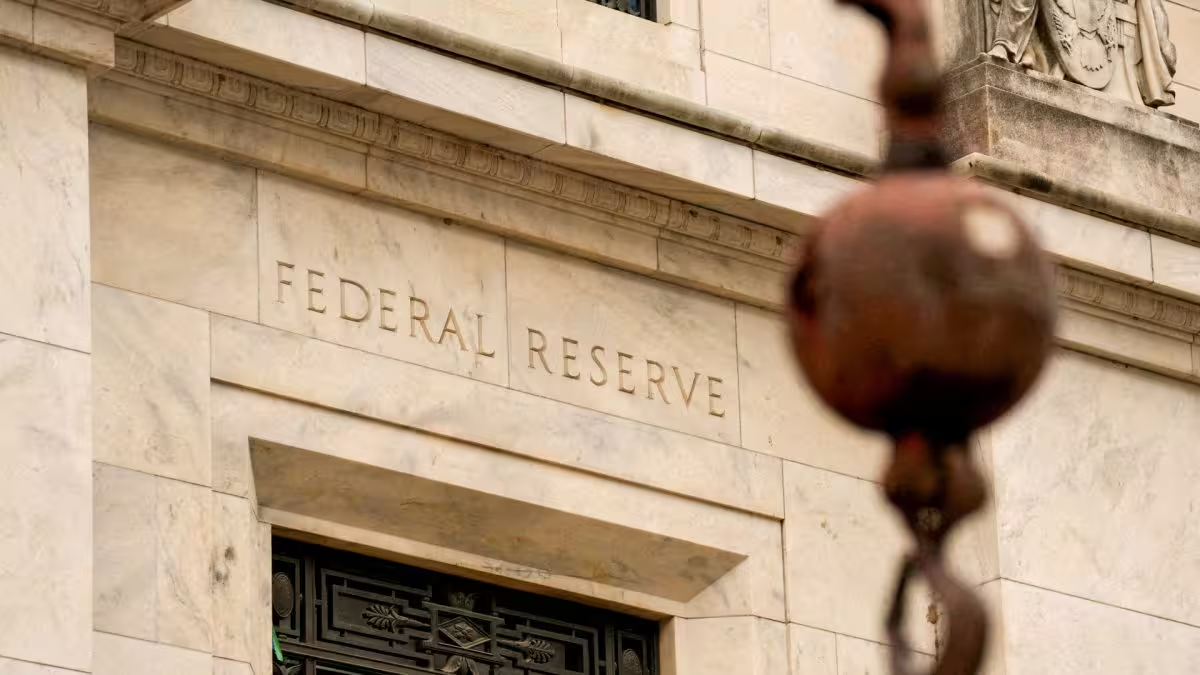

US inflation remained above the Federal Reserve’s 2 per cent target, but softer-than-expected price growth and revised July data reduced expectations of an October rate hike
US inflation rose less than expected in August, offering some relief to the Federal Reserve as it weighs whether to raise interest rates again. But a sharp rise in consumer spending showed that demand in the economy remains resilient.
The Personal Consumption Expenditures price index, the Fed’s preferred inflation gauge, rose 0.3 per cent in August after a downwardly revised 0.1 per cent increase in July, the Commerce Department’s Bureau of Economic Analysis said on Wednesday.
On a year-on-year basis, PCE inflation rose 3.4 per cent in August, unchanged from the revised July rate. Economists polled by Reuters had expected inflation to rise 3.7 per cent.
The August reading was also lower than the 3.7 per cent annual increase previously reported for July. The BEA revised the data after changing its methodology for measuring prices for software and accessories, portfolio management fees and legal services. The agency also revised inflation data going back to 2021.
Core PCE inflation, which excludes volatile food and energy prices, rose 0.2 per cent in August. It increased 3.0 per cent from a year earlier, after a downwardly revised 3.0 per cent rise in July.
 More from Business
The Fed has a 2 per cent inflation target, meaning price growth remains above the central bank’s preferred level despite the latest moderation.
Consumer spending jumps
The inflation report came alongside data showing strong consumer demand.
Consumer spending surged 0.9 per cent in August after a downwardly revised 0.1 per cent increase in July. Economists had been watching spending closely because consumer consumption accounts for more than two-thirds of US economic activity.
After adjusting for inflation, consumer spending increased 0.6 per cent in August. Personal income rose 0.2 per cent, while disposable income increased 0.3 per cent.
The saving rate fell to 4.1 per cent from 4.6 per cent in July.
The combination of softer inflation and strong spending presents a mixed picture for the Fed. Lower-than-expected price growth could reduce the immediate pressure for another rate increase, while resilient demand could keep inflation elevated.
What it means for Fed rates
Financial markets reduced their expectations for an October rate hike after the data. The probability of a rate increase at the Fed’s October 27-28 meeting fell to around 41.5 per cent, from 51.5 per cent before the report, according to the CME FedWatch Tool cited by Reuters.
The shift also came after New York Fed President John Williams said on Tuesday that he saw no urgency for further action.
The Fed raised its benchmark interest rate to the 3.75-4.00 per cent range earlier this month. It was the first rate increase in three years, with policymakers signalling that further increases could be needed.
The latest inflation figures could give policymakers more time to assess incoming economic data before deciding on another increase.
However, the case for further tightening has not disappeared. Inflation remains well above the Fed’s 2 per cent target, while consumer spending continues to show strength.
Economists also pointed to the risk that higher energy prices could keep inflation under pressure. Gasoline prices rebounded 4.4 per cent in August, while food prices were unchanged.
“Two months’ worth of data is not enough to point to a new trend,” Stephen Stanley, chief US economist at Santander US Capital Markets, said, according to Reuters. He said the data gave the Fed some reason for optimism but suggested policymakers could remain cautious about further rate increases.
The US economy has also remained resilient. Gross domestic product growth for the second quarter was revised up to an annualised 2.2 per cent, with consumer spending and business investment supporting activity.