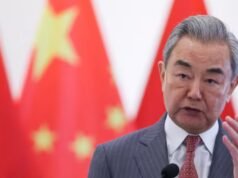



AI has emerged as a key issue ahead of the Trump-Xi summit, with the US and China discussing AI safety, advanced chips and a mechanism to report incidents that could threaten national security
Artificial intelligence has emerged as a key issue ahead of US President Donald Trump’s meeting with Chinese President Xi Jinping, adding a new technology dimension to talks already expected to cover trade, tariffs, critical minerals, Taiwan and Iran.
Trump and Xi are scheduled to meet in Washington on Thursday, September 24, as the world’s two largest economies try to stabilise a relationship marked by trade restrictions and growing competition over advanced technology.
AI was already part of discussions between the two leaders during Xi’s visit to Beijing in May. But the issue has gained greater importance ahead of their latest meeting after senior US and Chinese officials discussed a possible mechanism for dealing with AI-related incidents.
US Treasury Secretary Scott Bessent said Washington had proposed a new notification system that would allow the two countries to alert each other about AI incidents that could affect national security. The proposal was discussed during Bessent’s talks with Chinese Vice Premier He Lifeng in New York ahead of the Trump-Xi summit.
Bessent said the two sides had agreed to establish a formal dialogue focused on AI risks and emergency communication protocols. US and Chinese officials are expected to meet again in Shenzhen within two months to continue those discussions.
 More from Business
The proposed mechanism does not mean Washington and Beijing have agreed to cooperate broadly on AI. Instead, it points to a limited area where the two countries could communicate despite their wider technology rivalry.
Why AI matters to Trump and Xi
The US and China are competing for an advantage in AI because the technology is increasingly linked to economic growth, advanced manufacturing, cybersecurity and military capabilities.
Washington has imposed restrictions on China’s access to some advanced semiconductor technology used to develop and operate leading AI systems. At the same time, Chinese companies have continued to develop their own AI models and reduce their dependence on US technology.
Reuters reported last week that AI competition is expected to be a central issue at the Trump-Xi talks, with disagreements extending to advanced chips, technology transfers, AI regulation and the potential military use of autonomous systems.
Trump has repeatedly stressed the importance of maintaining US leadership in AI. He said earlier this month that “whoever wins AI, wins”, reflecting the administration’s view that technological leadership is closely linked to economic and strategic power.
At the same time, concerns about the risks posed by increasingly capable AI systems have intensified. The proposed US-China notification mechanism could provide a channel for the two countries to discuss incidents involving AI systems without resolving their broader competition.
AI cooperation despite technology rivalry
The timing of the proposal is significant because Washington and Beijing remain divided over technology controls.
The US has accused Chinese companies of using techniques such as model distillation to reproduce capabilities developed by American AI companies. Beijing has rejected such accusations.
The two countries also have different approaches to AI regulation. Trump has generally argued against regulations that could slow US technological development, while China has introduced rules covering areas including generative AI and AI-generated content.
Yet the risks created by increasingly capable AI systems could provide a narrow area for dialogue.
The Associated Press reported that both countries are concerned about risks including cyberattacks, biological misuse, loss of control over AI systems and threats to critical infrastructure such as finance, transportation and energy.
OpenAI has also called for international technical standards for advanced AI systems and greater coordination on incident reporting. The company has argued that common standards could help governments and developers respond to risks as AI capabilities advance.
Trade remains the main economic issue
AI, however, is not replacing trade as the central economic issue between Trump and Xi.
The two countries are still working under a fragile trade truce that is due to expire on November 10. Officials are discussing ways to maintain tariff stability and potentially reduce duties on some non-critical goods.
Bessent has also discussed a possible arrangement involving reciprocal tariff reductions worth about $30 billion, covering areas such as agriculture, energy, medical devices and other goods.
There are also unresolved issues involving China’s purchases of US agricultural products and Boeing aircraft, as well as restrictions on critical minerals and rare earths.
The latest talks have therefore focused on whether the existing trade arrangement can be extended and whether the two sides can make incremental progress without reopening last year’s tariff confrontation.
Taiwan, Iran and rare earths add to the agenda
Beyond trade and technology, Taiwan remains one of the most sensitive issues in the US-China relationship.
Iran is another issue that could feature in the discussions. China remains an important economic partner of Iran, including as a buyer of Iranian oil, while the Trump administration has increased pressure on countries and entities involved in Iran’s energy trade.
Rare earths are also important because China has a dominant position in their global supply chain. The materials are used in a range of products, including electronics, electric vehicles and advanced technologies.
Against this backdrop, the Trump-Xi meeting is likely to cover several areas where the two countries are competing while looking for limited areas of cooperation.
AI stands out because the latest talks have produced a specific proposal for communication on safety incidents. Whether that develops into a lasting mechanism will depend on what Washington and Beijing can agree on after the leaders meet.
(With inputs from agency.)