

Paramount has agreed to higher US film production, cable safeguards and independent oversight of CNN and CBS as part of the settlement
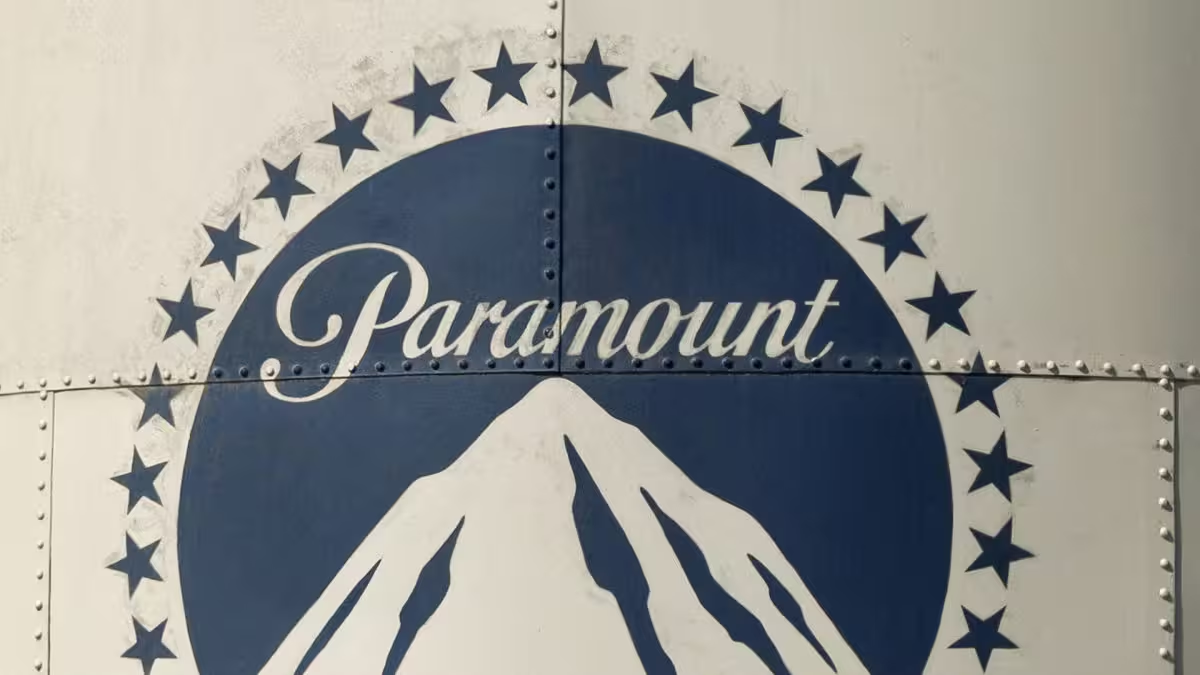
Paramount Skydance has settled a lawsuit brought by California and 11 other US states over its planned $110 billion acquisition of Warner Bros Discovery, removing a major legal hurdle for one of Hollywood’s biggest media mergers.
The settlement allows Paramount to move closer to completing the deal, which would bring major film studios, streaming services and television networks under one company. The transaction would combine Paramount’s businesses with Warner Bros Discovery’s assets, including Warner Bros, HBO Max, CNN and CBS.
The states had sued in July to stop the acquisition. They argued that the merger could reduce competition in the film and television industries and give the combined company greater power over prices and content.
Under the settlement, Paramount has agreed to several conditions aimed at addressing those concerns.
The company will commit at least an additional $1.5 billion to US film production over five years. It must also release at least 30 films a year during the first two years after the merger. That number will rise to 32 films a year for the following three years.
At least four films each year must be independent productions. If Paramount fails to meet the agreed film output, it could face a penalty of $30 million for each missed film. The company could also be required to sell Miramax Studios under the terms of the settlement.
 More from Business
The agreement also includes measures covering Paramount and Warner Bros Discovery’s cable businesses. For five years, the combined company will have to negotiate distribution agreements for their respective basic cable channels separately.
The settlement also provides for a News Editorial Independence Board to oversee editorial independence at CBS and CNN. An independent monitor will supervise Paramount’s compliance with the agreement.
California Attorney General Rob Bonta said the settlement addressed the states’ concerns over competition, film production and consumer choice. He also made clear that the agreement was not an endorsement of the merger itself.
The Writers Guild of America also settled its separate lawsuit against the merger. The union had argued that the deal could reduce writers’ pay and worsen working conditions.
The WGA said it still believes the merger could hurt writers and the wider entertainment industry. It said it decided to settle because continuing the case without support from government enforcers would have been too costly.
The merger has already received approval from antitrust regulators in several other jurisdictions, including the European Union and Britain. The US administration had also cleared the deal before the states filed their lawsuit.
Paramount and Warner Bros Discovery have said the merger could generate about $6 billion in savings. The combined company is expected to carry about $80 billion in debt, while the transaction is valued at around $110 billion.
The settlement also helps Paramount avoid a $7 million daily payment to Warner Bros shareholders if the deal remains unfinished beyond September 30.