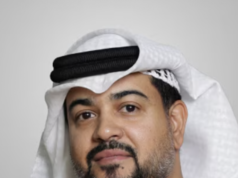




Sara Ahmed Buhiji stands at the junction of two systems that Bahrain needs to work together: destination demand and the venues capable of converting that demand into visits. Appointed chief executive of the Bahrain Tourism and Exhibitions Authority in January 2024 and serving as chair of Exhibition World Bahrain, she has a mandate that reaches from international marketing to business events, festivals, investment and workforce development.
The institutional design is significant. Tourism authorities can generate awareness, while convention centres win and host events, but the full economic value appears only when airlines, hotels, venues, attractions and local businesses coordinate. Buhiji’s dual leadership gives Bahrain a clearer line between promotion and delivery. A conference bid can be assessed not only for venue revenue but for room nights, seasonality, delegate spending and the possibility of repeat leisure visits.
Her appointment came as Bahrain sought to sharpen tourism’s contribution to economic diversification. The Kingdom competes within a Gulf region investing heavily in airports, hotels, entertainment and global events. Bahrain’s response cannot be based on scale alone. Its advantages include compactness, accessibility, a long trading history, established hospitality and cultural assets that can be experienced without the distances found in larger destinations.
Buhiji has helped frame development around those strengths while giving particular attention to people. Her emphasis on human capital and skills recognizes a truth sometimes obscured by headline investment: visitors remember the welcome, the guide, the event team and the hotel colleague more vividly than a strategy document. Tourism growth without a trained local workforce risks leaking value and weakening authenticity. Development programmes and community participation therefore belong at the centre of competitiveness.
Exhibition World Bahrain is a powerful instrument in that strategy. The venue gives the country capacity to pursue international congresses, exhibitions, corporate meetings and large-scale celebrations. Business events can fill weekdays and shoulder periods, attract higher-spending travellers and expose decision-makers to Bahrain as an investment and leisure destination. Under Buhiji’s chairmanship, the venue is not merely real estate. It is a demand generator with national economic reach.
The work also requires disciplined measurement. Visitor totals matter, but so do length of stay, hotel performance, event conversion, repeat visitation and the distribution of benefits across the economy. Buhiji’s challenge is to ensure a busy calendar translates into durable gains for operators and communities. That means building international partnerships while maintaining a coherent Bahrain identity rather than chasing every available event or audience.
Her leadership is helping Bahrain compete through integration. The destination’s attractions, calendar and convention infrastructure are being presented as one proposition, supported by investment in the people who deliver it. In a region of spectacular tourism announcements, that joined-up approach may prove Bahrain’s strongest differentiator. Buhiji’s recognition by Forbes Middle East reflects not only her formal titles, but the strategic leverage created when tourism and exhibitions are made to pull in the same direction.
Air access remains the essential external dependency. Event dates, source-market promotion and airline capacity need to reinforce one another, particularly when Bahrain is bidding for associations whose delegates travel from several continents. Buhiji can use the authority’s market intelligence to focus route-development conversations and to demonstrate the total value of an event visitor. The compact geography then becomes an advantage: delegates can move quickly from airport to venue, hotel, restaurant and heritage site.
Her tenure will also be judged by whether benefits reach beyond the largest institutions. Exhibitions should create contracts for local production companies, caterers, transport providers and creative businesses. Festivals should provide platforms for Bahraini artists and entrepreneurs. By designing procurement, training and promotion with that multiplier in mind, Buhiji can make the sector more inclusive. That is how a calendar of events becomes a tourism economy rather than a sequence of busy days.