
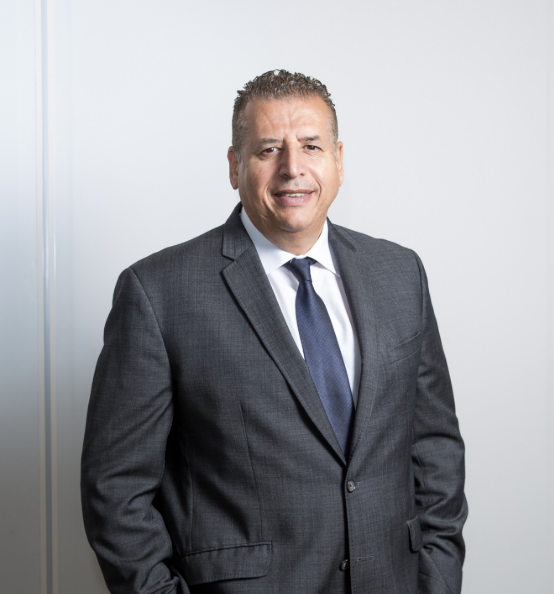


Guests may know the Ritz-Carlton Abu Dhabi, Park Hyatt Abu Dhabi, Sofitel Dubai Jumeirah Beach or JW Marriott Hotel Marina without knowing that Abu Dhabi National Hotels sits behind the asset. Khalid Anib’s role is to ensure that the owner remains an active participant in the performance and long-term value of those properties.
Anib became chief executive of ADNH in 2016. Before joining the group, he spent five years in Saudi Arabia managing the hospitality division of Al Hokair Group, experience that gave him a regional operator’s understanding of hotels, restaurants and entertainment assets.
That experience helped him move into a company whose activities historically extended well beyond hotel ownership. ADNH built capabilities in catering, transport and support services alongside its property portfolio. Anib has therefore had to decide where integrated operations create an advantage and where a business is better served by its own management, capital and public-market identity.
The 2024 flotation of ADNH Catering was the clearest expression of that portfolio discipline. The offer raised approximately $235 million through the sale of 40 per cent of the company, creating a listed platform with its own governance and access to capital while allowing ADNH to retain a controlling interest. The transaction showed Anib acting as a corporate strategist as well as a hotel owner, identifying value in a business that guests rarely associate with the parent group.
By the end of 2025, ADNH oversaw commercial operations for more than 12 hotels across Abu Dhabi, Dubai and Ajman. Its portfolio also included Sheraton Abu Dhabi Hotel and Resort, Le Meridien Abu Dhabi and Kempinski The Boulevard Dubai. During 2025, the hotels served more than 1.9 million guests.
The financial scale is equally significant. ADNH reported revenue of approximately $421 million and net profit of $28 million in the first half of 2026. These figures reflect a business that must manage daily hotel performance while allocating capital across renovations, development and wider hospitality services.
Anib operates through partnerships with international hotel groups. The brand supplies distribution, loyalty and operating expertise, but the owner funds the asset and carries much of the long-term risk. Effective asset management therefore requires rigorous challenge: whether a renovation will generate an adequate return, whether food and beverage is positioned correctly and whether the management contract continues to serve the property.
The portfolio contains several mature hotels in markets where new supply is entering. Older assets can remain highly competitive when their locations, design and operations are renewed with discipline. Deferred investment, by contrast, can quickly erode rate and reputation. Anib’s task is to prioritise capital without allowing short-term cost control to weaken long-term value.
ADNH also has interests beyond hotel ownership. The group developed a substantial catering and support-services business, which completed a public listing in 2024. That transaction created a clearer platform for growth and demonstrated the value that can be unlocked from operational businesses built around hospitality expertise.
Abu Dhabi’s expanding cultural, leisure and events calendar provides demand, while Dubai adds a highly competitive international market. Anib must balance the two, ensuring each hotel responds to its local demand rather than relying only on the strength of its global flag.
Asset-level evidence is central to that stewardship. A hotel may report higher revenue while losing market share or postponing essential capital work. Anib’s team must compare each property’s performance with its competitive set, test the operator’s forecasts and evaluate whether renovation, refinancing or repositioning will create the best return. That discipline becomes more important as construction costs rise and established UAE hotels compete with newer supply.
His leadership illustrates a less visible side of tourism. Brands often receive public attention, but owners determine whether hotels are built, renovated and sustained through cycles. Anib has spent a decade positioning ADNH as an informed institutional owner. The quality of that stewardship is felt in the guest experience even when the company’s name does not appear above the entrance.