


Music has long been an integral part of the travel experience, shaping the atmosphere of a destination, influencing how guests feel within a hotel or resort, and creating memories that can linger long after a journey has ended. As hospitality brands increasingly look beyond traditional design to create distinctive and immersive experiences, the role of music has become ever more important.
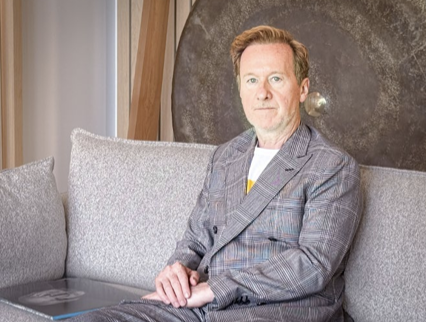
At the intersection of music, hospitality and creative experience is Nick Wood, Founder and Creative Director of Nick Wood Music, whose work explores the powerful relationship between sound and place. From creating carefully curated musical identities for hospitality brands to developing soundscapes designed to complement the character of a destination, his approach recognises that music can be as influential to the guest experience as architecture, lighting or cuisine.
In this exclusive Breaking Travel News Q&A, Nick Wood discusses the evolving role of music within hospitality, how the right soundtrack can shape a guest’s perception of a property, the importance of authenticity and local culture, and why hotels and resorts are increasingly turning to music as a key part of their brand identity.
Q1. Can you tell us about your role and the vision behind this latest initiative?
I am the Founder and Creative Director of Nick Wood Music, a sonic branding and immersive sound experience company operating across Tokyo, Los Angeles, Hong Kong, London and Dubai. My background as a composer and producer places music at the centre of everything I have done for more than four decades. I have worked in advertising, film, television, records and live performance, with artists, directors and brands across Asia, Europe and the Americas. NWM is the natural evolution of this creative and production experience, now focused entirely on how luxury brands and spaces sound and feel.
The vision is straightforward: sound is the most powerful and least understood element of luxury experience. Every great hotel invests deeply in what guests see, touch and taste. Very few invest in what they hear, and almost none approach it with genuine creative and production rigour. NWM exists to change that. We design how places feel through sound.
Q2. What market opportunity or industry challenge prompted its development?
The luxury hospitality industry has evolved enormously in its understanding of sensory design. Architecture, interiors, lighting, scent and culinary experience have all been elevated to an art form. Sound has not kept pace. In many hotels, music is still an afterthought: a playlist generated by an algorithm, prepared by a company that in many cases has never visited the space, never sat in the lobby at midnight or the restaurant at noon, never felt how the acoustics change when the room fills. There is no relationship to the brand, the space, the time of day or the emotional journey of the guest. In some cases, the selection is driven entirely by AI, with no human creative judgement applied at any point in the process.
That gap represents both a challenge and an extraordinary opportunity. Guests feel sound even when they are not consciously aware of it. It shapes mood, influences dwell time, signals brand values and creates the emotional memory that brings people back. A playlist that could belong to any hotel in any city in the world is not just a missed opportunity – it is actively working against everything else the design team has achieved. The hotels that understand this earliest will have a significant and lasting advantage.
Q3. What makes this offering different from existing solutions in the market?
Nick Wood Music is a global team of music curators, sound designers, engineers, composers and producers, brought together with a single purpose: to design how places feel through sound. That breadth of talent and discipline under one roof is genuinely rare in this industry, and it is what allows us to operate at every level when creating a sonic identity – from the overarching creative strategy to the finest details of mix and production.
NWM is a creative and strategic partner in the fullest sense. We compose original music, develop bespoke sonic identities, design soundscapes that respond to architecture and guest flow, and build frameworks that evolve with a brand over time. We do not begin with a library. We begin with a conversation about who you are, what your guests feel when they arrive, and what you want them to carry with them when they leave.
Our work also extends into the physical and technical dimensions of sound. We consult on acoustics and the sonic character of a room, understanding that the architecture itself is an instrument that shapes everything heard within it. We have designed and installed sound systems into luxury hotels, and we are currently working on what I consider some of the most exciting projects in our portfolio: the design of dedicated vinyl listening rooms in Europe and the United States. These are spaces where every element has been considered with obsessive care, from the equipment specification and system design to the curation of the vinyl collection itself. Having lived in Japan for over 38 years, where the culture of listening, truly listening, runs deeper than almost anywhere else in the world, this kind of work is as close to my heart as anything we do.
We also bring a depth of experience that is difficult to replicate. Over four decades and more than 2,000 projects across advertising, film, television and brand experience, working with clients including Ferrari, Disney, Apple and Chanel, we have developed an understanding of how sound works emotionally and commercially that informs everything we do. That knowledge is now being applied to the world’s most discerning hospitality brands.
Q4. How do you expect it to improve the experience for travellers and industry partners?
For guests, the difference is felt rather than articulated. A hotel with a thoughtfully designed sonic identity feels more coherent, more alive and more memorable. Sound reinforces every other sensory investment the property has made. It signals that every detail has been considered.
For our hospitality partners, the commercial case is equally compelling. Sound influences guest behaviour in measurable ways: dwell time, spend per visit, return rate and brand recall all respond to sonic environment. We are working with neuroscientists to understand and quantify these effects, which means we can increasingly speak to the ROI of sonic investment in terms that resonate with ownership and asset management as much as with creative directors and GMs.
Q5. What trends are you currently seeing across the travel and hospitality sector?
The move toward immersive, experience-led design is accelerating. Guests at the luxury end of the market have seen everything. They have stayed in beautiful rooms and eaten exceptional food in every major city in the world. What they are now seeking is something that feels genuinely distinctive and emotionally resonant. Multi-sensory design is the frontier where that differentiation is being won.
We are also seeing wellness evolve far beyond the spa. Sound is a natural and powerful tool in that conversation: sleep, restoration, mindfulness and emotional regulation are all areas where music and acoustic design can make a meaningful contribution to a guest’s wellbeing, not just their enjoyment.
Q6. How is technology reshaping customer expectations and business performance?
Technology is opening up possibilities in sonic design that would have been unthinkable even a decade ago. One of the most fascinating areas we have been exploring is the relationship between the natural world and music. We have been working with PlantWave, a device that translates the bioelectrical signals of living plants into real-time musical data, to explore new possibilities in sonic design. For example, we could use this to understand how the natural rhythms of a hotel’s gardens, its landscape and its living environment might become part of the sonic identity of a space.
One project that brought this to life in a particularly meaningful way involved composing a piece of music inspired by and created in connection with Indigo plants. That piece was subsequently tested in a neuroscience laboratory setting, and the results gave us something we had long known intuitively but could now demonstrate scientifically: that our music had a measurable calming and relaxing effect on the listener. Being able to point to independent validation of that effect changes the conversation with clients considerably, particularly in the luxury wellness space where the connection between nature, sound and human wellbeing is central to everything we do.
Technology has also transformed how and where we create. I can now compose and produce music to full studio standard from any hotel room in the world. I travel with what amounts to a state-of-the-art studio in a suitcase, which still genuinely excites me every time I set up! What it means practically is that NWM can establish an artist in residence almost anywhere, creating original music that is directly inspired by a place, its landscape, its culture and its atmosphere. That authenticity is increasingly what distinguishes the most memorable sonic experiences from anything that could be sourced remotely from a catalogue. A piece of music composed on the shores of Lake Como, or at dawn in Kyoto, carries something in it that no algorithm can manufacture.
Q7. What has been the biggest challenge in bringing this project to market?
Helping the industry understand that sound is a strategic investment rather than a commodity purchase. The conversation often begins in the wrong place: a GM asks what we charge per month and compares it to what they are currently paying. The more meaningful question is what a distinctive and coherent sonic identity is worth to a brand over five or ten years. Once we reframe the conversation in those terms, the decision becomes straightforward.
The other challenge is simply education. Sonic branding is well established in the consumer brand world. In luxury hospitality it is still relatively new, which means part of our role is building the vocabulary and the business case alongside the creative work.
Q8. Are there any early results, customer feedback or case studies you can share?
We composed the original music for Ora spa at Claridge’s in London, which has now been in place for five years. The relationship has deepened considerably over that time, which speaks to the value both parties have found in it. We recently delivered the complete sonic universe for the Ferrari Luce, Ferrari’s first electric vehicle, developed in collaboration with LoveFrom’s Marc Newson and Sir Jonathan Ive. That project required us to design sound that expressed a fundamentally new chapter in one of the world’s most iconic brands, which is exactly the kind of challenge NWM was built for.
Q9. Looking ahead, how do you see the business evolving over the next few years?
We see NWM becoming the defining sonic partner for luxury hospitality globally. The next phase of our work is deepening the neuroscience foundation of what we do, moving from intuitive creative practice toward an evidence-based understanding of how specific sonic choices produce specific human responses. That will allow us to make promises to clients that are grounded in data as well as artistry.
We are also expanding our geographic reach. Tokyo, Los Angeles, Hong Kong, London and Dubai give us strong foundations across the key luxury markets, and we see significant opportunity in the Middle East, USA, Japan and continental Europe.
Q10. What message would you like to share with the global travel industry?
Sound is the last great undiscovered tool in luxury hospitality. Every major investment made in architecture, interior design, lighting and culinary experience is being experienced through a sonic environment that was probably not designed at all. That is an opportunity, not a criticism. The hotels and brands that move first will create something that is genuinely difficult for competitors to replicate, because a sonic identity, when it is done well, becomes as recognisable and as ownable as a visual one. We would love to help you find yours.