
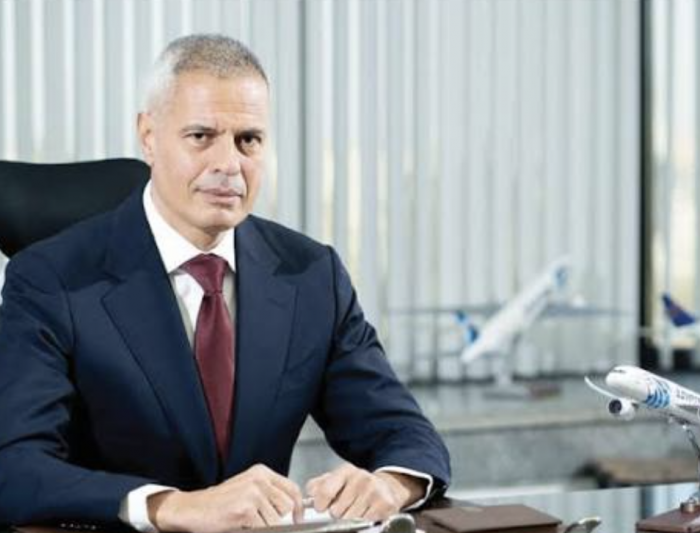


Ahmed Adel’s relationship with EGYPTAIR began in the cockpit. He joined the airline as a pilot in 1988, became a medium-aircraft captain in 1997 and a widebody captain in 1999. Over the following decades, he moved through training, inspection and operational leadership before first becoming chairman and chief executive in 2018.
His return to the position in February 2025 placed an experienced operator back in charge of a group with seven principal subsidiaries spanning passenger airlines, cargo, maintenance, ground services, tourism and duty free. Forbes Middle East reported that EGYPTAIR served 85 destinations directly and more than 70 additional airports through codeshare partnerships in 2026.
Adel’s first period as chairman, from June 2018 to March 2020, gave him experience of the role before the industry’s most severe crisis. It also raised his international standing: he was elected to the IATA Board of Governors and then to its smaller chair committee, becoming the first Egyptian to hold that position. His earlier work as EGYPTAIR’s official spokesman and chair of the crisis team following the loss of flight MS804 demonstrated a different kind of leadership, combining operational investigation, public communication and responsibility to affected families.
His reappointment therefore brought back a leader who knows both the technical organisation and the scrutiny surrounding a national carrier. EGYPTAIR’s eight-company structure can support an integrated aviation business, but it can also create duplication and slow decisions. Adel must make the passenger airline, cargo, maintenance and ground-services companies work as a coordinated group while preserving the regulatory independence and safety controls each function requires.
Adel’s technical progression is central to his leadership profile. He became an Airbus A330 and A340 instructor and examiner, worked as an inspector for the Egyptian Civil Aviation Authority and led air training. He later became head of flight operations and vice-chairman of EGYPTAIR Holding. These roles gave him a direct understanding of safety systems, crew capability and the operational consequences of fleet decisions.
The current renewal programme includes 14 new aircraft scheduled for delivery between 2026 and the end of June 2027. New aircraft can improve fuel efficiency, range and customer experience, but they also require financing, simulator capacity, maintenance preparation and disciplined route deployment. Adel must ensure that the fleet plan strengthens the network rather than adding capacity faster than the airline can use it profitably.
Egypt’s tourism growth creates a compelling opportunity. A record 19 million visitors arrived in 2025, while Cairo’s cultural offer has been strengthened by the Grand Egyptian Museum and continuing investment in Red Sea destinations. EGYPTAIR can capture more of that demand if schedules, connections and product quality match the country’s visitor ambitions.
The airline also has a geographic advantage. Cairo can connect Africa, Europe, the Middle East and Asia, while membership of Star Alliance and wider codeshare relationships extend the network. Yet hub potential depends on transfer reliability, baggage performance, airport processes and schedule coordination, not geography alone.
Adel’s international roles add another dimension. He serves on the IATA Board of Governors and participates in leadership structures connected to the Arab Air Carriers’ Organization, African Airlines Association and Star Alliance. During his earlier tenure, he became the first Egyptian elected to IATA’s smaller executive body, giving the airline a voice in industry policy.
The task ahead is institutional. EGYPTAIR must modernise systems and service while preserving safety and retaining experienced staff. State ownership can support long investment horizons, but it also creates pressure for accountability and efficient capital use.
Adel’s career has prepared him to understand the airline from aircraft systems to boardroom strategy. His success will depend on converting that knowledge into consistent execution. Fleet renewal will be visible to passengers, but the deeper transformation will be measured in punctuality, productivity, connections and the confidence with which EGYPTAIR carries Egypt’s tourism story abroad.