

For generations, Shekhawati’s grand havelis have stood as reminders of a time when wealthy Marwari families built elaborate homes in this area in northern Rajasthan and then left for bigger cities. In the absence of care, the painted havelis, which were once a symbol of the community’s wealth and status, began decaying. Many of the owners did not return.

Now, there are signs that the story is changing.
An exhibition at the Visual Arts Gallery, India Habitat Centre, in Delhi this week, Raj Se Swaraj Tak – From Colonial Rule to Freedom, Through the Eyes of Shekhawati, brings together around 1,000 objects to tell the story of the region over the last two centuries. Curated by Shruti Nada Poddar, founder of MOHAR (Museum of Heritage and Art at Ramgarh) and art historian Alka Pande, the exhibition draws on Shruti’s 12-year-old personal collection as well as objects found in the havelis she has acquired and restored.

Chhatri
| Photo Credit:
Special Arrangement
The exhibition showcases 10 journeys through Shekhawati, beginning with its architecture and painted walls and moving through the lives of saints, trade and global connections, the influence of the British Raj, changing lifestyles, the role of art and the spread of oleography, the freedom movement, post-Independence India, and finally the Shekhawati diaspora and its return to the region.
“There would be at least 1000 objects,” says Shruti, many collected over more than a decade. The collection includes traditional and colonial objects discovered inside old havelis, as well as Shekhawati’s trademark reverse-glass paintings.

One of the more unexpected sections is a bridal education room. Shruti says some old bridal boxes contained tablets that were part of the preparation of young brides. The material will be displayed separately, with restricted access, but its presence points to a society that had systems of knowledge around marriage and sexuality.
For Shruti, the exhibition is about understanding the mindset that produced this extraordinary region. “It is not just about objects and havelis. It is about the whole ethos of Shekhawati for the last two centuries,” she remarks.

Veranda haveli
| Photo Credit:
Special Arrangement
The painted haveli towns of Shekhawati were added to UNESCO’s Tentative List in 2026, a crucial step in the World Heritage Site process. The tentative listing has brought Shekhawati in the spotlight once again.
Shruti believes the recognition has already helped garner official attention. “It helps people validate it more. It makes the Government wake up,” she points out.
Shekhawati, a cluster of 14 towns and cities, has thousands of surviving havelis. According to Shruti, Ramgarh alone has about 150 of them. Many are effectively unattended. “There might be a caretaker who never opens the haveli. He might just have the keys,” she says.
Shruti began restoring her own ancestral haveli 13 years ago when it was “dilapidated, breaking apart, and filled with bats.” Since then, she has acquired several more properties, turning one into a museum with a Raja Ravi Varma gallery and another into a hospitality unit. She is also restoring buildings with traditional lime technology and teaching local women and residents how to use it.
With the return of some of the families, Shruti is excited about its future.
She says the younger generation is beginning to reclaim ancestral havelis, with some restoring them and turning them into small hospitality properties. Better infrastructure has helped. Her own journey from Gurugram to Ramgarh has become quicker with new expressways and highways. “People are coming back, that is the most important thing,” she says.

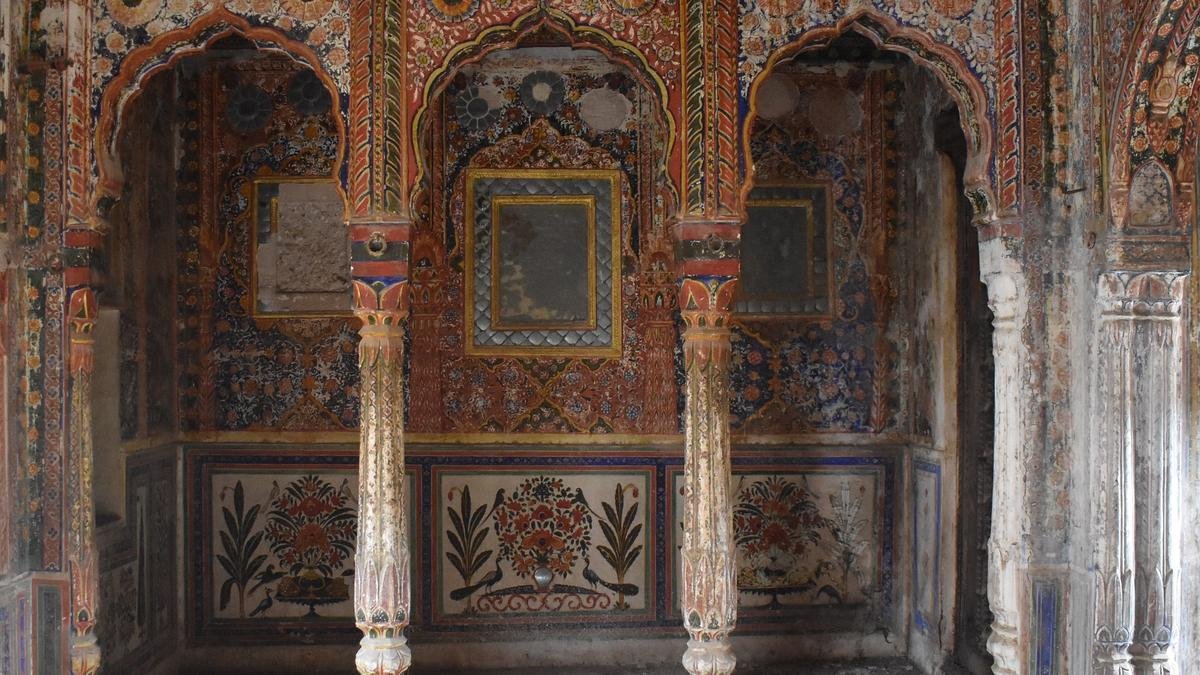
Fresco and structure details
| Photo Credit:
Special Arrangement
Her hope is that easier access will bring more visitors, investment, and patronage without damaging the historic landscape.
The exhibition also marks the launch of Shruti’s book Handbook of Heritage Conservation: Special Focus – Havelis of Shekhawati which will be launched by Tim Curtis, regional head of UNESCO for South Asia, on September 23.
And on September 27, World Tourism Day, the exhibition will host a discussion on Shekhawati’s future.
The exhibition will be on view at Visual Arts Gallery, India Habitat Centre, Lodhi Road, from September 23rd to 30th.
Published – September 26, 2026 07:20 pm IST