
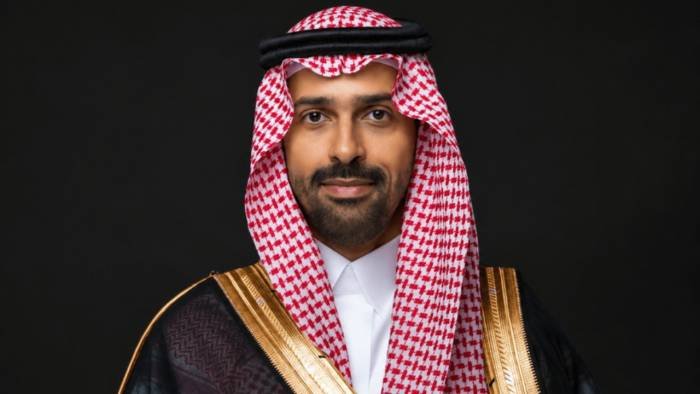

With Ageel Alshaibani appointed chief executive of the Saudi Tourism Authority, Saudi Arabia enters the second act of its extraordinary tourism transformation, one defined less by announcing ambition and more by delivering at scale as the Kingdom prepares to host WTM Spotlight Riyadh and TOURISE builds its own global stage.
 Ageel Alshaibani, chief executive officer, Saudi Tourism Authority
Every great production needs a compelling first act, and Saudi Arabia’s tourism transformation has certainly delivered one. In little more than six years, the Kingdom has moved from being largely closed to international leisure tourism to becoming one of the most closely watched destination markets in the world.
At the centre of that opening act was Fahd Hamidaddin. As founding chief executive of the Saudi Tourism Authority, he helped take Saudi tourism from Vision 2030 blueprint to global proposition, memorably describing the Kingdom as the “world’s biggest start-up”. It was an apt description for a tourism economy being built at extraordinary speed, with huge ambition, rapid experimentation, unprecedented investment and a determination to challenge the conventions of an established industry.
Fahd Hamidaddin, founding chief executive of the Saudi Tourism Authority
Now the first act is over. Hamidaddin has exited stage right and Ageel Alshaibani has stepped into the leading role as chief executive of the Saudi Tourism Authority, but he arrives on a very different stage. If the first phase was about launch, visibility and ambition, the second will increasingly be about scale, execution and proving that one of tourism’s boldest productions can become a long-running commercial success.
The numbers suggest there is already a substantial audience. Saudi Arabia recorded around 123 million domestic and inbound tourist trips in 2025, up approximately six per cent year-on-year. Of those, 29.3 million were inbound and 93.3 million domestic, while tourism spending reached a record SAR304 billion, with inbound visitors accounting for SAR176.6 billion.
There is, however, important nuance behind those headline figures. Religious travel remained the largest inbound segment, followed by leisure and business, which means the next chapter of Saudi tourism is not simply about putting more people through the door. It is about changing the mix, increasing leisure demand, extending stays, improving distribution and turning an extraordinary amount of destination investment into sustainable international tourism flows.
That investment is increasingly visible on the ground. On the Red Sea coast, Six Senses Southern Dunes, The St. Regis Red Sea Resort, Nujuma, a Ritz-Carlton Reserve, Shebara and Desert Rock have already moved from renders and announcements into operating reality. Shura Island will ultimately bring together 11 international resorts, with names including Rosewood, Raffles, Grand Hyatt, Four Seasons, Fairmont, Miraval, Faena and Jumeirah. Phase one of The Red Sea is expected to deliver more than 2,700 hotel keys, with the wider destination eventually targeting around 8,000 rooms across 50 resorts.
v
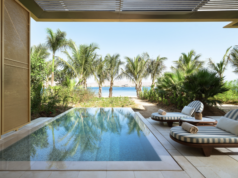
Further north, AMAALA is also moving from promise to operation. Four Seasons Resort and Residences AMAALA at Triple Bay has begun welcoming guests, while Equinox Resort AMAALA has brought the performance-led hospitality brand to the region with 128 rooms and suites and 21 residences. The destination’s first phase is expected to deliver around 1,470 hotel keys, eventually rising to approximately 4,000, with wellness brands including Clinique La Prairie and Jayasom also forming part of the mix.
Four Seasons Resort and Residences AMAALA at Triple Bay
In Riyadh, Diriyah provides another indication of the scale of what is coming. The development is targeting 50 million annual visitors by 2030 and more than 40 hotels, with announced brands including Four Seasons, Ritz-Carlton, Rosewood, Raffles, Capella, Armani, Orient Express, Park Hyatt, Corinthia and Janu, alongside Bab Samhan, a Luxury Collection Hotel, which is already open.
Qiddiya City adds another layer to the proposition, with plans spanning 20 districts and hundreds of attractions across sport, entertainment and culture. Six Flags Qiddiya City sits alongside Aquarabia and a wider entertainment ecosystem designed to broaden Riyadh’s appeal well beyond business and government travel.
The hotel pipeline makes clear just how much capacity still needs to be absorbed. At the end of the first quarter of 2026, Saudi Arabia had 385 hotel projects representing almost 105,600 rooms in development, the largest national hotel construction pipeline in the Middle East. Riyadh alone accounted for almost 21,000 rooms across 105 projects, while Jeddah had nearly 14,800 rooms and Makkah more than 22,000.
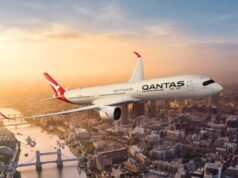
Aviation is scaling to support that growth. Saudi airports handled 140.9 million passengers in 2025, an increase of 9.6 per cent, including 75.8 million international passengers. Jeddah’s King Abdulaziz International Airport handled 53.5 million passengers, Riyadh’s King Khalid International 40.8 million and Dammam’s King Fahd International 13.7 million.
These are no longer start-up numbers, but Act Two is also where the production becomes more complicated. No major tourism transformation of this scale was ever likely to reach opening night without rewrites, missed cues and drama backstage.
Saudi Arabia’s giga-project programme is being reprioritised as capital is directed towards projects with clearer near-term economic and strategic returns. The emphasis is increasingly on sequencing and delivery rather than attempting to build every element of Vision 2030 at once, and there has been greater scrutiny around project cost, timing and execution.
NEOM has become the most visible example. The Line, Trojena and other elements of the development have faced changes in phasing and scope, while Sindalah has required further intervention following its initial launch. None of this means the ambition has disappeared, but it does underline the point that the second phase of Saudi tourism will be defined as much by operational discipline as by vision.
There are geopolitical headwinds too. Conflict across the wider region has disrupted aviation, affected traveller confidence and added another layer of uncertainty to investment and operating decisions. Yet the continued depth of Saudi Arabia’s hospitality pipeline suggests that the long-term tourism thesis remains intact.
Perhaps that is the real dress rehearsal. The test is not whether every element of the production runs exactly to script, but whether the machinery behind it can adapt when it does not.
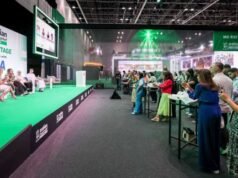
That brings the story neatly to Riyadh this week, where the inaugural WTM Spotlight takes place from September 8-10 at Riyadh Front Exhibition & Conference Centre. Even the name feels unusually appropriate.
For much of the opening act, Saudi Arabia travelled to London, Berlin, Dubai and other established tourism stages to tell its story and place the Kingdom in the international spotlight. This time, the stage has moved. WTM Spotlight is bringing destinations, buyers, tourism leaders, brands and industry professionals directly to Riyadh, putting the Saudi capital at the centre of conversations around the future of travel in the Kingdom and the wider region.
Breaking Travel News is an official media partner of WTM Spotlight and will be on the ground throughout the event, capturing the stories of the day as they happen and shining a light on the destinations, companies and industry leaders taking centre stage.
The symbolism matters because WTM Spotlight is not appearing in isolation. TOURISE has also opened nominations for its 2027 Awards, another Saudi-born platform designed to bring international destinations, innovators and tourism leaders together in Riyadh. Together, the two initiatives point to a broader change in Saudi Arabia’s place within the global tourism ecosystem.
For much of the past six years, the world’s tourism industry has talked about Saudi Arabia. Increasingly, Saudi Arabia wants the world’s tourism industry to come to Riyadh to talk about tourism. That represents a shift from destination to marketplace, from exhibitor to convenor and from standing in somebody else’s spotlight to helping build the stage itself.
This is the production Ageel Alshaibani inherits. As a former Deputy Minister for Strategic Planning and Monitoring, he already knows the strategy, the institutions and many of the personalities behind the Kingdom’s tourism programme, but his challenge is different from that of his predecessor.
Hamidaddin’s era was about introducing Saudi Arabia to the world. Alshaibani’s will increasingly be judged on what happens when the world arrives.
Can Saudi Arabia fill more than 100,000 hotel rooms currently in the development pipeline? Can it grow leisure tourism alongside the enormous religious tourism market? Can Riyadh, the Red Sea, AlUla, Diriyah, Qiddiya and the Kingdom’s other emerging destinations become complementary parts of a coherent national proposition? Can aviation growth keep pace with hotel supply, and can international tour operators, travel advisers and OTAs package and distribute the rapidly expanding inventory effectively?
Our Habitas AlUla
Most importantly, can the “world’s biggest start-up” make the transition from disruptive newcomer to mature tourism economy?
Those questions make Act Two potentially more interesting than Act One. The sets are increasingly real, the hotels are opening, the aircraft are landing and the audience is assembling. Some scenes have already been rewritten and there has been plenty of backstage drama, but the spotlight is now firmly on Riyadh.
Fahd Hamidaddin helped write a remarkable opening act. Ageel Alshaibani now takes centre stage for the second, and this time the global travel industry will be watching not simply to see what Saudi Arabia announces next, but how the whole production performs.
by Justin Cooke, Editor in Chief