


There was a time when Saudi Arabia was a destination travellers knew largely through photographs: the great desert stretching towards the horizon, the ancient Nabataean tombs of the north, the pilgrimage cities of Makkah and Madinah, and the futuristic skyline beginning to take shape in Riyadh.
Today, the reality is considerably more intriguing.
At the 2026 World Travel Awards Middle East Gala Ceremony, Saudi Arabia’s extraordinary transformation into one of the world’s most closely watched emerging travel destinations was celebrated in a collection of honours spanning luxury hotels, resorts, cultural destinations and an entirely new generation of tourism developments.
It is a story that is no longer about what Saudi Arabia intends to become. Increasingly, it is about what has already arrived.
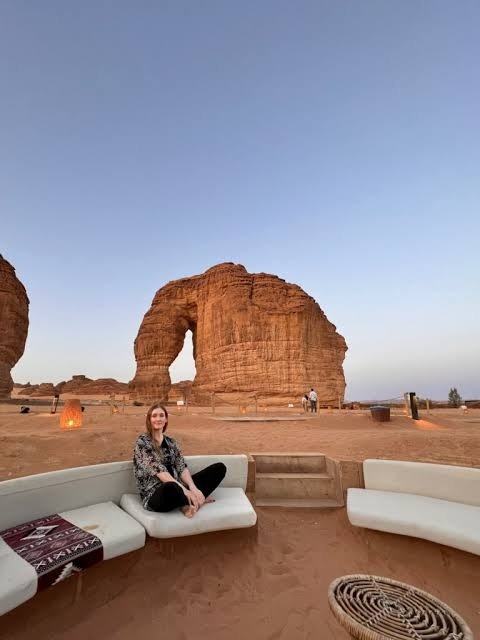
Few places illustrate that transformation better than AlUla. Set among sandstone cliffs, desert valleys and archaeological treasures dating back thousands of years, the destination has become the cultural jewel of Saudi Arabia’s tourism renaissance. Its extraordinary landscape has provided the setting for a new generation of intimate hotels, restaurants, cultural experiences and events, while its ancient heritage gives the destination something that money alone cannot manufacture: a genuine sense of place.
The World Travel Awards had already recognised AlUla as the Middle East’s Leading Cultural Tourism Project for three consecutive years between 2023 and 2025. In 2026, it once again stood among the Kingdom’s most important tourism contenders, nominated across categories including emerging destination, festival and event destination and cultural and adventure attractions.
And then there is Diriyah, where the story is different but equally compelling.
On the outskirts of Riyadh, the historic home of the first Saudi state is being transformed into a vast cultural and lifestyle destination. The mud-brick architecture of At-Turaif, a UNESCO World Heritage Site, provides the historical heart of an ambitious development bringing hotels, restaurants, galleries, retail and public spaces together. By the end of 2025, Diriyah had recorded more than 3.6 million visitor visits.
The arrival of Bab Samhan, a Luxury Collection Hotel, Diriyah has added another layer to that transformation. The property was among the nominees for Middle East’s Leading New Hotel 2026, alongside a group of major new openings across the Gulf.
Yet perhaps nowhere is Saudi Arabia’s new tourism personality more dramatically visible than along the Red Sea.
The western coastline, once largely unknown to international leisure travellers, is becoming one of the world’s most extraordinary new luxury resort destinations. Coral reefs, volcanic landscapes, desert mountains and remarkably clear waters provide the backdrop for resorts that have been designed around the idea of low-impact luxury and immersion in nature.
The 2026 World Travel Awards nominations alone reveal the scale of the transformation. InterContinental The Red Sea Resort, Four Seasons Resort and Residences Red Sea at Shura Island, Miraval The Red Sea, Rixos Obhur Jeddah Resort & Villas, SLS The Red Sea and The Red Sea EDITION were all competing for the title of Middle East’s Leading New Resort.
For the traveller, the significance goes beyond another collection of five-star hotels.
Saudi Arabia is attempting to create an entirely new model of resort tourism — one where the natural environment is the attraction rather than something viewed from behind the windows of a hotel.
The same philosophy can be seen in the Kingdom’s luxury resort categories. The 2026 nominees for Saudi Arabia’s Leading Luxury Resort included Nujuma, a Ritz-Carlton Reserve, Shebara Resort, The St. Regis Red Sea Resort, Six Senses Southern Dunes, The Chedi Hegra, Banyan Tree AlUla and InterContinental The Red Sea Resort.
It is an extraordinary collection, and one that would have been almost unimaginable in Saudi Arabia’s tourism landscape a decade ago.
But Saudi Arabia’s appeal is not confined to remote resorts.
Riyadh has emerged as one of the Middle East’s most energetic capitals, combining an increasingly sophisticated restaurant and hotel scene with contemporary art, major sporting events, concerts and a rapidly expanding calendar of international entertainment.
The city is also becoming an important business destination. Riyadh was among the nominees for Middle East’s Leading Business Travel Destination 2026, alongside Abu Dhabi, Amman, Doha, Dubai, Kuwait City, Manama and Ras Al Khaimah.
Its hotels reflect that evolution. The Ritz-Carlton, Riyadh, Four Seasons Hotel Riyadh, Mandarin Oriental Al Faisaliah, JW Marriott Hotel Riyadh, Fairmont Ramla, Riyadh and Mansard Riyadh, a Radisson Collection Hotel were among the properties competing across the Kingdom’s leading business, luxury and city-hotel categories.
Jeddah offers a contrasting experience.
With its historic Al-Balad district, Red Sea waterfront and growing collection of restaurants, galleries and luxury hotels, the city has become an important cultural and leisure gateway. The World Travel Awards nominations included properties such as The Jeddah EDITION, Rosewood Jeddah, Waldorf Astoria Jeddah – Qasr Al Sharq and Park Hyatt Jeddah – Marina, Club and Spa.
And beyond the country’s two largest cities lies perhaps its greatest asset: variety.
Saudi Arabia possesses deserts, mountains, ancient archaeological sites, coral reefs, oases and long stretches of coastline. In the south, the landscapes of Asir offer a dramatically different vision of the Kingdom, while the Red Sea provides opportunities for diving, sailing and marine exploration. The desert around AlUla has become a stage for cultural events and immersive experiences, while the great urban centres increasingly offer the restaurants, retail and entertainment expected of a modern luxury destination.
That diversity is reflected in the World Travel Awards categories themselves.
Saudi Arabia was represented among the nominees for Middle East’s Leading Emerging Tourism Destination with AlUla, Diriyah and The Red Sea, while AlUla was also among the nominees for Leading Festival & Event Destination. Jeddah and Riyadh were competing for Leading Sports Tourism Destination, while Saudi Arabia was nominated for Leading Heritage Destination.
The hotel sector tells the same story.
For 2026, Saudi Arabia’s nominees included everything from the traditional grand hotels of Riyadh and Makkah to new boutique properties, desert camps, Red Sea resorts and extraordinary villas. Among the national categories were Leading Desert Resort, Leading Luxury Resort, Leading New Hotel, Leading Villa Resort, Leading Beach Resort and Leading Family Resort.
This is perhaps the most remarkable aspect of Saudi Arabia’s current tourism story: it is not creating one destination but many.
A traveller can arrive in Riyadh for a weekend of contemporary culture and dining, fly north to explore the archaeological wonders of AlUla, continue west towards the Red Sea for a barefoot luxury escape and finish in Jeddah amid the historic streets of Al-Balad. Each experience feels distinct, yet each belongs to the same rapidly changing country.
There is a sense, too, that Saudi Arabia’s luxury proposition is evolving beyond the conventional Gulf formula.
The Kingdom does not need to compete simply on grand lobbies and enormous suites. Its greatest advantage is authenticity — landscapes that cannot be replicated, archaeological treasures that pre-date modern borders and a culture with centuries of stories to tell.
The challenge is to preserve that authenticity as visitor numbers grow.
The country’s tourism ambitions are immense. Having exceeded the original target of 100 million tourists ahead of schedule, Saudi Arabia has now raised its ambition to 150 million visitors by 2030. Tourism spending surpassed SAR300 billion by the end of 2025.
That scale makes responsible development crucial, particularly in fragile environments such as AlUla and the Red Sea.
Yet the direction of travel is unmistakable.
Saudi Arabia is becoming one of the world’s most intriguing new luxury destinations precisely because it offers something travellers cannot find elsewhere: the feeling of witnessing a country open a new chapter in its history.
The World Travel Awards recognition provides a useful snapshot of that transformation. There are the established names — Riyadh’s grand hotels, Jeddah’s waterfront resorts and Makkah’s celebrated properties — alongside a new generation of destinations whose names have only recently entered the international travel lexicon.
AlUla. Diriyah. Shura Island. The Red Sea. Amaala.
These are no longer simply ambitious development projects on a tourism strategy document. They are becoming places travellers can actually experience.
And perhaps that is what makes Saudi Arabia’s rise so fascinating.
For decades, the Kingdom was one of the world’s great unknowns. Now, with extraordinary speed, it is becoming one of its most talked-about destinations.
The 2026 World Travel Awards have captured that moment beautifully: a country with one foot firmly planted in an extraordinary past and the other stepping confidently into the future.
For the traveller, Saudi Arabia is no longer a destination to watch.
It is a destination to discover.
Saudi Arabia’s World Travel Awards 2026 winners
Saudi Arabia’s Leading Airline GSA 2026 — Almosafer
Saudi Arabia’s Leading Airport Hotel 2026 — Radisson Hotel Riyadh Airport
Saudi Arabia’s Leading Beach Resort 2026 — The St. Regis Red Sea Resort
Saudi Arabia’s Leading Boutique Hotel 2026 — Al Mashreq Boutique Hotel
Saudi Arabia’s Leading Budget Hotel 2026 — M Hotel Makkah by Millennium
Saudi Arabia’s Leading Business & Conference Hotel 2026 — Mandarin Oriental Al Faisaliah
Saudi Arabia’s Leading Business & Leisure Hotel 2026 — Four Seasons Hotel Riyadh
Saudi Arabia’s Leading Business Car Rental Company 2026 — Lumi
Saudi Arabia’s Leading Business Hotel 2026 — Fairmont Ramla, Riyadh
Saudi Arabia’s Leading Car Rental Company 2026 — Lumi
Saudi Arabia’s Leading Chauffeur Company 2026 — Blacklane
Saudi Arabia’s Leading City Hotel 2026 — Riyadh Marriott Hotel
Saudi Arabia’s Leading Conference Hotel 2026 — The Ritz-Carlton, Riyadh
Saudi Arabia’s Leading Corporate Travel Company 2026 — Almosafer Business
Saudi Arabia’s Leading Cultural Tourism Project 2026 — AlUla
Saudi Arabia’s Leading Desert Resort 2026 — Banyan Tree AlUla
Saudi Arabia’s Leading Destination Management Company 2026 — Discover Saudi
Saudi Arabia’s Leading Family & Leisure Destination Hotel 2026 — Bay La Sun Hotel & Marina
Saudi Arabia’s Leading Family Hotel 2026 — Swissotel Al Maqam Makkah
Saudi Arabia’s Leading Family Resort 2026 — InterContinental The Red Sea Resort
Saudi Arabia’s Leading Hospitality Company 2026 — Serb Business Holding Company
Saudi Arabia’s Leading Hospitality Development Company 2026 — Taiba Investments
Saudi Arabia’s Leading Hotel 2026 — InterContinental Taif by IHG
Saudi Arabia’s Leading Hotel Group 2026 — Taiba Investments
Saudi Arabia’s Leading Hotel Residences 2026 — Al Khozama Hotel & Residences KAUST
Saudi Arabia’s Leading Hotel Suite 2026 — Royal Suite @ Mandarin Oriental Al Faisaliah
Saudi Arabia’s Leading Leisure Travel Agency 2026 — Almosafer
Saudi Arabia’s Leading Luxury Hotel 2026 — Raffles Makkah Palace
Saudi Arabia’s Leading Luxury Hotel Villa 2026 — Presidential Dune Villa @ The St. Regis Red Sea Resort
Saudi Arabia’s Leading Luxury Resort 2026 — Nujuma, a Ritz-Carlton Reserve
Saudi Arabia’s Leading New Hotel 2026 — Sofitel Riyadh Hotel & Convention Centre
Saudi Arabia’s Leading Online Travel Agency 2026 — Almosafer
Saudi Arabia’s Leading Private Jet Charter 2026 — NasJet
Saudi Arabia’s Leading Residential Family Resort 2026 — AlSharq Village
Saudi Arabia’s Leading Residential Resort 2026 — Al Nakhla Residential Resort
Saudi Arabia’s Leading Resort 2026 — Rixos Obhur Jeddah Resort & Villas
Saudi Arabia’s Leading Serviced Apartment Brand 2026 — The Ascott Limited
Saudi Arabia’s Leading Serviced Apartments 2026 — Ascott Rafal Olaya Riyadh
Saudi Arabia’s Leading Shopping Mall Hotel 2026 — Mandarin Oriental Al Faisaliah
Saudi Arabia’s Leading Short-Term Rental Management Company 2026 — bnbme Holiday Homes
Saudi Arabia’s Leading Tour Operator 2026 — Al Fahhad Travel and Tourism
Saudi Arabia’s Leading Travel Agency 2026 — dnata Travel
Saudi Arabia’s Leading Travel Management Company 2026 — Almosafer Business
Saudi Arabia’s Leading Villa Resort 2026 — The St. Regis Red Sea Resort
Saudi Arabia’s Leading Visa Services Agency 2026 — Direct for Travel & Tourism
Saudi Arabia’s Leading Wedding Hotel 2026 — The Ritz-Carlton, Riyadh
Saudi Arabia’s major Middle East titles
Saudi Arabia also secured a number of the region’s biggest destination awards:
Middle East’s Leading Heritage Destination 2026 — Saudi Arabia
Middle East’s Leading Cultural Destination 2026 — Saudi Arabia
Middle East’s Leading City Destination 2026 — Riyadh
Middle East’s Leading Cultural Tourism Project 2026 — AlUla
Middle East’s Leading Heritage Hotel 2026 — Dar Tantora The House Hotel
Middle East’s Leading Luxury Desert Resort 2026 — Banyan Tree AlUla
Middle East’s Leading Luxury Villa Resort 2026 — The St. Regis Red Sea Resort
Middle East’s Leading New Resort 2026 — InterContinental The Red Sea Resort
Middle East’s Leading Residential Resort 2026 — Al Nakhla Residential Resort
Middle East’s Leading Tourism Development Project 2026 — Shura Island
Middle East’s Leading Wedding Hotel 2026 — The Ritz-Carlton, Riyadh
It is a remarkable haul for Saudi Arabia, particularly given the breadth of the wins: from AlUla and the Red Sea to Riyadh, Makkah and Jeddah, the results underline the extraordinary pace at which Saudi Arabia is developing and diversifying its tourism proposition.