

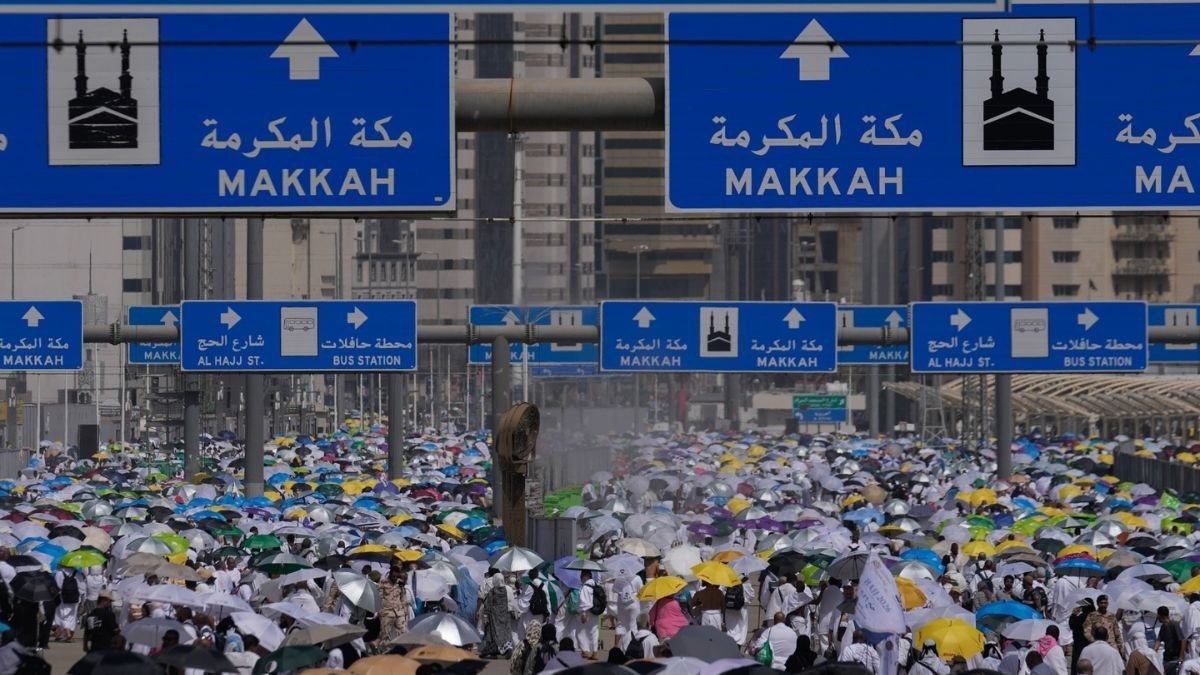

Saudi Arabia has issued brief alerts over possible attacks in the holy city of Mecca and in the Jeddah and Taif governorates as Iran-backed Houthis escalated their attacks on the kingdom. The alert came a day after a series of ballistic missile and drone attacks launched from Yemen, which injured 13 people in the kingdom’s south, as reported by news agency AFP.
Houthis escalate attack on Saudi Arabia
Houthi rebels launched an attack on Saudi Arabia, leaving several people injured. In the wake of the attack, Saudi Arabia conducted retaliatory airstrikes in Yemen. Meanwhile, Houthi rebels have seized control of the Yemeni city of Mocha. Mocha is a strategically important city located near the Red Sea. Due to its geographical location, the Houthi hold over this area is considered strategically significant. Capturing Mocha could expand Houthi access to the Bab-el-Mandeb Strait—a vital maritime route connecting the Red Sea to the Gulf of Aden. Meanwhile, persistent Houthi attacks on Saudi Arabia have raised questions about the efficacy of the defense pacts involving Pakistan, Saudi Arabia, and Turkey.
The Bab el-Mandeb Strait is a crucial maritime route for international trade, and rising tensions in the area could disrupt shipping and impact global maritime commerce. Against this backdrop, the Houthis’ control of Mocha is not merely a local issue confined to Yemen. Their growing presence around the Red Sea could further heighten security concerns across the wider region.
Why the focus on Iran?
Houthi rebels have long faced allegations of receiving support from Iran. In light of this, Pakistan has directly urged Iran to rein in the Houthis. While Pakistan cites its defense agreement with Saudi Arabia, the latter has launched airstrikes in Yemen in retaliation for Houthi attacks. This situation has sparked fears of escalating tensions among Pakistan, Iran, Saudi Arabia, and the Houthi rebels. All eyes are now on how Iran responds to Pakistan’s warning and what the Houthi rebels’ next move will be.
Four-year Yemen truce collapses
The latest escalation follows weeks of intensifying clashes between Houthi fighters and Saudi-backed government forces in Yemen. The fighting has effectively shattered a four-year truce that had brought relative calm to several parts of the country. Heavy fighting has been reported on multiple fronts, including along Yemen’s western coast. Government forces have claimed territorial advances in the provinces of Hodeida, Taiz and Baydah. The Houthis have also continued attacks targeting Saudi oil infrastructure and tankers operating in the Red Sea, keeping pressure on a conflict that has repeatedly threatened regional security and vital energy and shipping interests.
How did Yemen’s civil war begin?
Yemen’s civil war erupted in 2014 after Houthi forces seized the capital, Sanaa, and took control of large parts of northern Yemen. The move forced the internationally recognised government into exile.
In 2015, a Saudi-led coalition, with the United Arab Emirates among its members, intervened militarily in an attempt to restore the government and push back the Houthi advance. The conflict subsequently developed into one of the world’s most severe humanitarian crises, with repeated fighting, displacement, food insecurity and attacks affecting civilians.
Also Read:
Mystery missile wreckage in Yemen raises big question: Is Saudi Arabia using China’s DF-15A?