
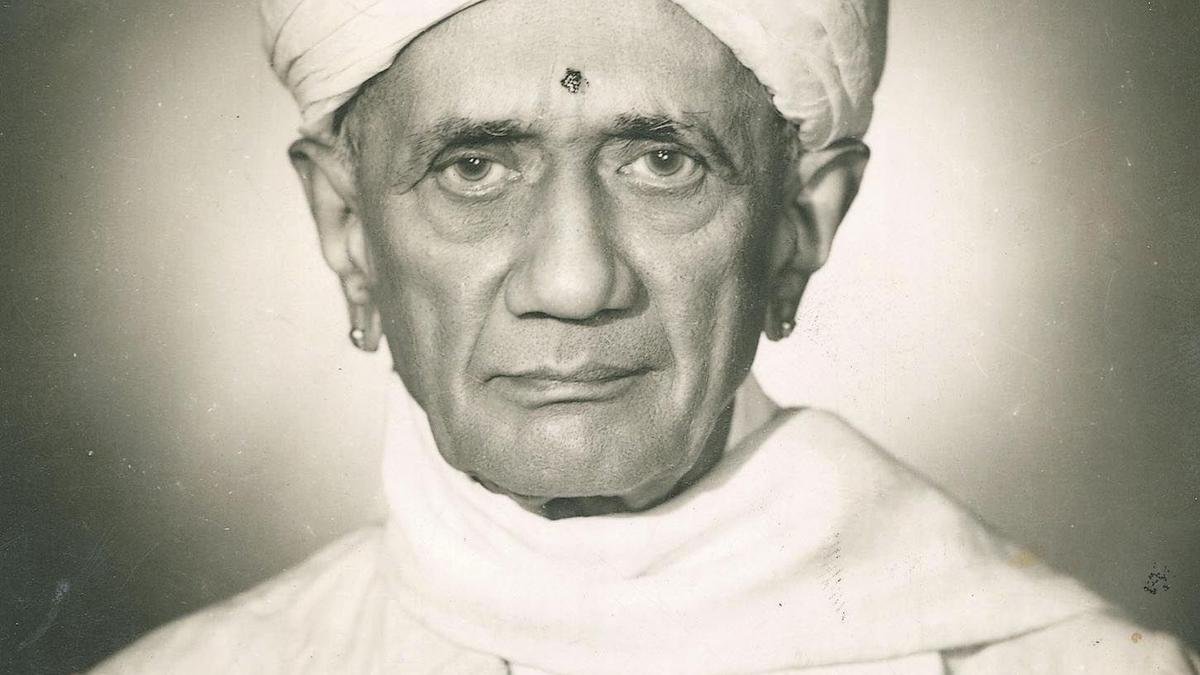


Pammal Sambandha Mudaliyar is considered one of the founding fathers of Tamil theatre.
| Photo Credit: The Hindu Archives
Pammal Sambandha Mudaliar’s magnum opus Nataka Medai Ninaivugal is a fascinating study of Tamil theatre of the late 19th and early 20th centuries, as seen through the journey of the Suguna Vilasa Sabha. Written in excruciating detail in most parts, this work documents the important role played by the Sabha in creating a renaissance in theatre, nurturing several talents and troupes. Ahead of Sambanda Mudaliar’s 62nd death anniversary on September 24, a look at the Suguna Vilasa Sabha’s performances in Ceylon and how they inspired the formation of a theatre group in the island nation.
In 1909, Sambandha Mudaliar and a few friends went on a private tour to Ceylon and happened to visit the Public Hall in Colombo. They made enquiries about staging performances there and the costs involved. In 1911, the Suguna Vilasa Sabha decided to venture into something it had not attempted before — taking their plays to Ceylon. Sambandha Mudaliar had to deal with multiple challenges in the preparations. One of them stemmed from within the Sabha itself, as a group of Telugu-speaking members protested against the inclusion of a junior artiste, who had just joined, at the expense of seniors. Another challenge was obtaining leave from work for artistes going on the tour, with Sambandha Mudaliar himself intervening on behalf of a few of them to resolve the matter. Costs, too, posed a challenge. This was, however, taken care of, since a drama contractor agreed to take responsibility of the entire production, paying the Sabha a lump sum of Rs 2,500 towards the staging of five plays.

Suguna Vilasa Sabha was located on the first floor of a building adjoining its earlier premises of a cinema theatre plaza.
| Photo Credit:
VINO JOHN
Finally, a nearly 50-member delegation travelled to Colombo, where it was welcomed by a group of prominent Tamils led by the eminent lawyer Sir A. Kanagasabai. Sambandha Mudaliar later wrote in his book Naan Kanda Naadaga Kalaignargal that the tour drew large crowds and began with the staging of Leelavathi Sulochana. Among the audience for the play was Warwick Major, who held a long lease on the Public Hall and regularly let it out for performances. This man would later etch himself in the history of Madras for giving it its first permanent cinema house, the Electric Theatre on Mount Road. Today, this building houses the Philatelic Bureau. The other plays staged included Manohara, Galava Charithram, Amaladityan and Sarangadhara. The Governor of Ceylon Sir Henry Edward McCallum presided over the performance of Amaladityan (an adaptation of Hamlet). Such was the success of the plays that Sir Kanagasabai requested Sambandha Mudaliar to stage another play in aid of the Governor’s Tuberculosis Fund. The Sabha staged the comedy Kaadhalar Kangal and donated half the proceeds, net of expenses, to the fund.
Sambandha Mudaliar writes of the warm hospitality accorded to the Suguna Vilasa Sabha members by people from across all sections of the society.

Sikander, a Tamil play based on the life of Alexander the Great, was inaugurated as part of the revived Suguna Vilas Sabha’s Dasara celebrations in October 1958.
| Photo Credit:
The Hindu Archives
The Sabha embarked on its second visit to Ceylon in May 1913, this time including Jaffna in their itinerary. After staging five plays at Colombo, the troupe travelled to Jaffna, where things ran into rough weather. Sambandha Mudaliar took ill (which he attributes to a severe bout of indigestion brought on by his inability to refuse the grand hospitality at various gatherings in Colombo!) and adding to the troupe’s discomfort was the less-than-satisfactory arrangements made by the contractor for the performing venue as well as their stay. It was decided by the Suguna Vilasa Sabha committee to refund the advance taken and cancel the tour.
The development led to rumours that the tour was being cancelled because the Sabha was dissatisfied with the reception it had received. The people of Jaffna took it to be an affront to their reputation as gracious hosts. Fortunately, the District Judge, MS Pinto happened to be Sambanda Mudaliar’s classmate at Madras Presidency College. At his behest took a group of lawyers took it upon themselves to ensure that the members were provided with better accommodation and facilities. The tour eventually continued and earned the sabha a surplus of Rs. 1,500, which went towards its building fund. As on its earlier visit, a benefit performance was staged at the request of a few prominent personalities, this time in aid of the Jaffna University.

The Suguna Vilasa Sabha in Chennai now.
| Photo Credit:
L. Srinivasan
During its silver jubilee year in 1916, the Suguna Vilasa Sabha undertook a final visit to Ceylon. According to Sambanda Mudaliar, it turned out to be a memorable occasion, since he was awarded the ‘Rao Sahib’ title as part of the king’s birthday honours. It was announced as part of a scene in their popular play Sabapathy. It was greeted with thunderous applause.
According to Kalaiarasu K. Sornalingam, a doyen of Tamil theatre in Ceylon, the Suguna Vilasa Sabha’s tours marked a turning point in the history of theatre in the island nation. Inspired by its performances, he founded the Lanka Subodha Vilasa Sabha in 1913, which in turn led to the formation of other troupes in places such as Jaffna. Sornalingam considered Sambanda Mudaliar his guru, and the latter, too, recognised him as an artiste of repute in his book Naan Kanda Naadaga Kalaignargal.
Sambanda Mudaliar’s influence as a theatre-personality truly transcended borders.
Published – September 15, 2026 06:34 pm IST